[Japan Series] Day 13: Takama Soba たかま, Abeno Harukas あべのハルカス, Ichiran 一蘭, Osaka 大阪市

DSCF by ukijojo on 500px.com

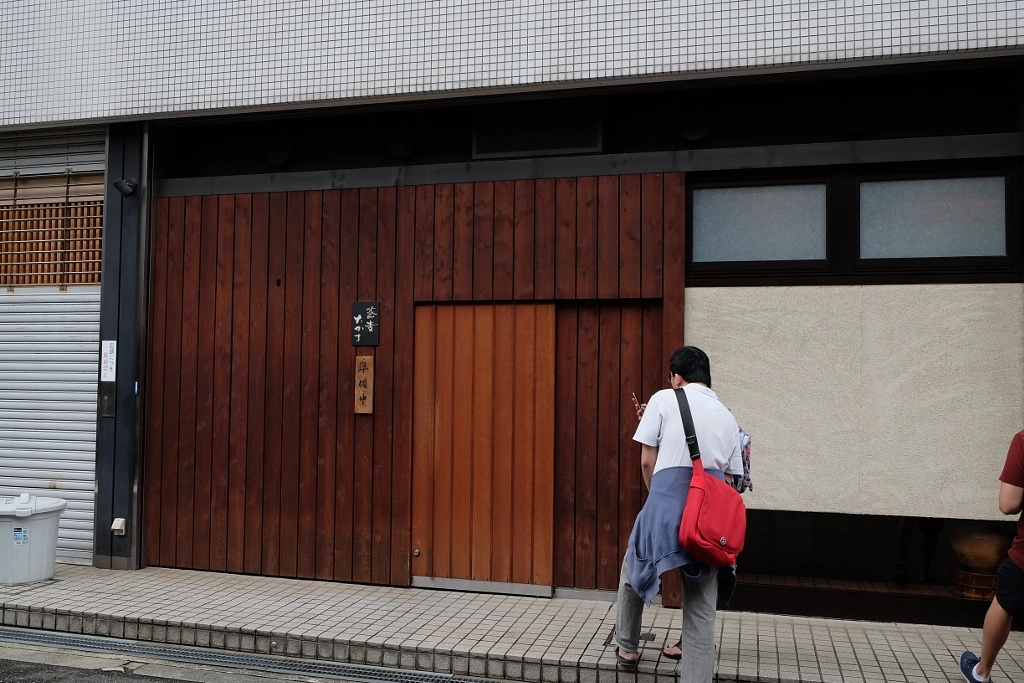
The next day, we decided to stay in Osaka to hit up a few more attractions. On my list was to try Takama (たかま), an affordable one Michelin star soba restaurant.  They open at 11:30am and I’m not sure if they take reservations, but were told to arrive 30 minutes before they open to ensure we get in during the first seating. The restaurant is tucked away in the side streets near Tenjinbashisuji Shotengai, a shopping alley, but this restaurant is super low key looking so you would miss it if you were just walking by. There is no English outside, so just look for this wooden house with a sliding door.
 

DSCF by ukijojo on 500px.com

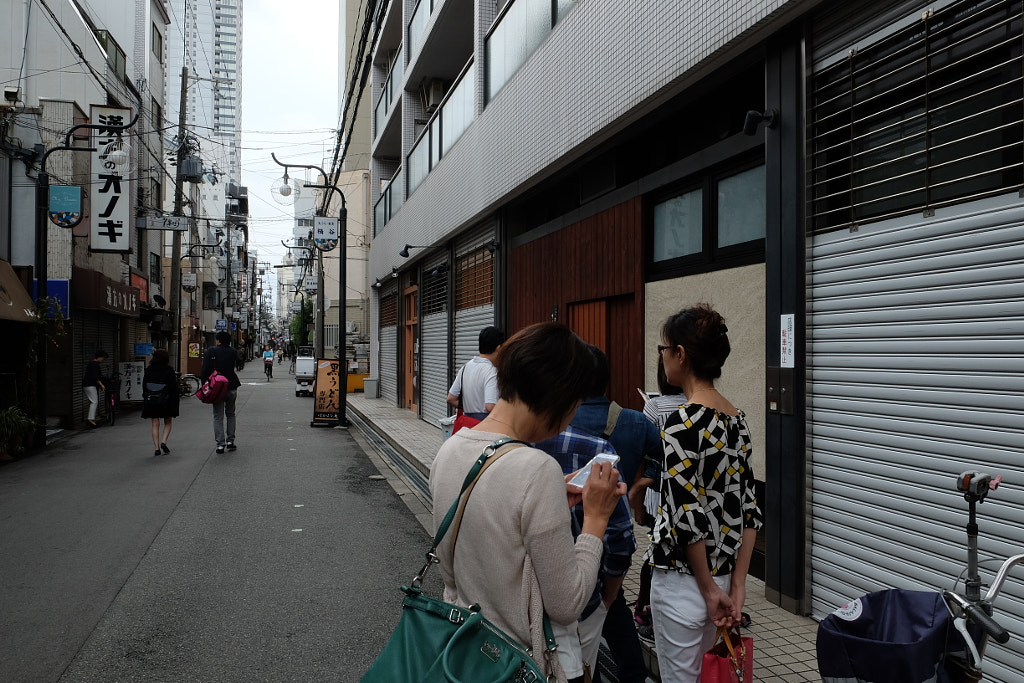
We arrived around 11am and a small line was already forming.
 

DSCF by ukijojo on 500px.com

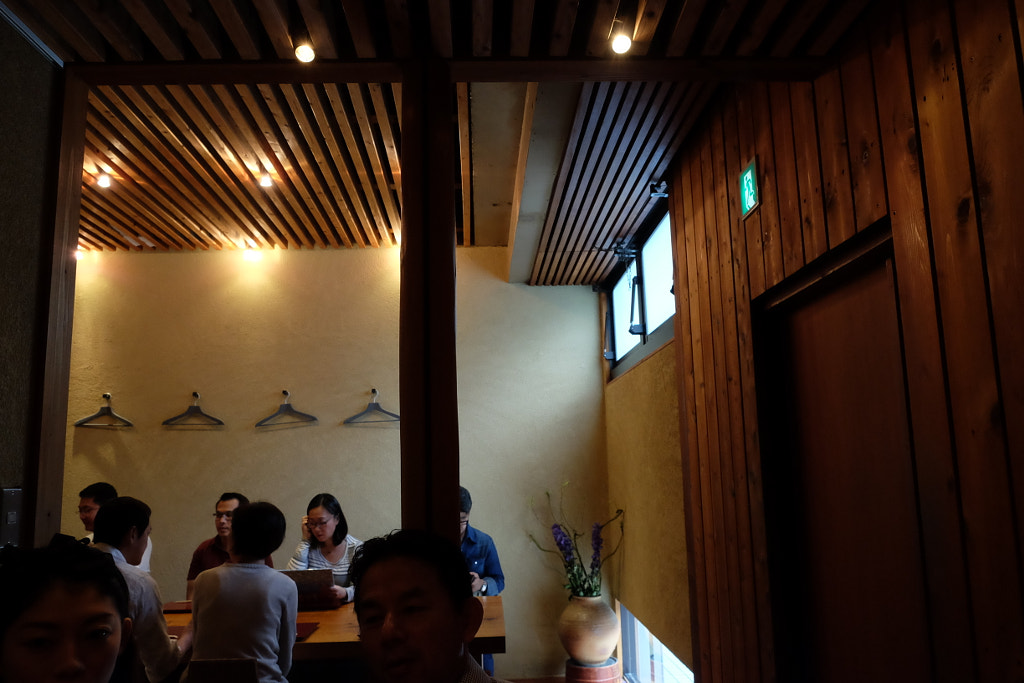
The restaurant is extremely small, with one round table that fits around 10 diners, and then a small four seater tucked on the other side. We were the second last couple to get a seat, so we ended up having to share a table with another another couple on the side. The only downside is that you can’t see what’s going on on the other side. I’m not sure if you can see the chefs on the other side making the soba, but we were lucky enough to get a seat, so it didn’t matter.
 

DSCF by ukijojo on 500px.com

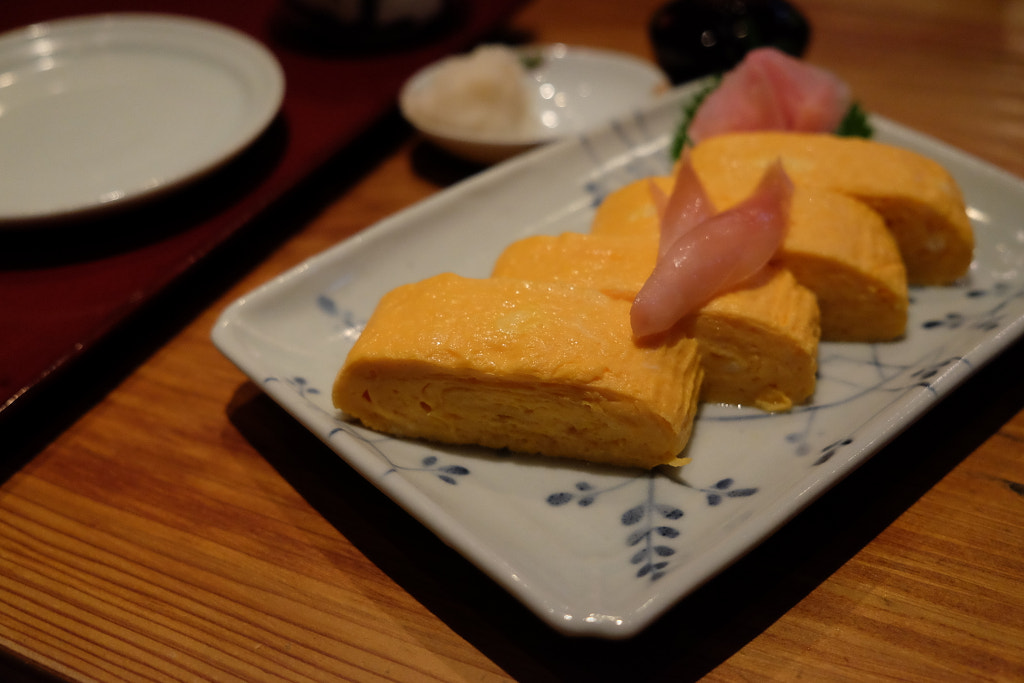
They have a small number of appetizers available, including the Dashimaki-Tamago. Of course it was pricier than the tamago we have been getting at the markets, but this was so light and fluffy! You can really see each layer of egg and it came paired with some grated radish and light soy sauce. Highly recommend getting this!
 

DSCF by ukijojo on 500px.com

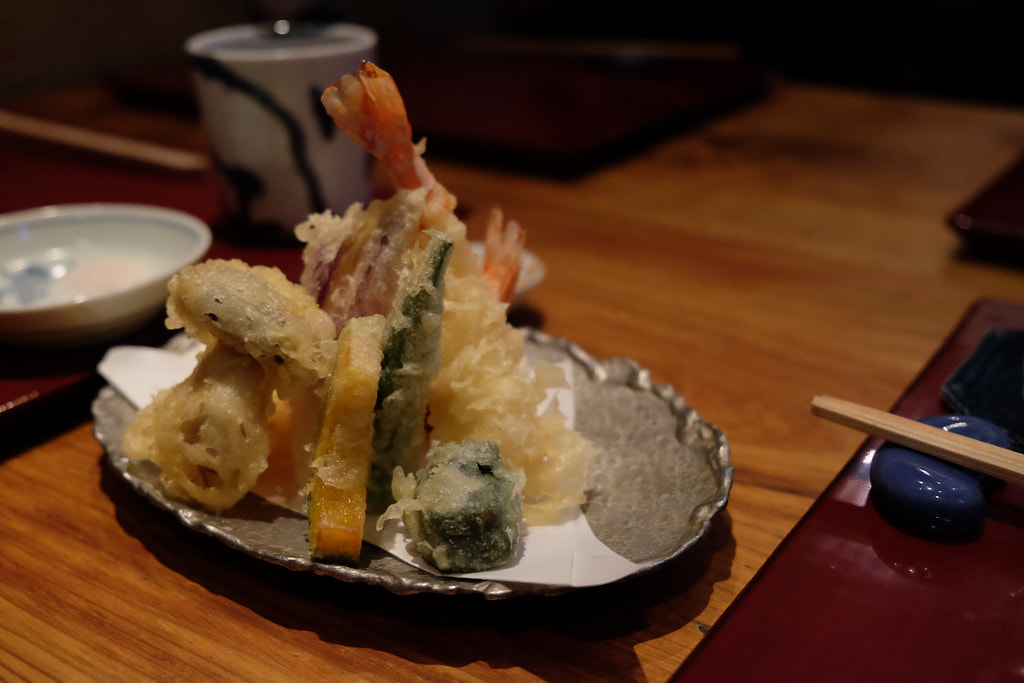
S got the Ebiten-oroshi Soba Set for 2,000 yen and it came with prawn and vegetable tempura. As you can see, the tempura batter is extremely light. It came with a variety of vegetables that we were not familiar with, but overall, it was very good.
 

DSCF by ukijojo on 500px.com

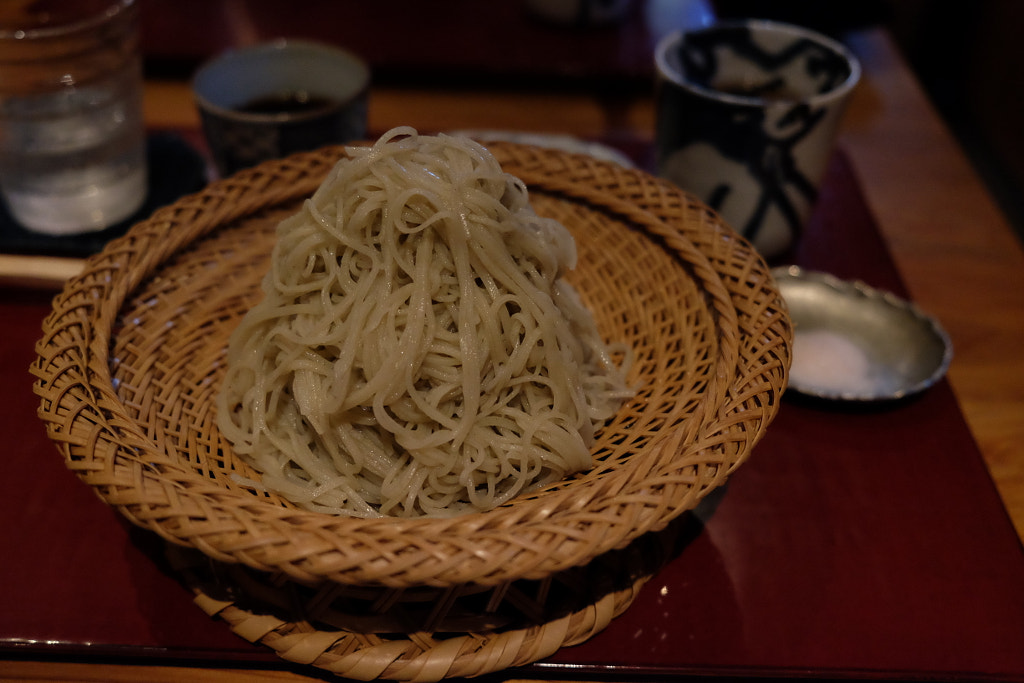
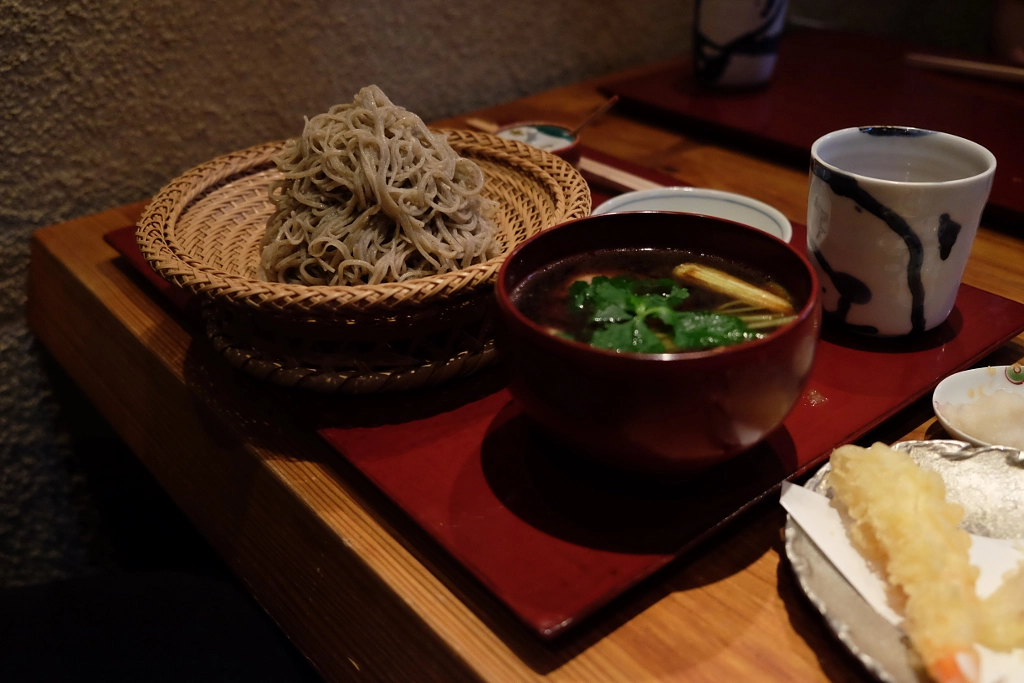
At Takama, they serve two types of soba. The first style is called mori, a regular-style soba made from marunuki flour. The second is called inaka, a noodle made with hikigurumi, a whole buckwheat flour. Both flours are extremely high-quality and are from the Fukui prefecture.  S can choose either type for his set. He went with the mori style and had it cold (zaru-style). The noodles are served cold with a light sweet soy dipping sauce. I really enjoyed this as the soba noodles were super thin and had a nice chewiness. The cold soba turned out to be my favourite. With the cold soba, you will also have leftover dipping sauce, and at the end of your meal, the server will bring a pot of hot water which you pour into your leftover dipping sauce to dilute it as a drinking broth. Really tasty!
 

DSCF by ukijojo on 500px.com

For myself, I decided to try the warm duck broth and got it with the inaka style, 100% buckwheat flour. The inaka style has a more nutty flavour, but I personally like the lighter mori-style. The duck broth is flavourful with 2-3 pieces of duck inside. However, I am not personally used to have soba in a warm broth and found that the duck broth overpowered the noodles. Back in Vancouver, I think the only comparable soba restaurant would be Kinome, but I think I have to say this is the best I’ve had. At the end of the day, the meal for two probably cost around $50 in total, which is extremely good given it is a one Michelin star restaurant. There are English menus available and the servers can speak simple English. Keep in mind, they are open open for lunch from11:30 am – 2:30am.
 

DSCF by ukijojo on 500px.com

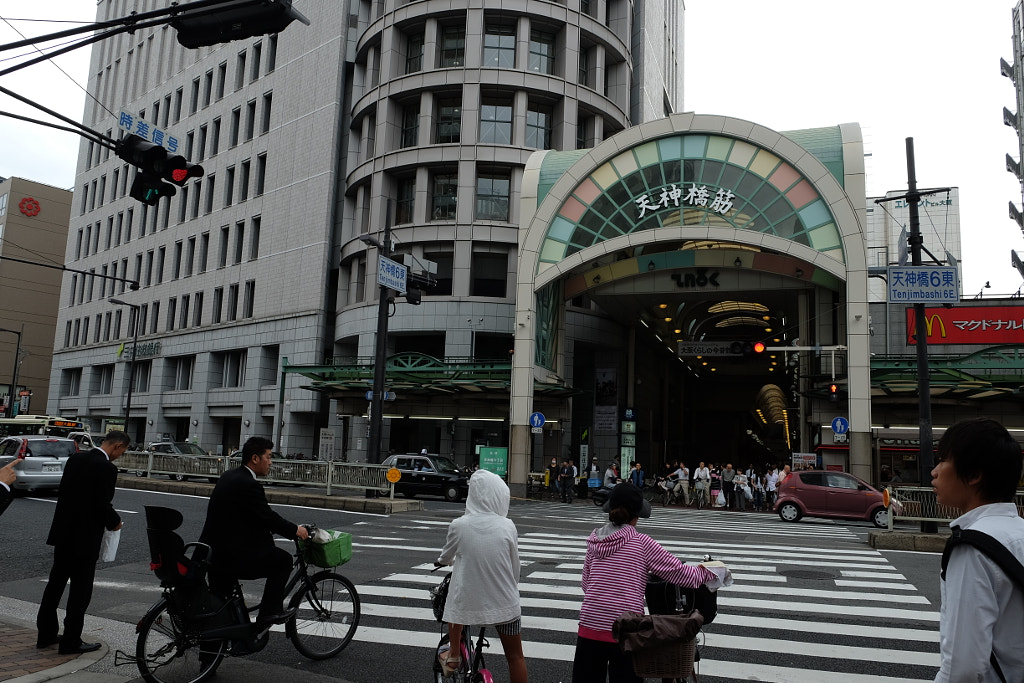
Since we were nearby, we decided to check out Tenjinbashisuji Shotengai (天神橋筋商店街). This is the longest shopping street in Japan which stretches 2,600 meters and has over 600 shops. On a weekday afternoon, it actually wasn’t too busy when compared to the famous Dotonbori. I found that many of the pharmacy shops here (if you look for the non-chain shops) were slightly cheaper so perfect if you are looking to stock up on Japanese drugstore cosmetics and snacks.
 

DSCF by ukijojo on 500px.com

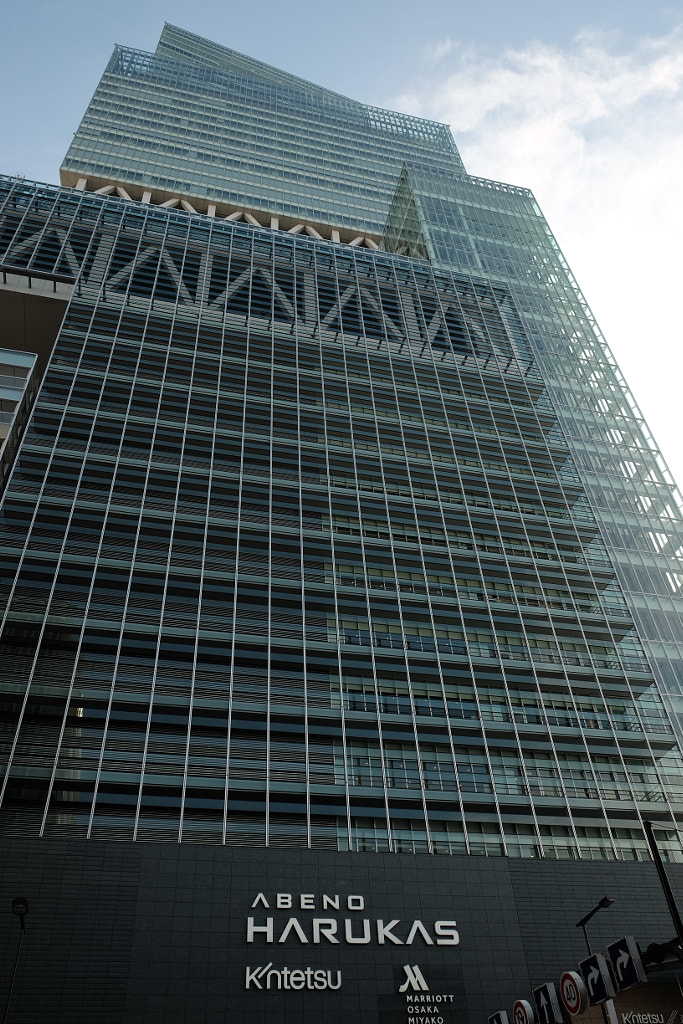
After some shopping, we decided to train to JR Tennoji station. Here, we visited Abeno Harukas which sits on top of the Kintetsu Osaka-Abenobashi Station, which is across the JR Tennoji station.
 

DSCF by ukijojo on 500px.com

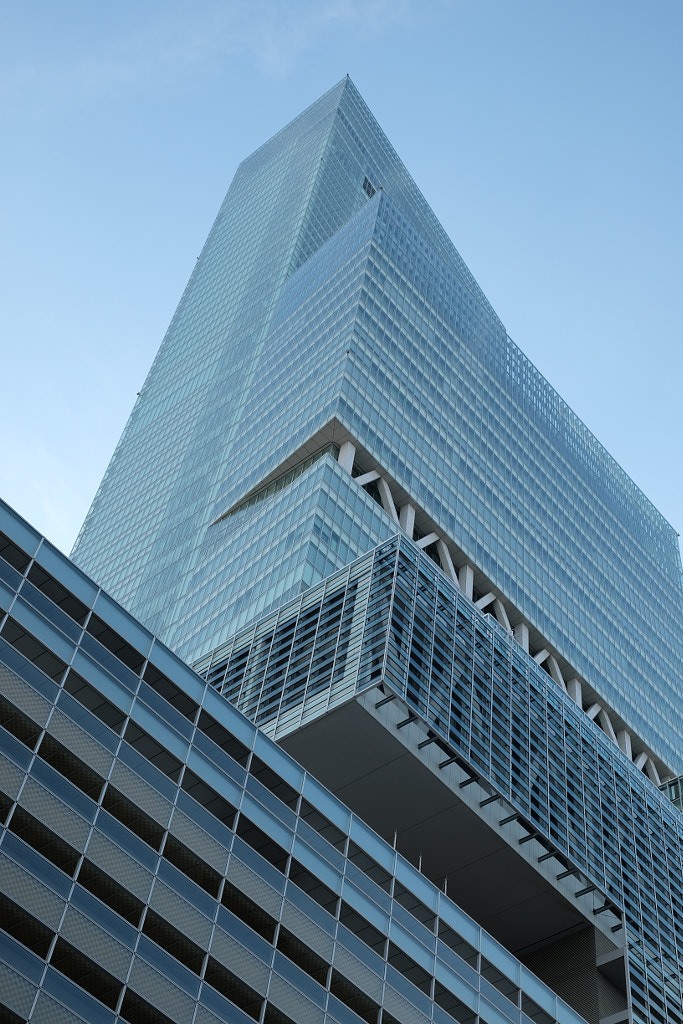
The Abeno Harukas (あべのハルカス) is the tallest skyscraper in Japan at 300 meters tall. The building includes a department store, an art museum, a hotel and an observation deck. The observation deck is called Harukas 300 and provides a 360 view of Osaka from the 60th floor. Admission costs 1,500 yen so since we already checked out Osaka from Umeda Sky Tower, we decided to skip this.
 

DSCF by ukijojo on 500px.com

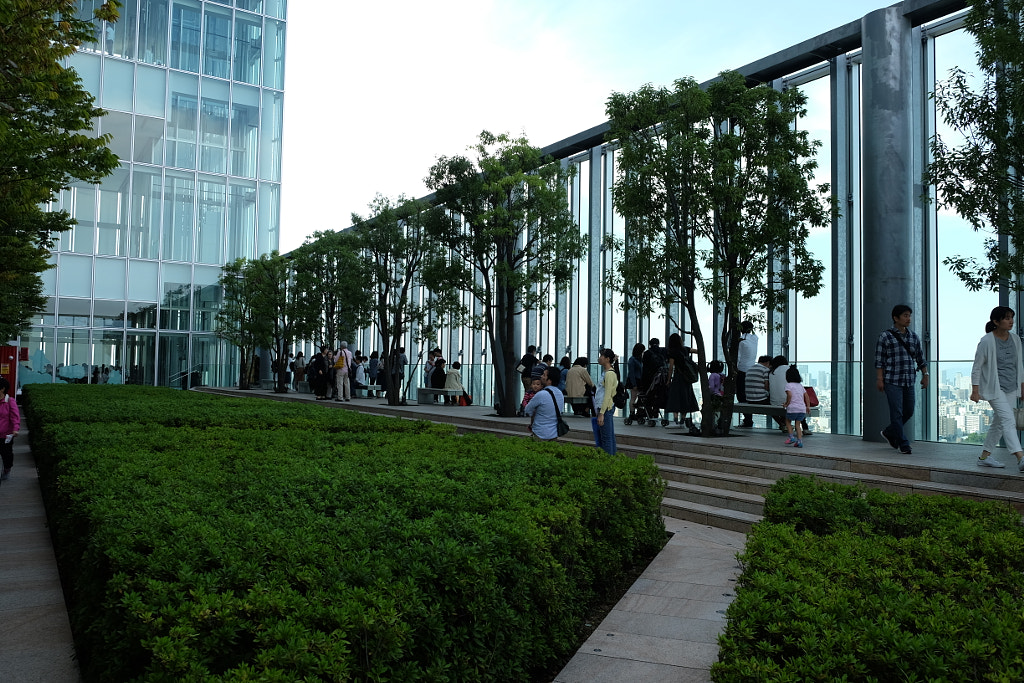
Instead, you can go to the 16th floor for free and enjoy the garden terrace. I really enjoyed this modern clean space and it is a good option if you don’t want to pay the admission price. Of course, I’m sure the 60th floor would offer better views.
 

DSCF by ukijojo on 500px.com

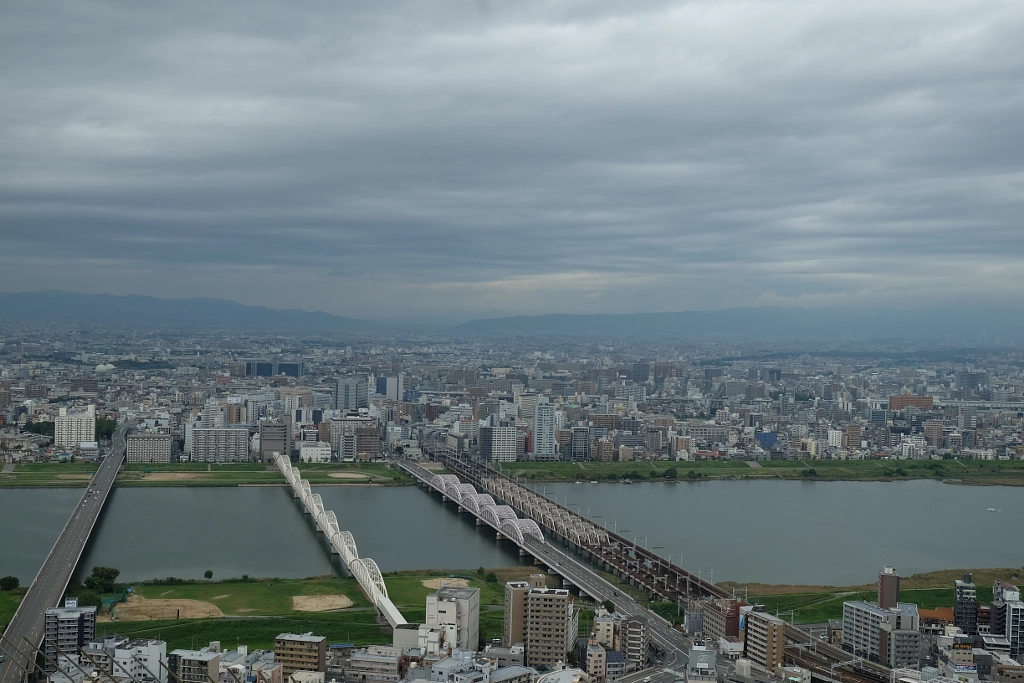
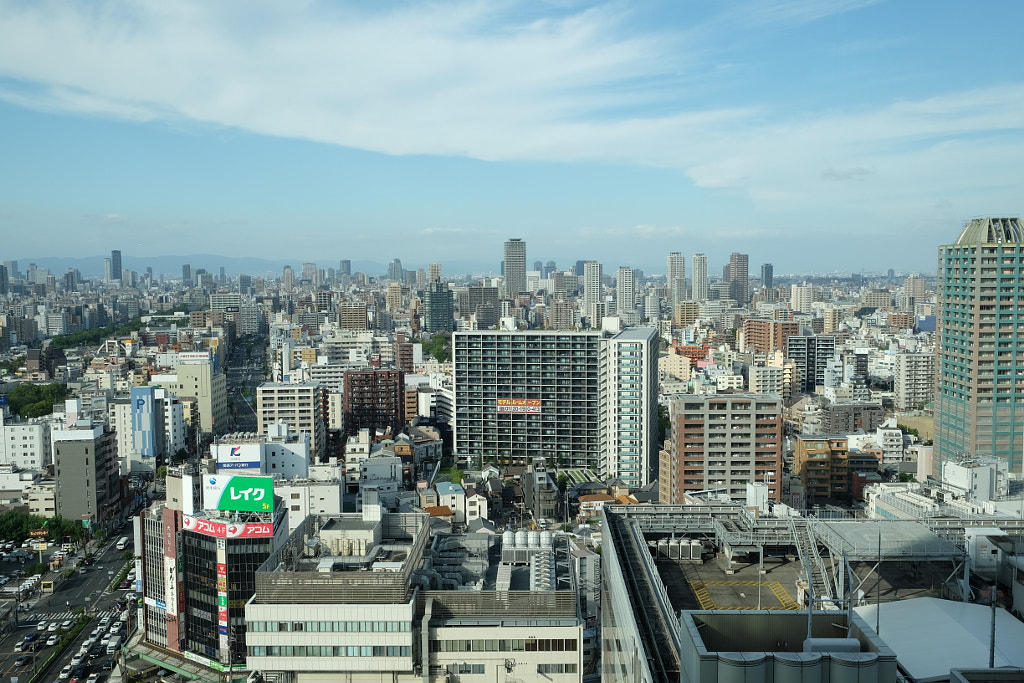
This is what you can see from the 16th floor at the garden terrace. Not bad since it’s free!
 

DSCF by ukijojo on 500px.com

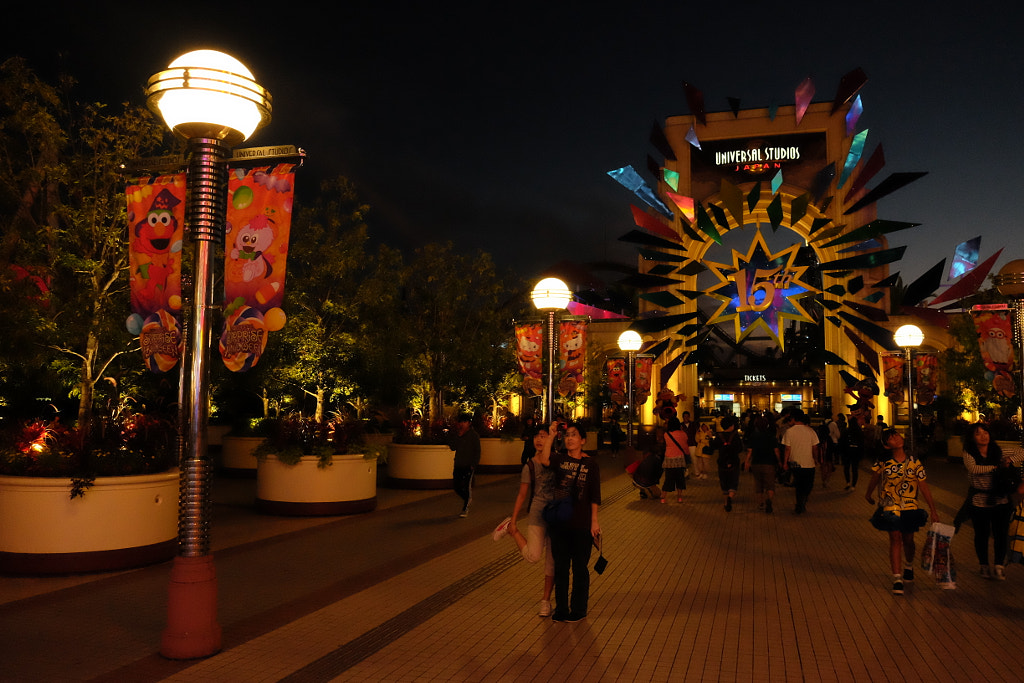
After walking around the department store, we decided to go check out Amerikamura. This is supposed to be a district near Shinsaibashi which offers more American style shopping. Funny enough, we searched Amerikamura in Google maps, and ended up at Universal Studios… Yes we have no idea how we ended up here, so always be careful with Google Maps in a foreign country. Turned out there were quite a lot of brightly lit souvenir shops before the entrance, so we did get to walk around a bit. As it was late, there was no point in entering Universal Studios at the time.
 

DSCF by ukijojo on 500px.com

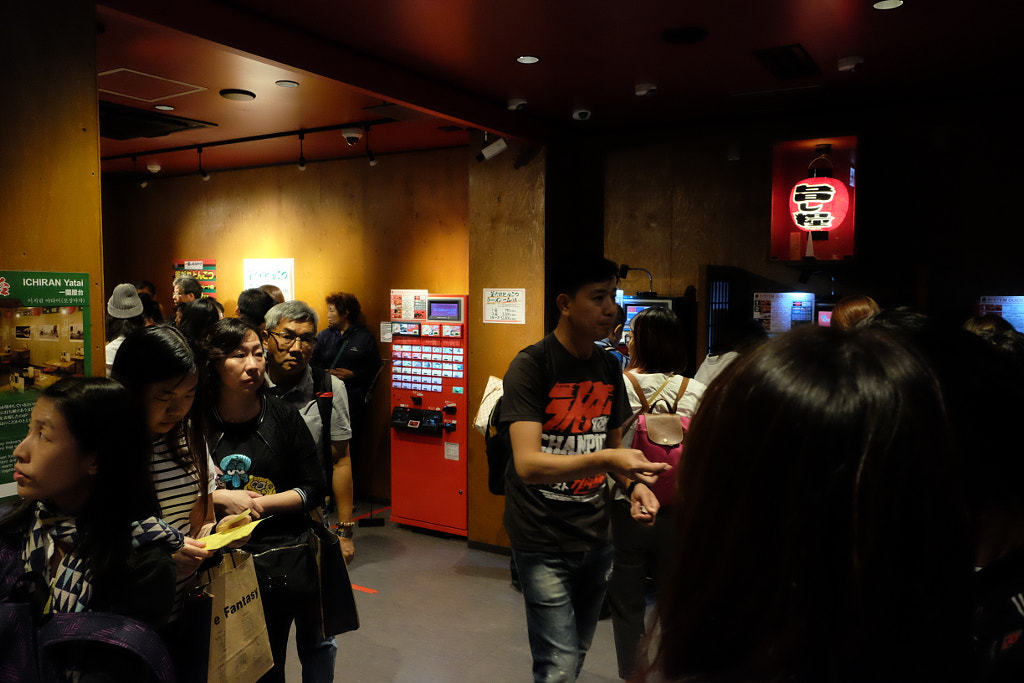
After our excursion, we decided to head back to the Dotonbori area and walking by Ichiran (一蘭 道頓堀店別館), I suggested we enjoy a warm bowl of ramen. There are two outlets in the Dotonbori area. One is by the canal outside, whereas the other is under the shopping area along the strip. We went for the latter because we heard this location has 3 floors and way more seats. Of course, there was still the usual crazy line up, but this one is super organized for the tourists. You will still have to purchase the ticket at the vending machine, but you will also be asked whether you want to sit at the traditional individual booths, or if you want family seating arrangements. If you have never been to Ichiran, then I suggest trying the unique individual booths. However, since we have already tried it, and the line up for family seating was quicker, we went with family seating. Definitely not as interesting, but this is perfect for large families or families with kids.
 

DSCF by ukijojo on 500px.com

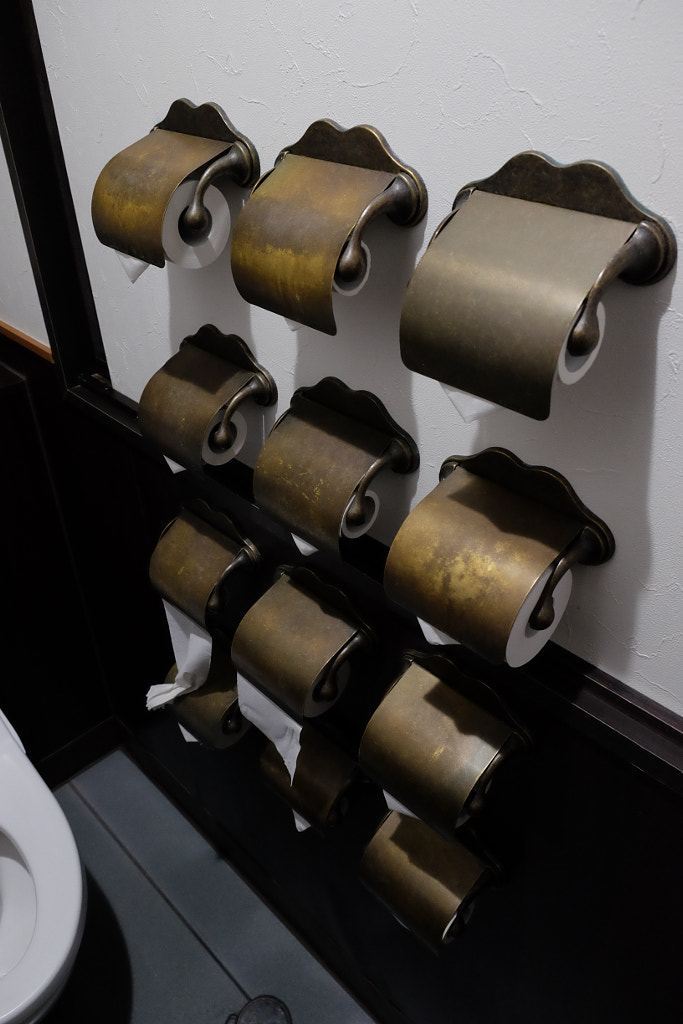
Be sure to check out the bathrooms! How many rolls of toilet paper do you need?
 

DSCF by ukijojo on 500px.com

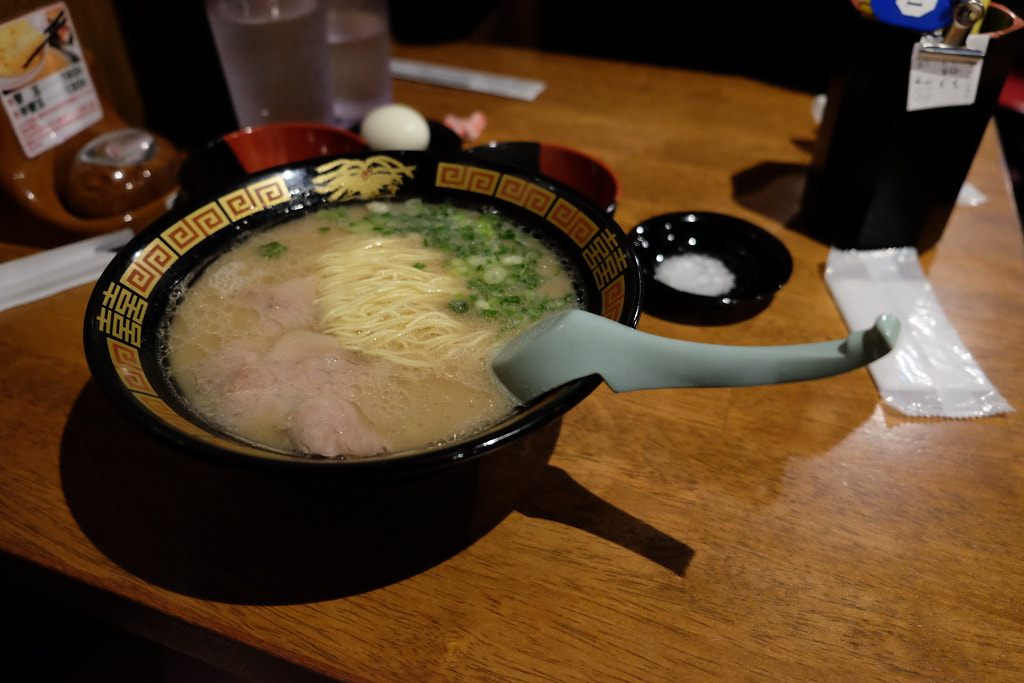
We ended our night with a delicious bowl of Ichiran and it did not disappoint. Consistent with the other locations we tried and service was quick.

Takama Soba
Address: 7-12-14 Tenjinbashi, Kita-ku, Osaka

Ichiran 一蘭 道頓堀店別館
Address:


[Japan Series] Day 12: Kinkakuji Golden Pavilion 金閣寺, Nishiki Market 錦市場, Gion 祇園, and Chao Chao Gyoza 餃々 三条木屋町店 in Kyoto 京都

DSCF by ukijojo on 500px.com

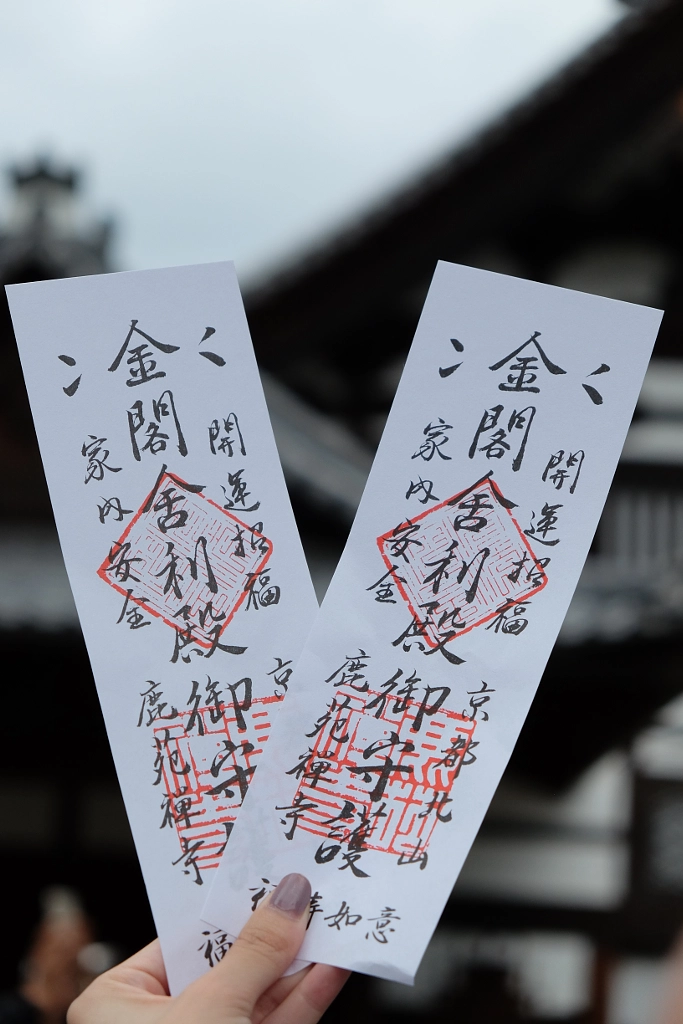
On day 12, we took the bullet train from Osaka to Kyoto again. Our first stop was to see the famous Golden Pavilion or Kinkakuji (金閣寺). The downside of many temples in Kyoto is that you can’t reach them by train and require a transfer to a bus. After a 30 minute ride to Kyoto Station, we switched to the Karasuma Subway Line and got off at Kitaoji Station. From here, you can take a bus (bus numbers 101, 102, 204 or 205) which takes around 10 minutes. Get off at Kinkakujimichi Bus Stop and you will see many other tourists walking towards the pavilion. Be warned that the buses get really crowded with tourists because many temples are only accessible by bus! Admission is 400 yen, but most temples require admission. You will receive this cute admission ticket!


DSCF by ukijojo on 500px.com

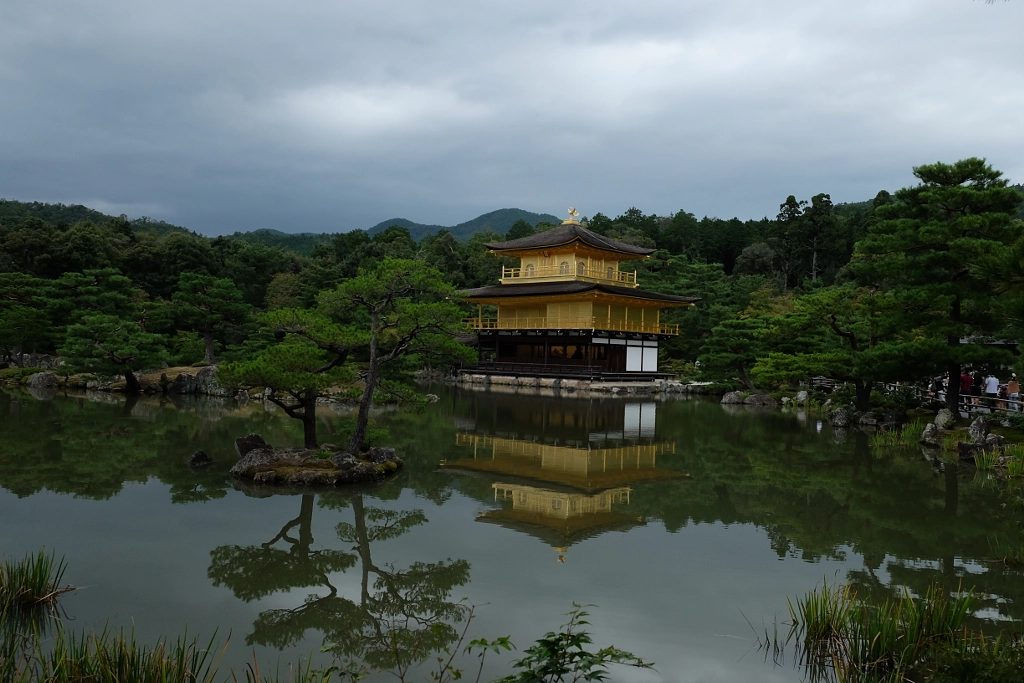
Kyoto was once Japan’s capital city and therefore has many historic value and has preserved many famous temples. S and I both love the city life, so we personally aren’t too intrigued by temples. However, I suggested we visit at least one, and Kinkakuji was the one I decided on. This beautiful golden zen temple definitely did not disappoint. Even on a gloomy day, the beautiful gold against lush green trees reflected on the pond surrounding the temple. It was seriously like a painting!


DSCF by ukijojo on 500px.com

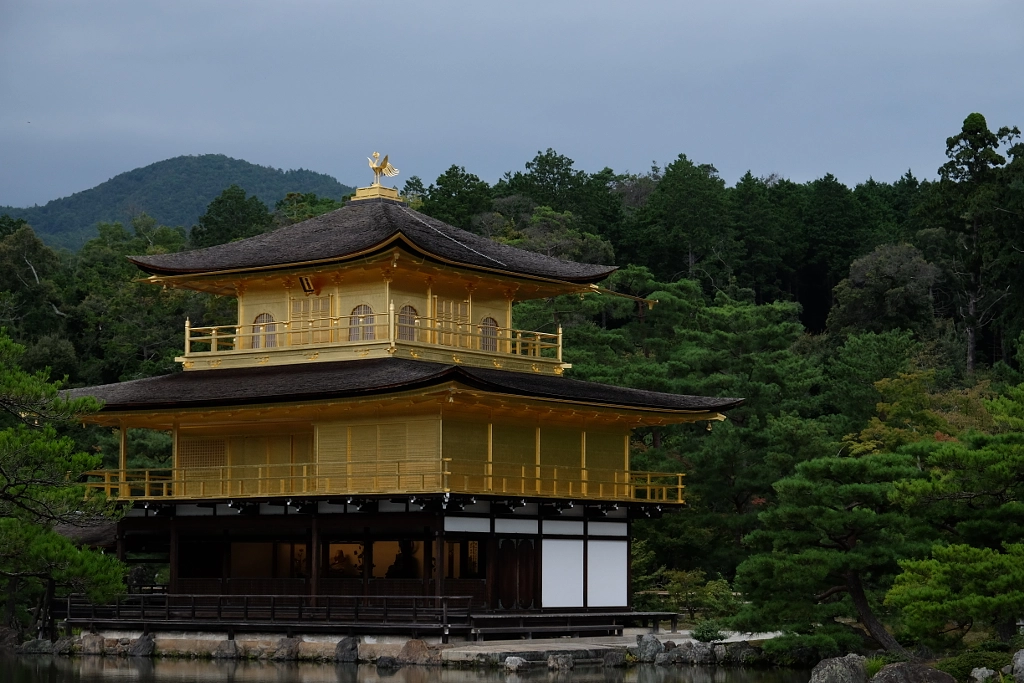
The top two floors of the temple are covered in gold leaf and really shines. The temple is formerly the retirement villa of the shogun Ashikaga Yoshimitsu but became a zen temple after his death based on his will. We were surprised to learn that we were actually not allowed to enter the temple. Instead, we had to crowd around the walkway path among all the tourists to snap a picture from afar. This attraction is extremely touristy but I did really enjoy it. It makes a nice light walk in the garden. However, other than the temple itself, there are not that many attractions in the garden. Near the end, you will find the Sekkatei Teahouse as well as some souvenir shops near the exit.


DSCF by ukijojo on 500px.com

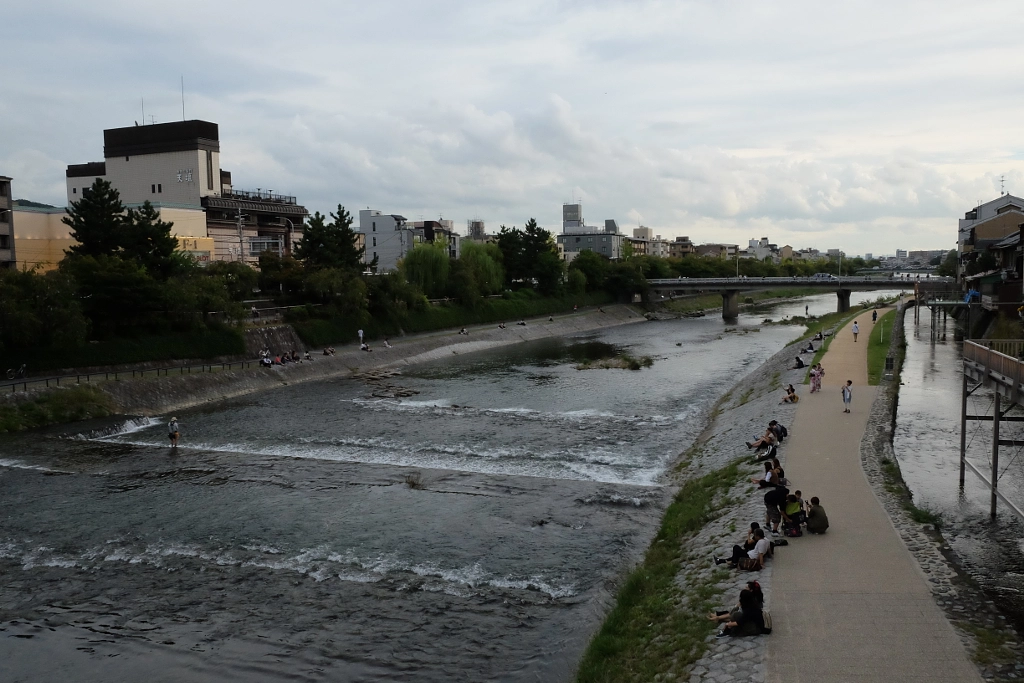
After visiting the temple, we decided to bus back to the Kyoto station area. If you are interested in temples, then the Ginkakuji and Kiyomizudera are also very popular. near the Kyoto station, you will find a bridge over the Kamogawa River. Many tourists and locals will take leisurely walks along the river and you can catch people fishing here as well.


DSCF by ukijojo on 500px.com

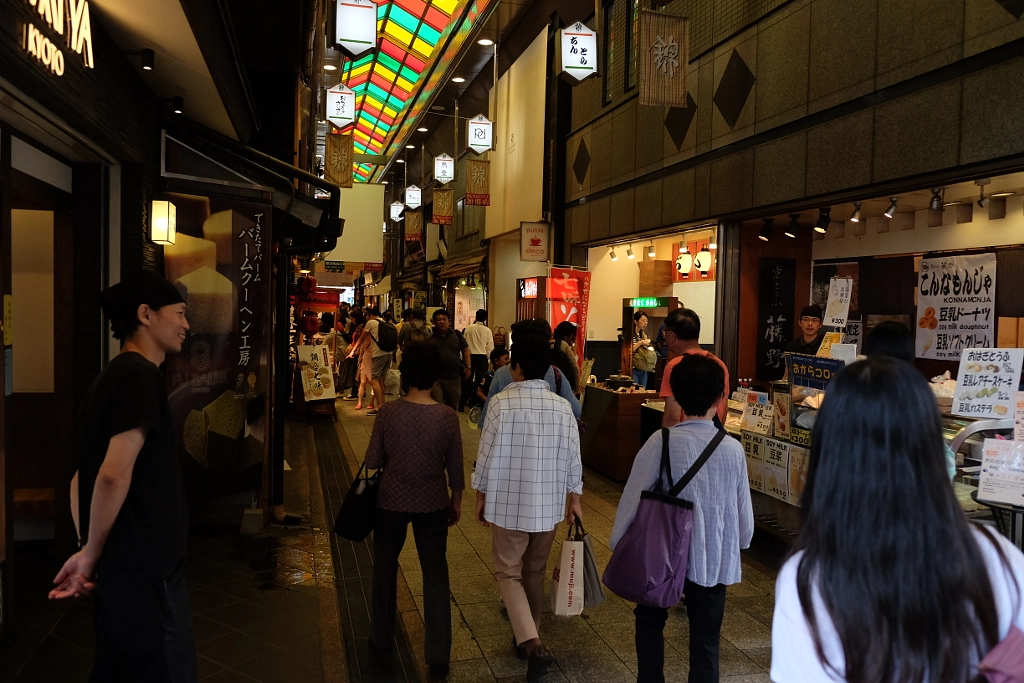
Getting hungry, I suggested we walk to the Nishiki Market (錦市場). This is a 5 block alleyway filled with hundreds of shops. You can find tons of local goods, like pickled vegetables, dried seafood, fresh seafood, produce, dessert, and cooking ware.

DSCF by ukijojo on 500px.com

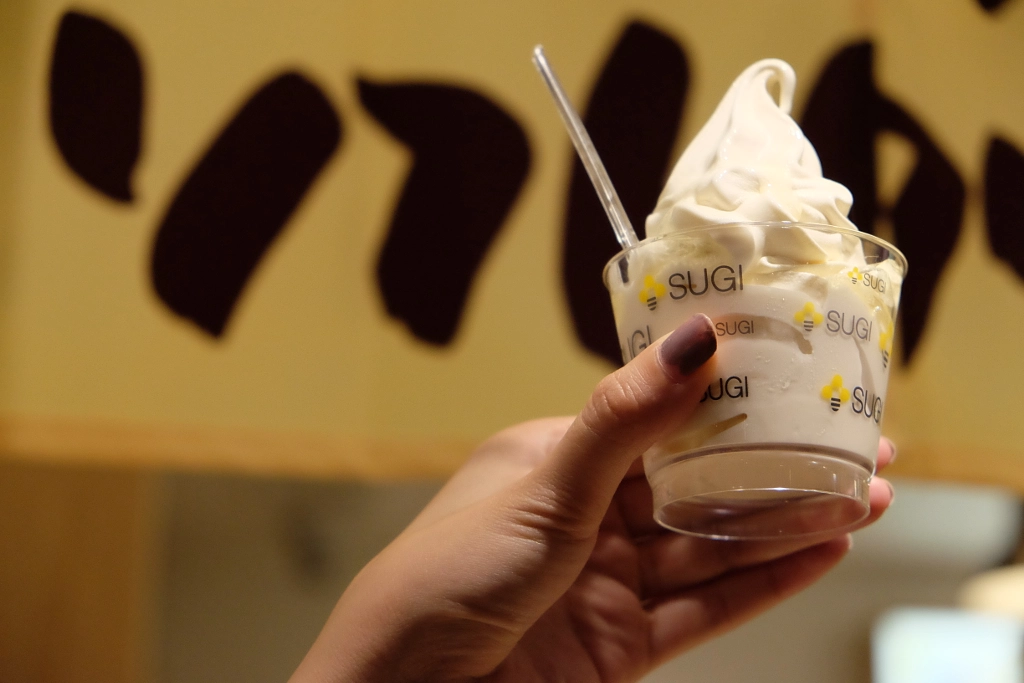
We decided to get some Honey Soft Serve! At Sugi Bee Garden, they specialize in honey and you can sample many flavours here. We ended up leaving with a soft serve and this was really smooth and creamy!


DSCF by ukijojo on 500px.com

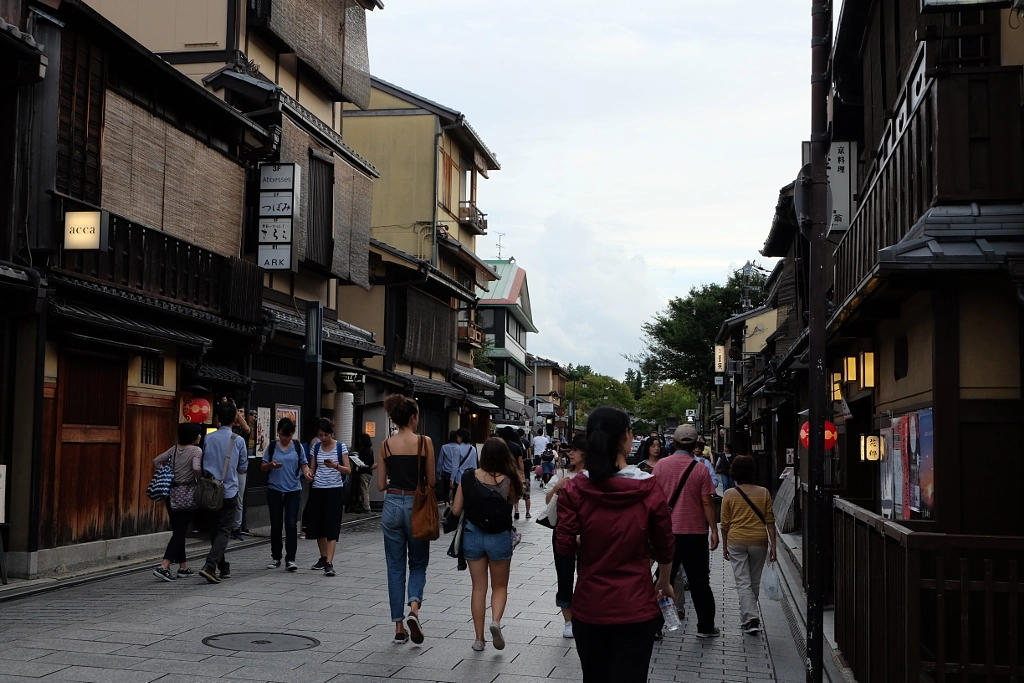
After grabbing some food at the market, we headed to the Gion (祇園) district. This is the famous area for geishas as you will find restaurants and teahouses where the geishas entertain here. You will also find wooden machiya merchant houses which make a great backdrop for photos!


DSCF by ukijojo on 500px.com

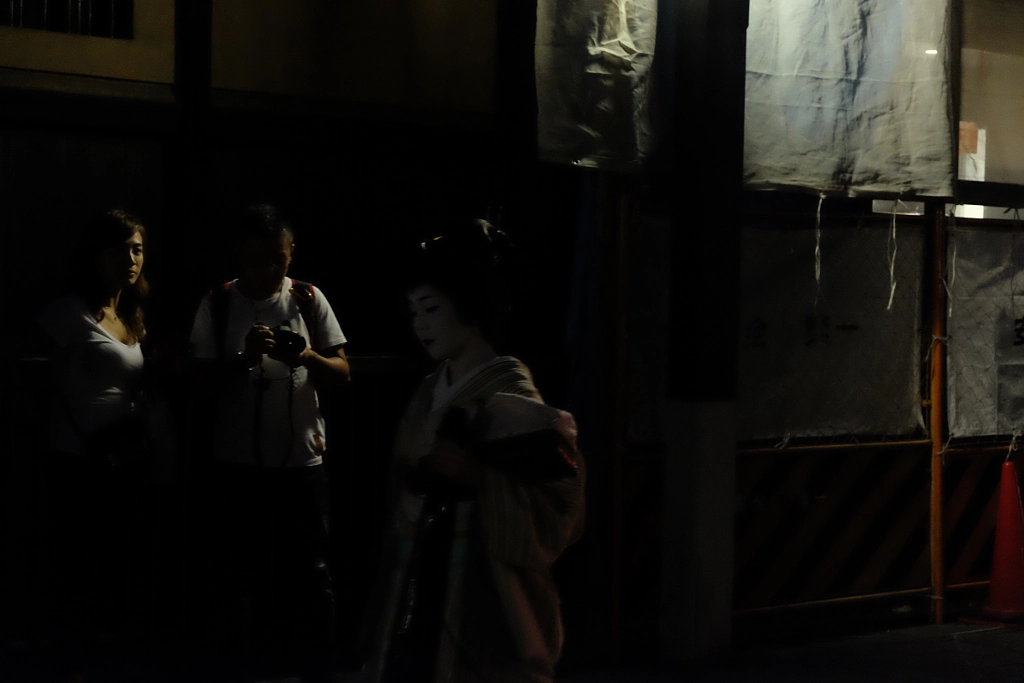
We had no interest in attending one of the performances by the geishas, but I did want to see a geisha in real life. I did some Googling and found that the best time to spot them is around 6pm-7pm because this is when they are making their way to their engagement. Luckily, we did spot one and we subtly got a picture of her. We read online that we should be respectful of them and avoid acting like a paparazzi as many tourists have gone too far and I can imagine how uncomfortable it would be for these ladies. They even have police in this area to control the amount of tourists! Another tip we learned during our hour here is to look into the taxis that drive in this area. Many of the geishas now take taxis to their engagement, so chances of seeing them walking around is slim.


DSCF by ukijojo on 500px.com

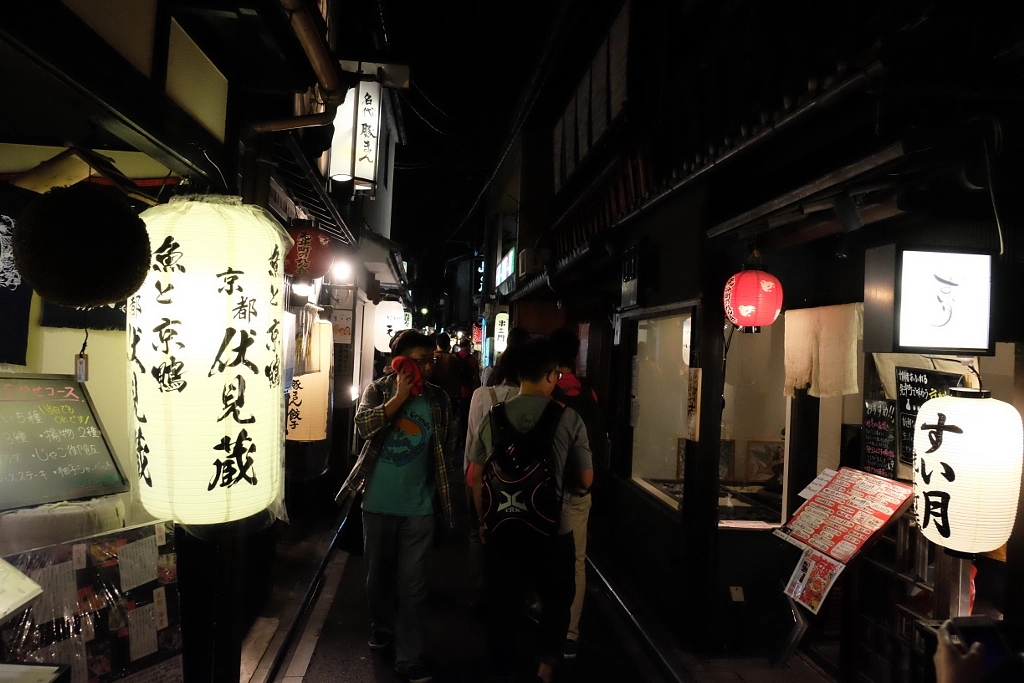
After our hunt for geishas, we headed to Pontocho (先斗町). This is a narrow alleyway filled with restaurants. Prices range from affordable to high end fine dining which require reservations. A good spot to drop by if you are looking for dinner.


DSCF by ukijojo on 500px.com

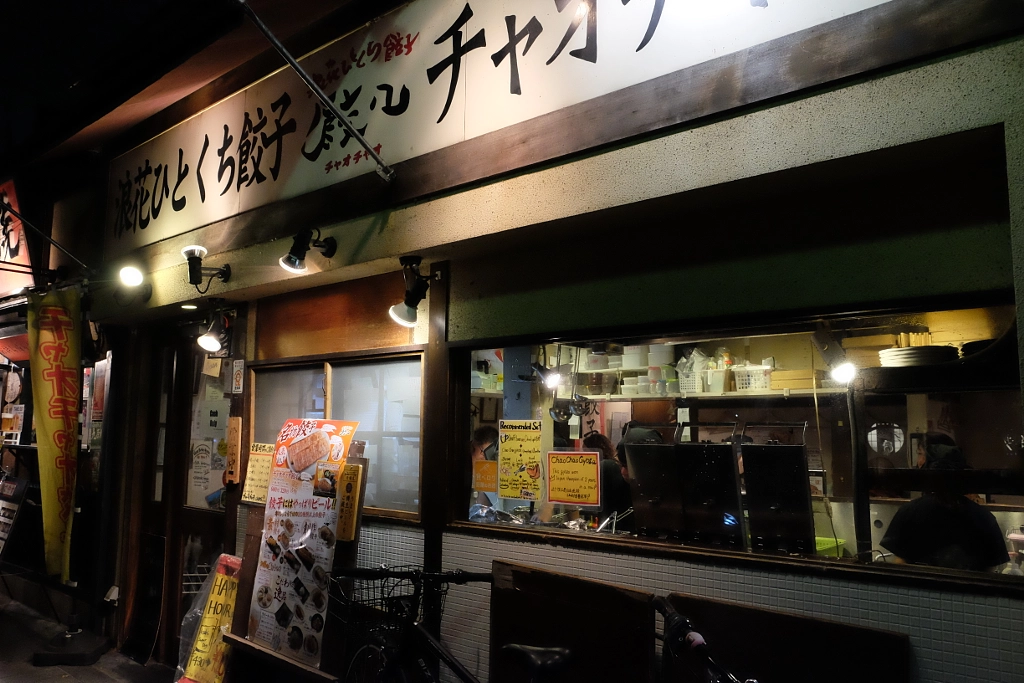
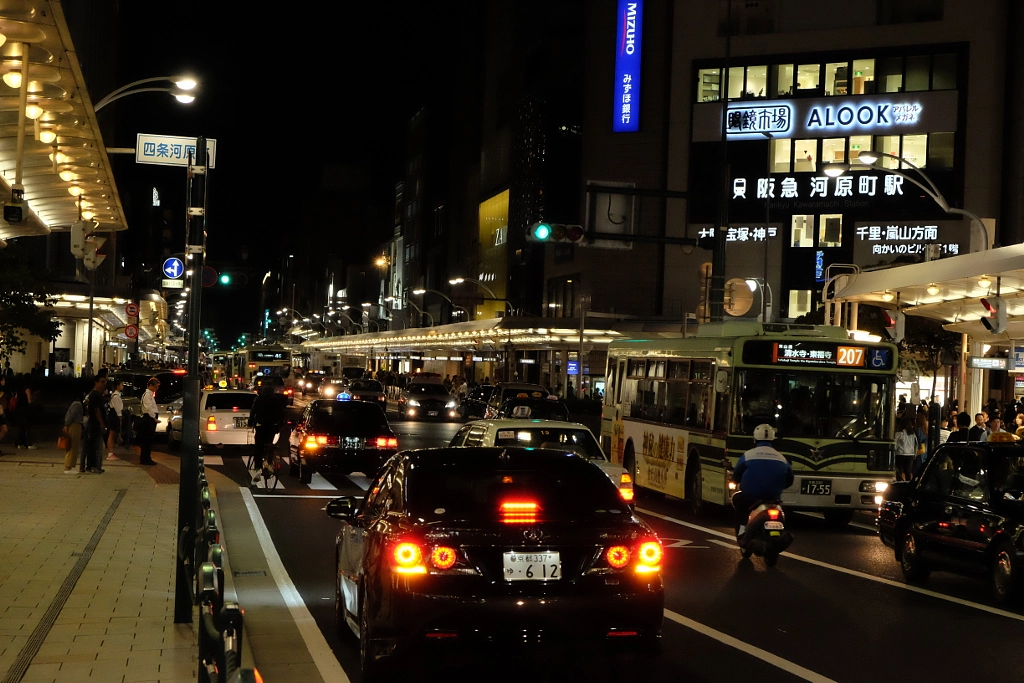
Our destination was Chao Chao Gyoza (餃々 三条木屋町店). The restaurant is basically at the end of Pontocho alley and is a huge tourist spot. When we arrived, there was already a long line that had formed. And to be honest, I was a bit skeptical because everyone lining up looked like a tourist. We ended up waiting for almost an hour but this was well worth it. The restaurant has actually won the countrywide gyoza competition twice!


DSCF by ukijojo on 500px.com

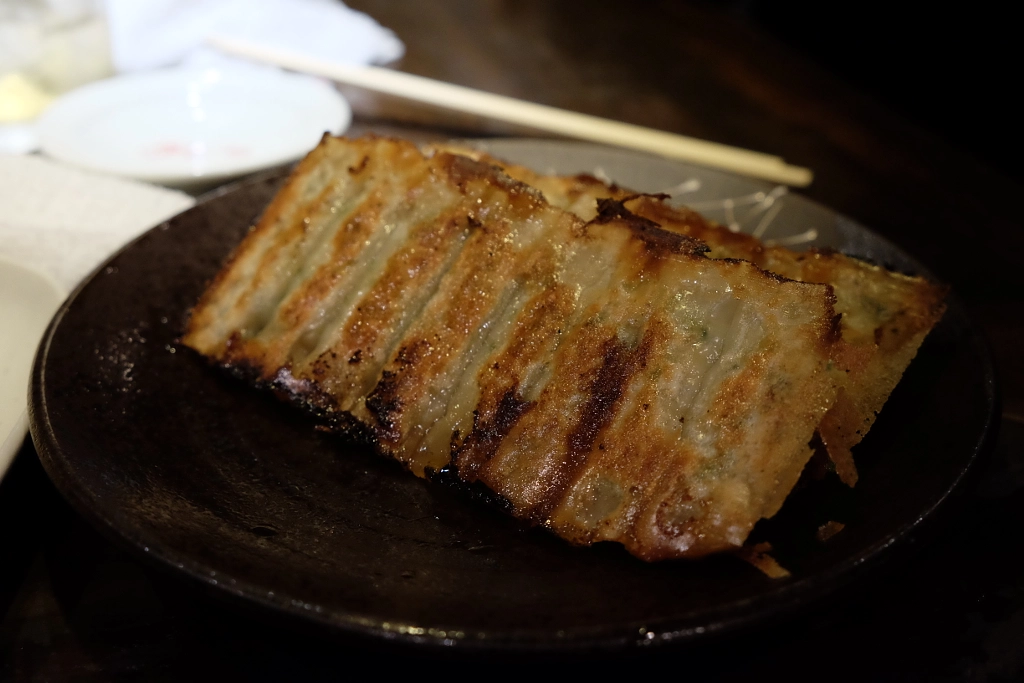
What are they famous for? Well gyozas of course. The gyozas here are actually all strung together in a row. The wrapper is thin and each gyoza is quite small, but filled with juicy meat. The most popular is the Chao Chao Gyoza which is filled with pork. 600 yen will get you 16 pieces, but as you can see, 16 pieces is quite small. We ended up getting another order of this after because they were so good!


DSCF by ukijojo on 500px.com

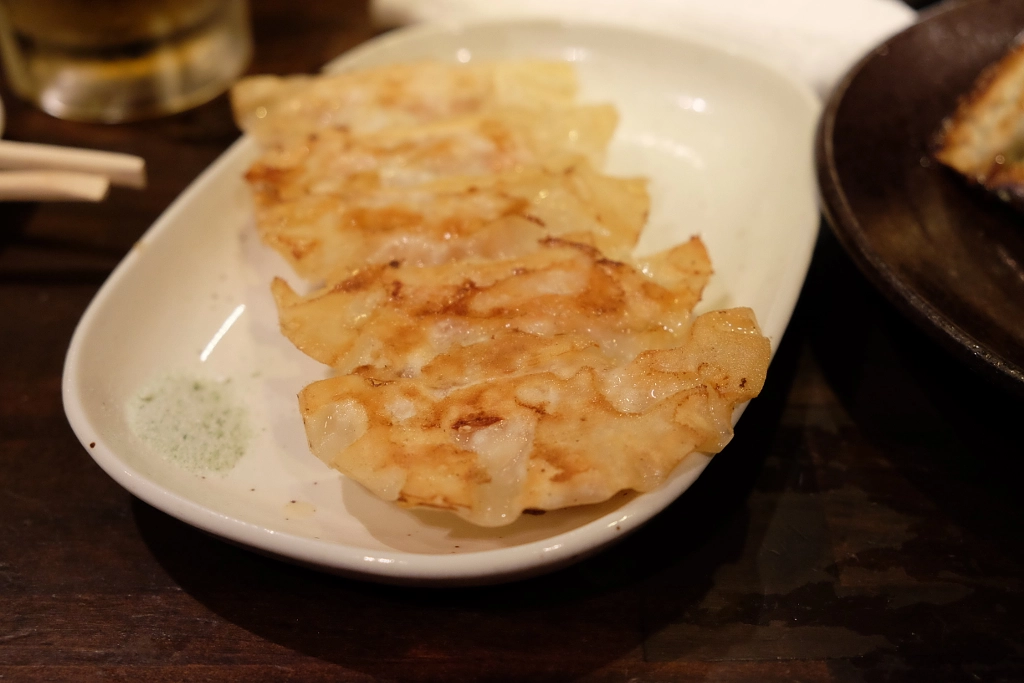
We also tried the Shrimp Gyoza which is 480 yen for 5 pieces. Really good as well, but the pork was still my favourite. They also have some unique fillings like cheese, curry, and even ginger. They also have a large option of drinks so we did enjoy some beer and plum wine. Beer and gyozas definitely make a perfect pairing! Not the cheapest meal you can get in Kyoto, but quite affordable and we had a great time sitting at the bar watching our gyozas being made. Plus, the restaurant is English friendly!

That wrapped up our last day trip to Kyoto as we trained back to Osaka after dinner!

Chao Chao Gyoza
Address: 117 Ishiyacho Kiya-Machi Sanjo Kudaru Nakagyo-Ku, Kyoto

[Japan Series] Day 11: Arashiyama 嵐山, Fushimi Inari-Taisha Shrine 伏見稲荷大社, Kyoto

DSCF by SophiaHo on 500px.com

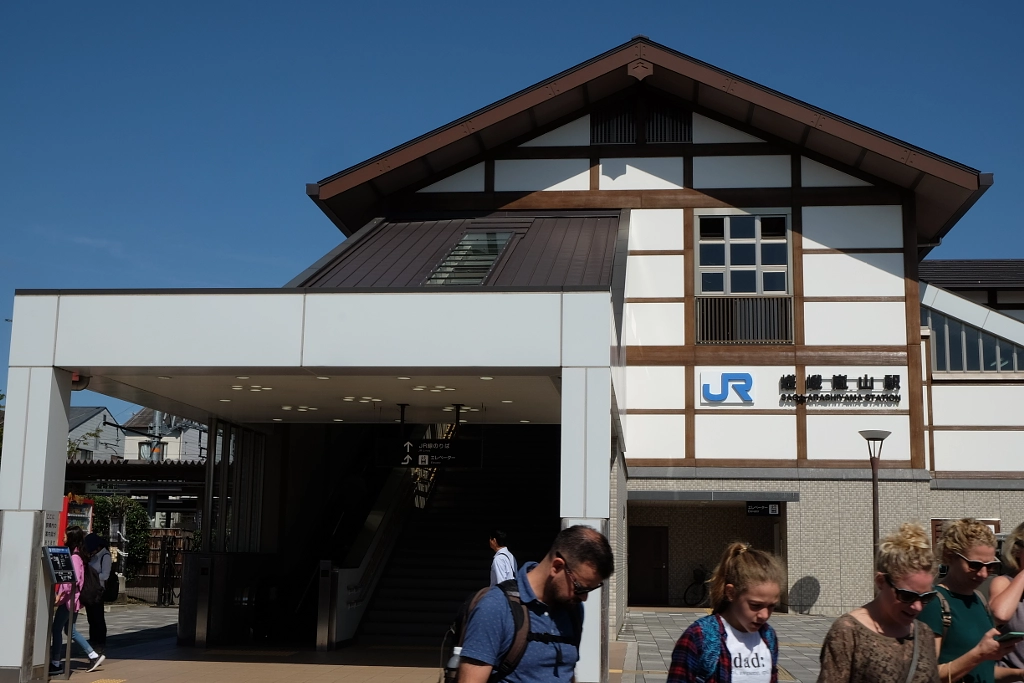
On Day 11, we headed from Osaka to Kyoto. Because the two cities are 30 minutes away by JR, we decided to just settle in Osaka and use it as a base instead of finding accommodation in Kyoto. Kyoto accommodation is also quite expensive, so it’s best to stay in Osaka to save a few bucks. Our trip today would be to check out Arashiyama, an outskirt of Kyoto. After taking the JR Kyoto line to Kyoto Station, we switched to the JR Sagano Line (also known as JR Sanin Line). It only takes 15 minutes to get to Saga-Arashiyama Station and you will find many tourists getting off here. From the station, it only takes around 10 minutes to get to the tourist attractions.


DSCF by SophiaHo on 500px.com

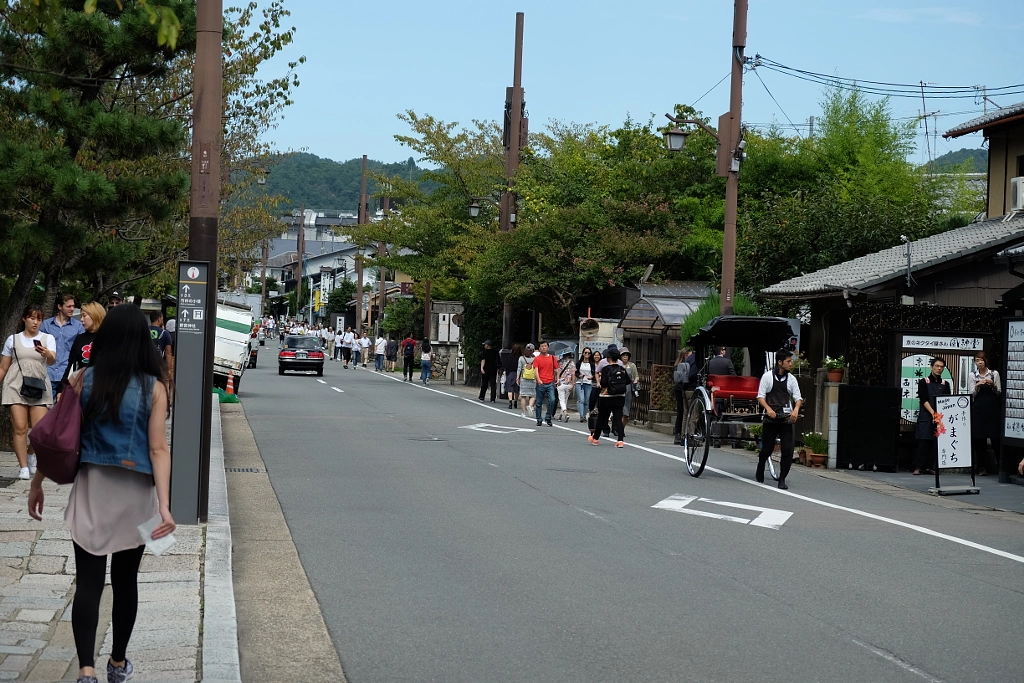
You’ll arrive at this street that leads to various attractions. We decided to go take a quick look at some of the temples first. Be ready for lots of walking around here unless you want to get a rickshaw!


DSCF by SophiaHo on 500px.com

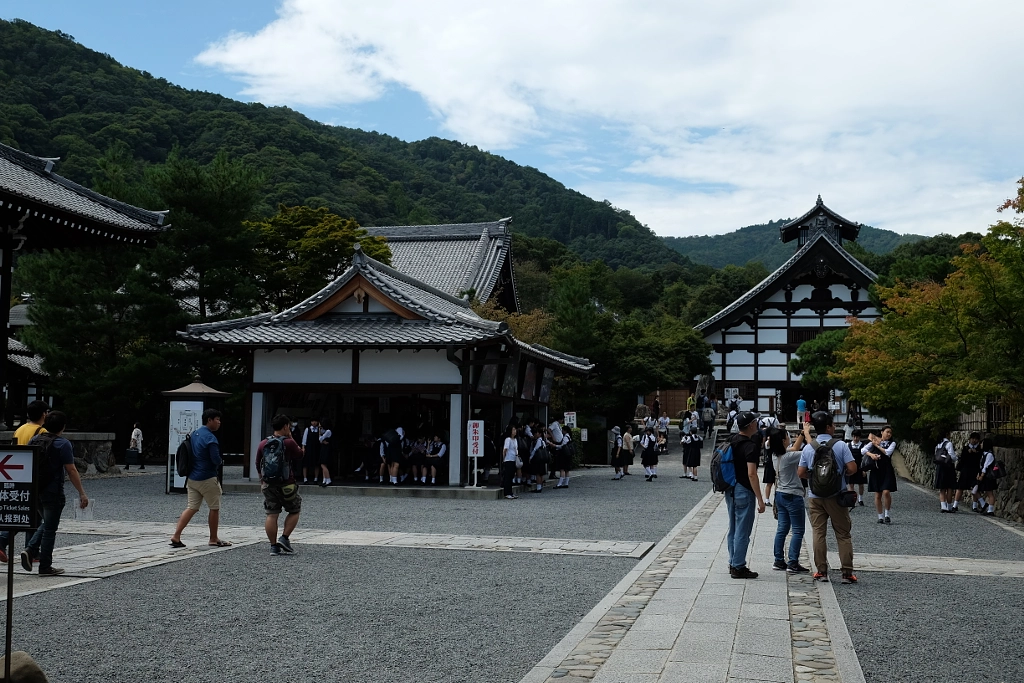
We arrived at Tenryuji Temple (天龍寺) which is one of the most famous temples in Arashiyama. It is also registered as a UNESCO world heritage site. Admission is 500 yen but since we are not very into temples, we decided to skip this and just took some pictures outside. Around this area, there are also many unique traditional buildings to take pictures of.


DSCF by SophiaHo on 500px.com

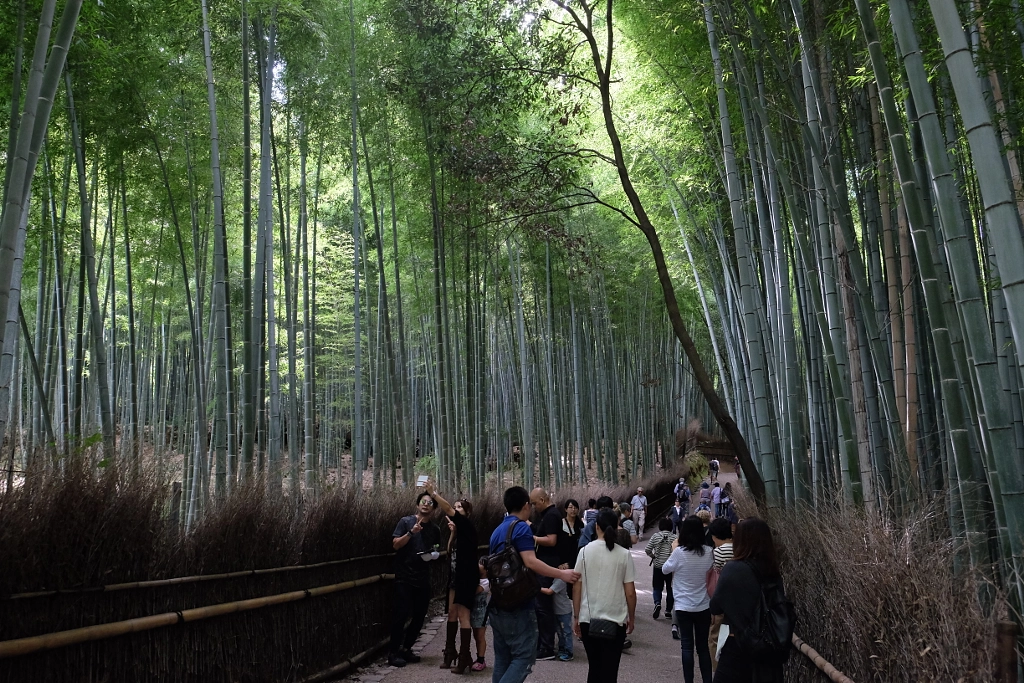
Around a 15 minute walk away is the famous Bamboo Grove. The walkway is paved so it makes it very easy to walk but the walk will still take you around 30 minutes one way to the very end if you stop and take pictures. I would allocate a whole hour for this so you can really soak it in. You can also choose to rent a bike instead but there are quite a lot of tourists walking, so it’s pretty difficult to bike the whole time here. Beautiful spot to get some pictures here!


DSCF by SophiaHo on 500px.com

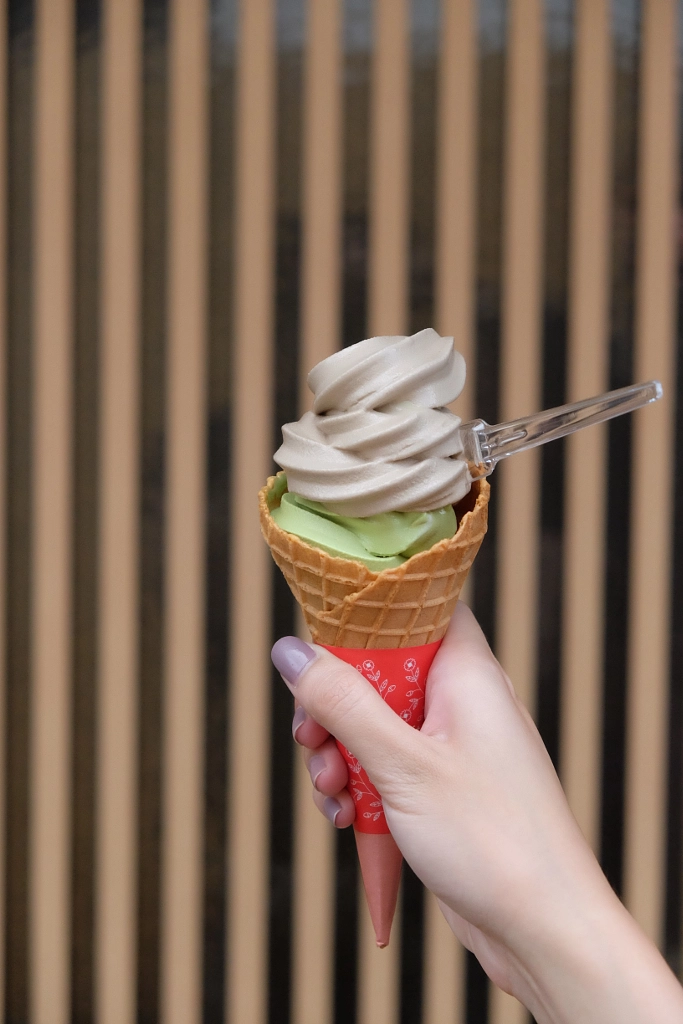
At the entrance of the bamboo grove, there are various food stands selling quick snacks. Starving after the walk in the bamboo grove, we got a Hojicha (roasted tea) and Matcha Soft Serve. So good!


DSCF by SophiaHo on 500px.com

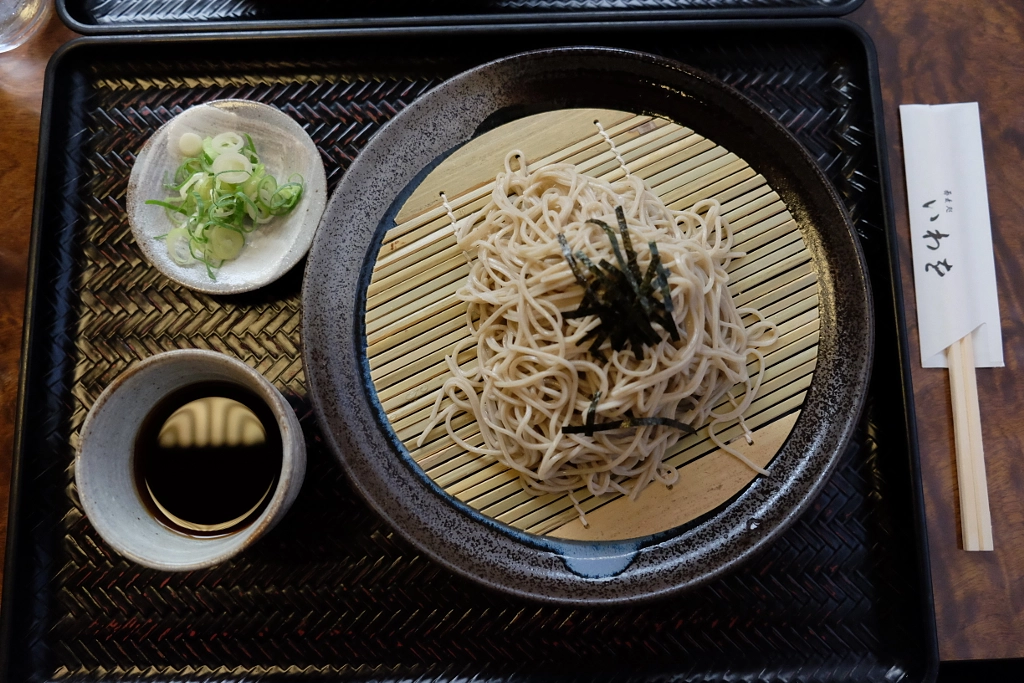
We then walked back towards the tourist shops and decided on a cute little soba store for lunch. I don’t know what the name of the store is as there was no English, but they seemed to focus on soba noodles. So simple but satisfying. Plus, this shop was more affordable as many of the restaurants in this area can be quite expensive.


DSCF by SophiaHo on 500px.com

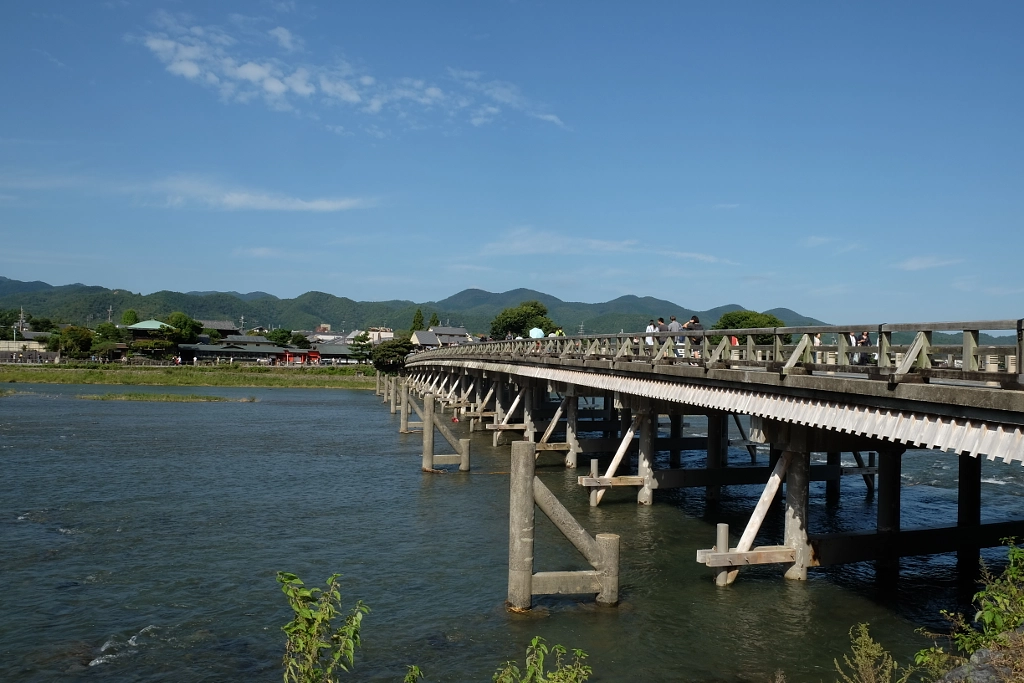
One of the most iconic spots in Arashiyama is the Togetsukyo Bridge. A beauitful bridge which water beneath and greenery and blue skies in the background. During cherry blossom season and the autumn is probably the best time to visit this area, but regardless, it’s still a nice getaway from the busy cities.


DSCF by ukijojo on 500px.com

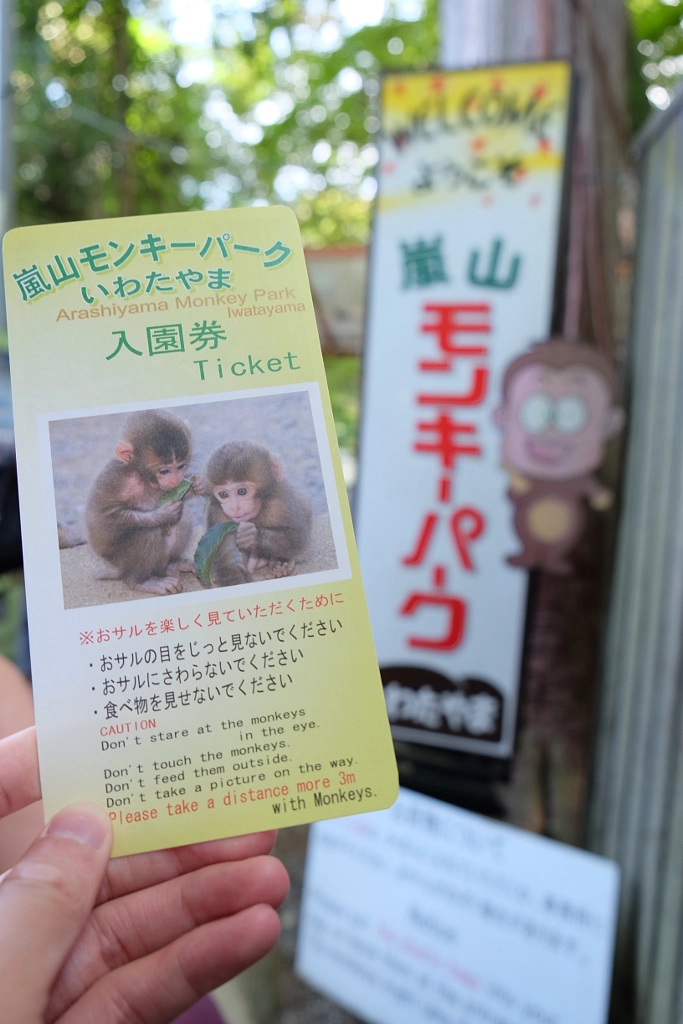
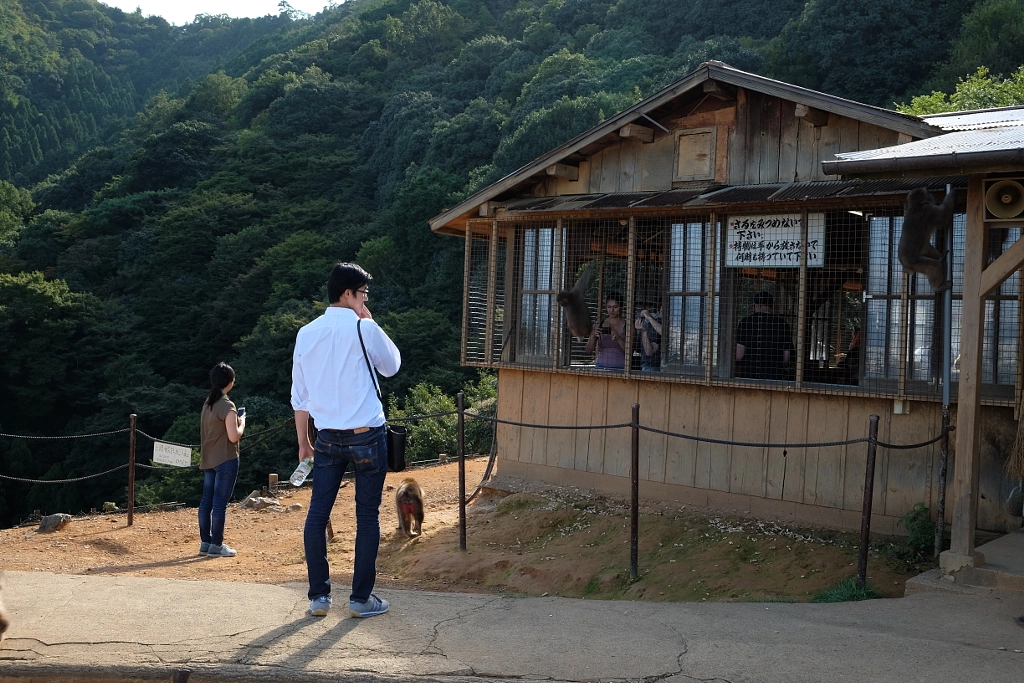
After crossing the bridge, we arrived to the entrance of Monkey Park Iwatayama. It costs 550 yen, but I thought it was well worth it if you haven’t seen monkeys run in the wild. Plus, you get a scenic view at the top of the mountain.


DSCF by ukijojo on 500px.com

They tell you it’s a short hike up, but be warned that the hike is quite steep! Especially in the heat, you will want to make sure you have a bottle of water. I think it took us roughly 30 minutes to get up although we made pit spots to catch our breath in the hot weather. When you get near the top, you will start to see some monkeys swinging across trees!


DSCF by ukijojo on 500px.com

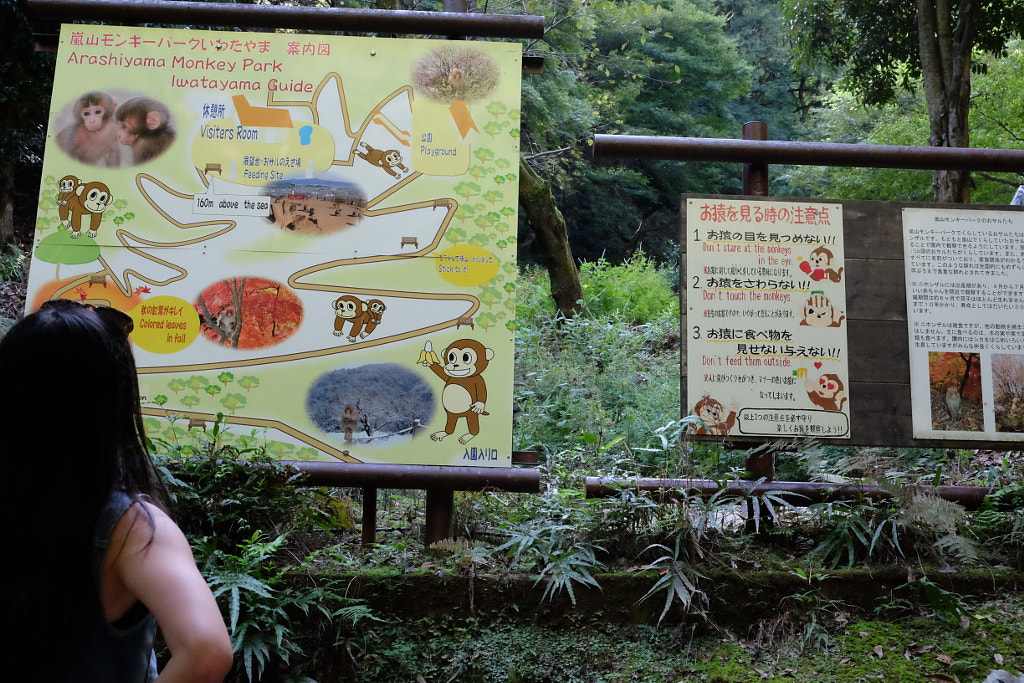
Finally, we are up top! This open area allows the monkeys to roam free. You are warned that you should not stare directly at the monkeys’ eyes or get too close to them. They seem to be quite accustomed to the tourists, but you should still be careful here!


DSCF by ukijojo on 500px.com

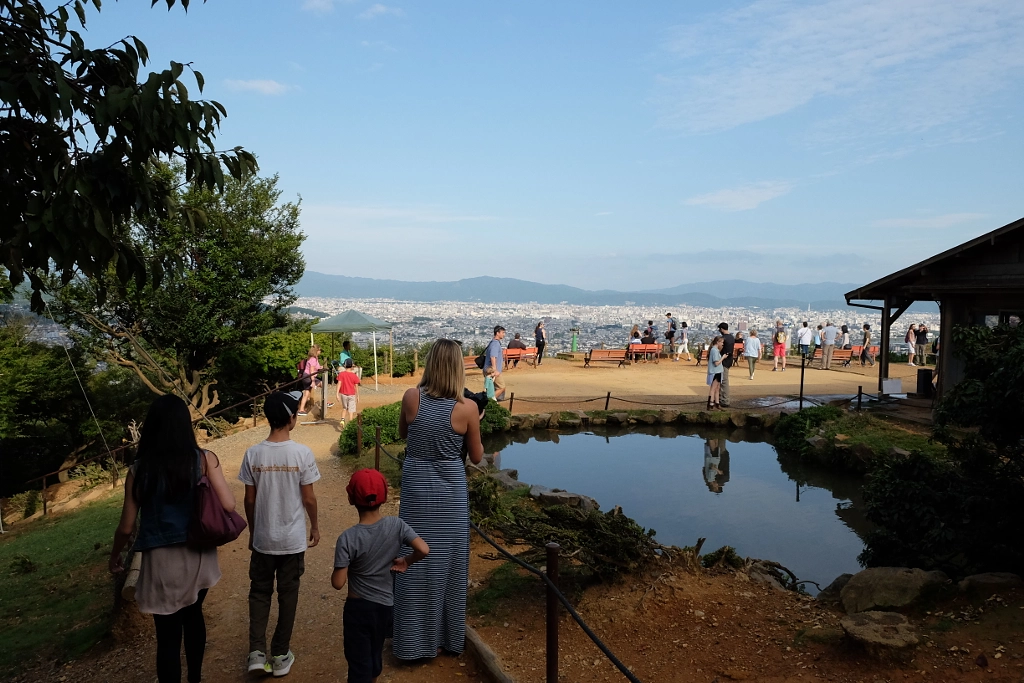
If you are not completely sold on seeing monkeys, then the view of Kyoto city is definitely a reason to come up here. A relatively short walk and you can see pretty much all of Kyoto from here.


DSCF by ukijojo on 500px.com

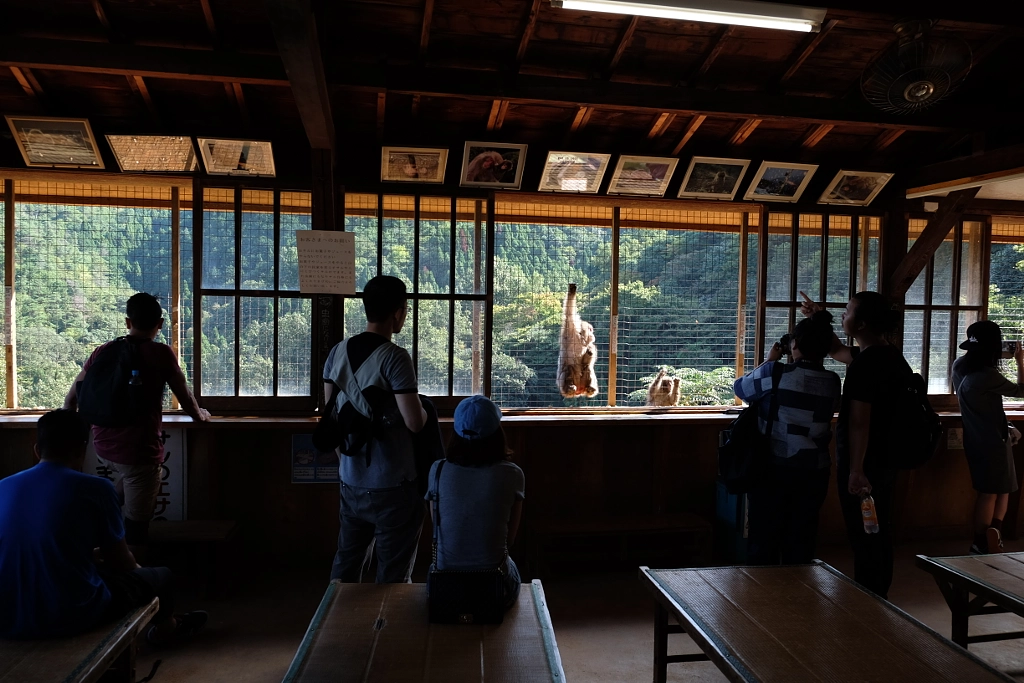
At the top, there is also a shelter area where the monkeys are not allowed in.


DSCF by ukijojo on 500px.com

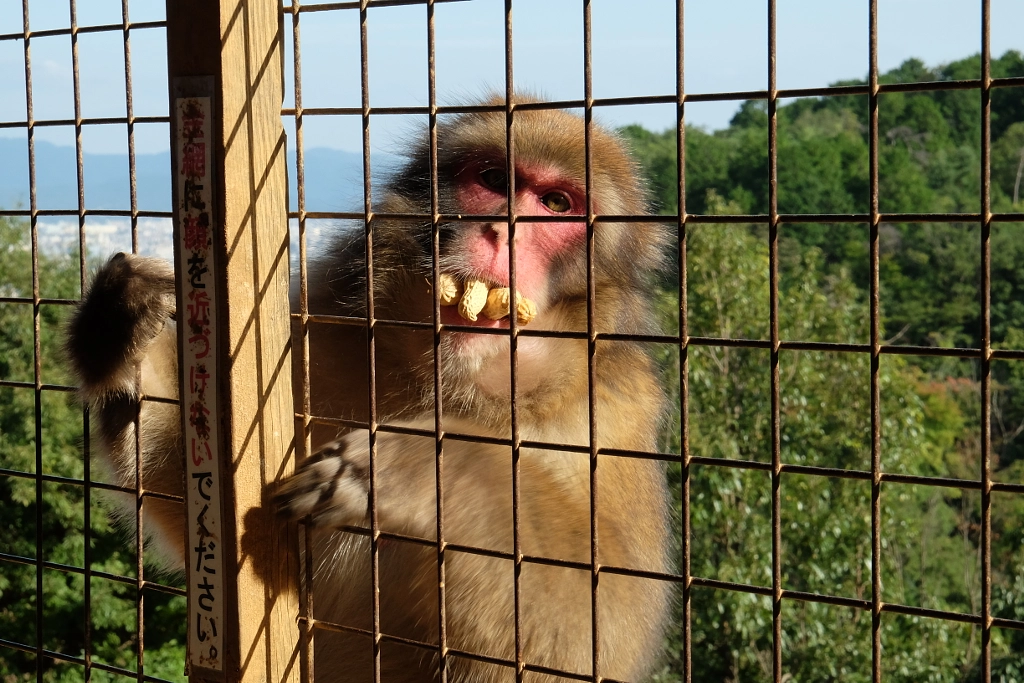
Here, you can buy food for 100 yen to feed these monkeys safely. They will climb on the fence and you can put the food on the palm of your hand so they reach in to take it.


DSCF by ukijojo on 500px.com

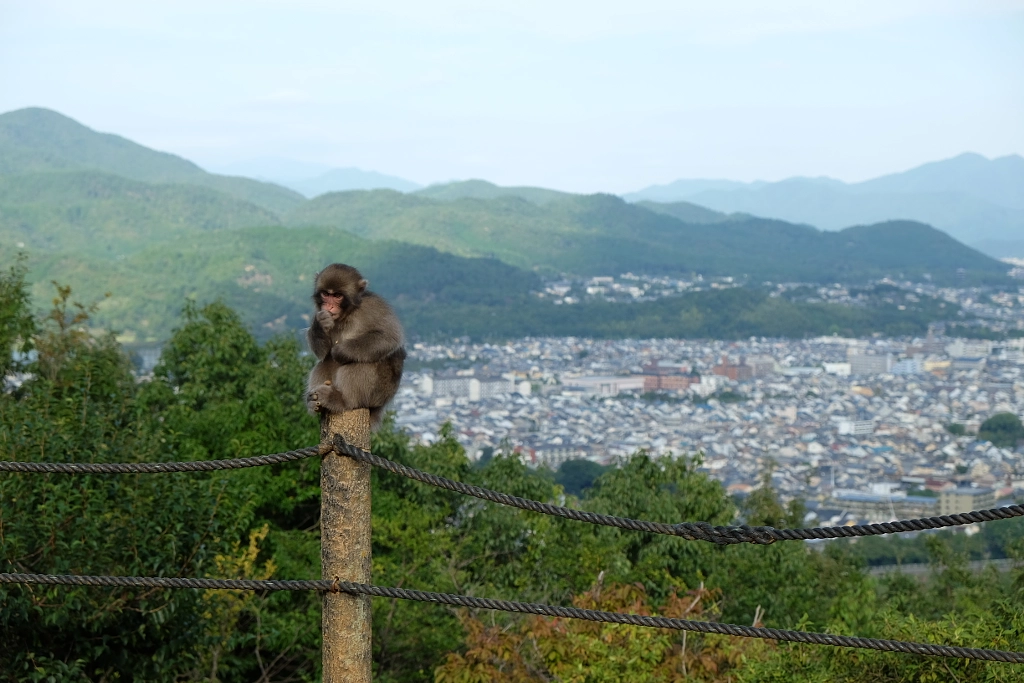
The monkeys here are called snow monkeys and they are pretty funny looking with red faces and bottoms. Look at this greedy one! He took all my peanuts and stuffed it in his mouth so he could collect and save them for later. Tricky monkeys!


DSCF by info9813 on 500px.com

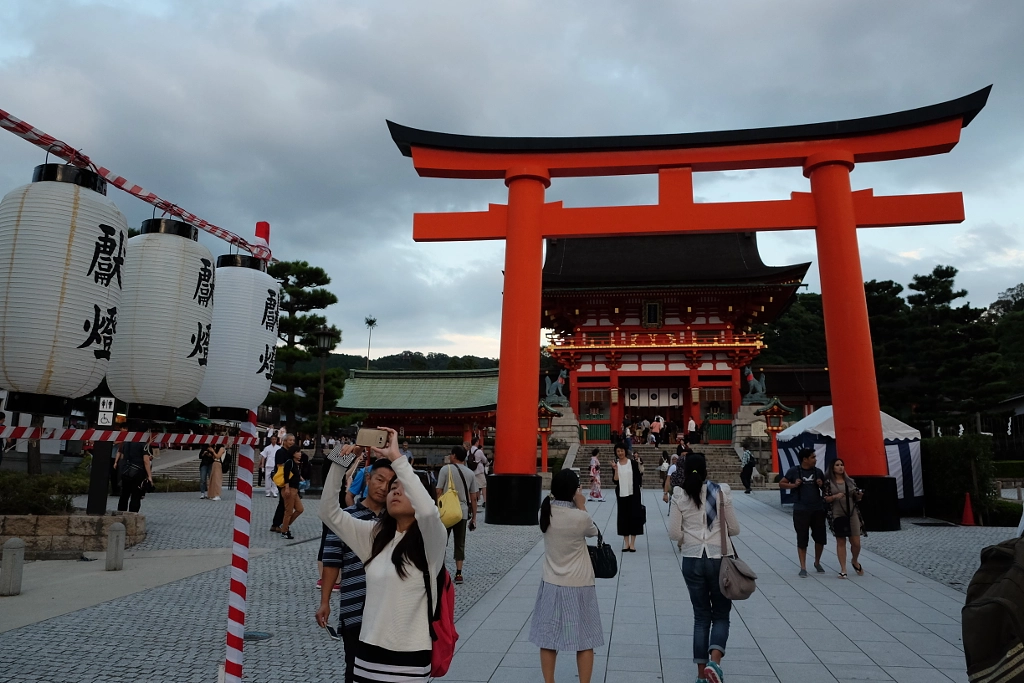
After most of the day at Arashiyama, we decided to hit up one more spot in Kyoto. The famous Fushimi Inari-Taisha Shrine (伏見稲荷大社). The shrine is located at Inari Station and you can take the JR Nara Line once you get back to the Kyoto Station. It takes only around 5 minutes from Kyoto Station to Inari Station. Upon arriving, you will be greeted by the huge torii gate. Entrance to this attraction is free.


DSCF by info9813 on 500px.com

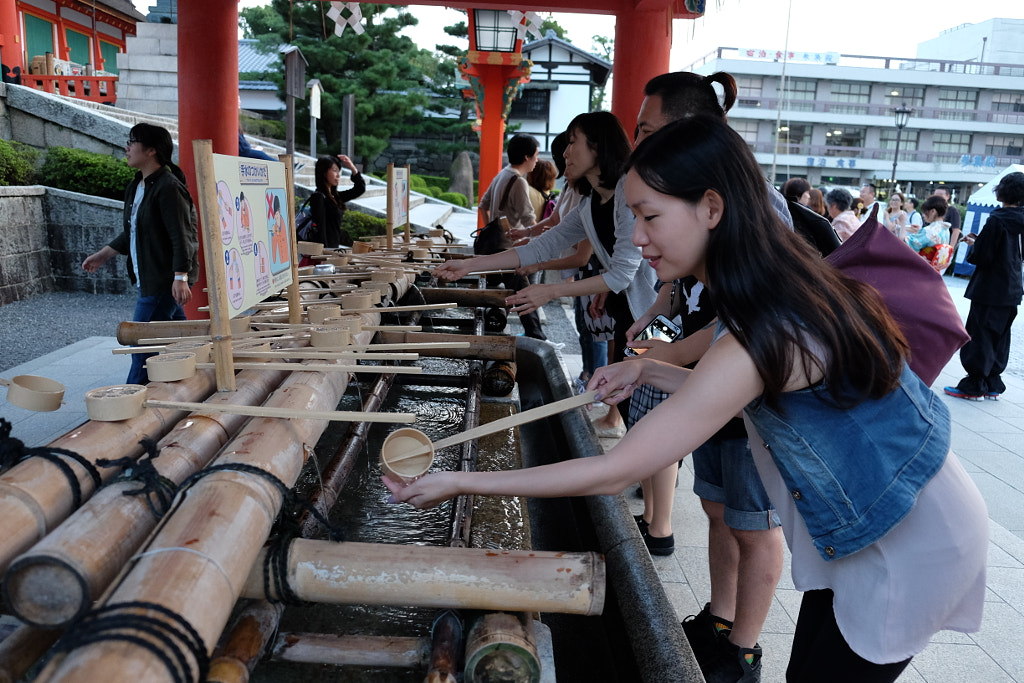
You will then find many traditional activities around the front such as this wash basin. Follow the instructions on the board and wash your hands following the steps, and apparently it will give you good luck! Why not?


DSCF by info9813 on 500px.com

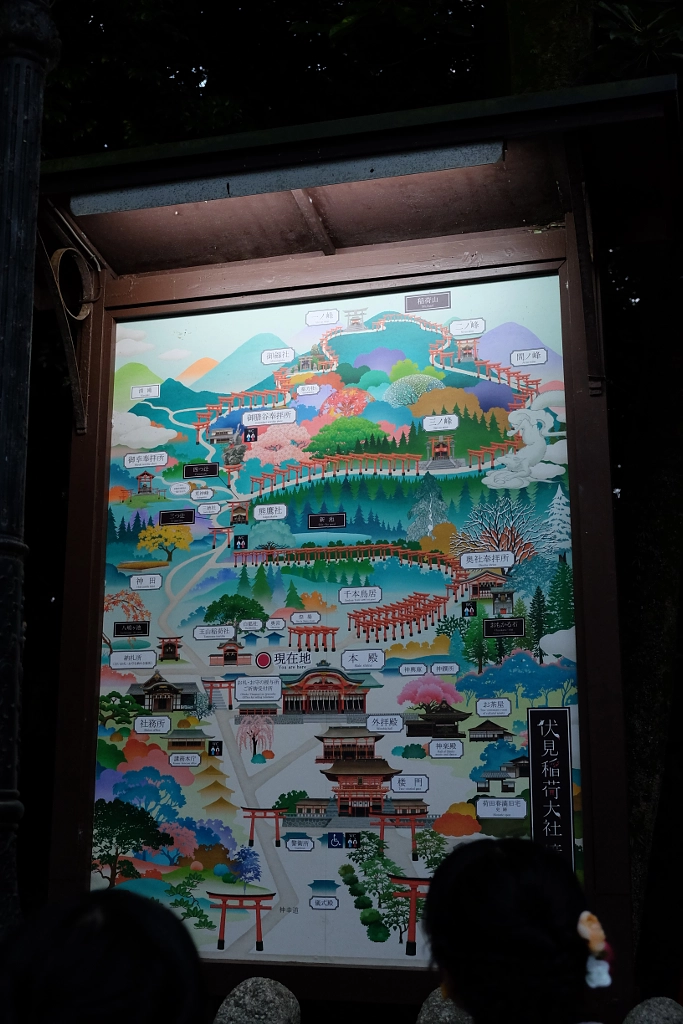
Here is the map of the shrine. This shrine is probably one of the most interesting ones because it is known for having thousands of torii gates along the path. It is really a hike in itself if you want to reach the very end because it will probably take you 2-3 hours round trip. You will end up at the top of Mount Inari which stands 233 meters high. Most tourists will not do the whole hike and neither did we as it was getting dark.


DSCF by info9813 on 500px.com

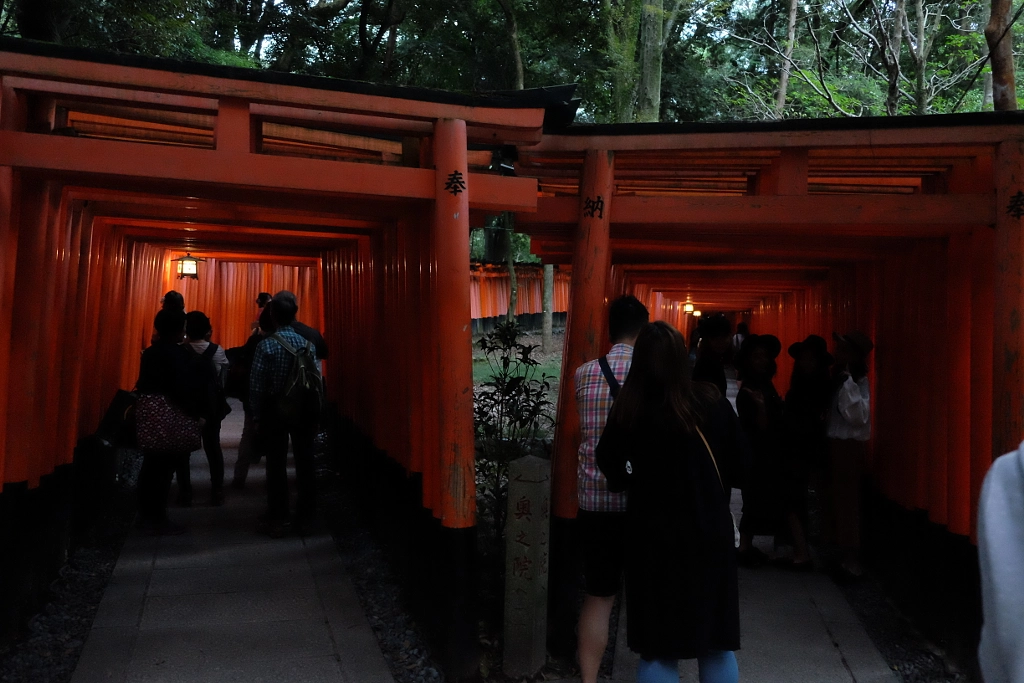
As you can see, the trail is nicely paved and you will find rows upon rows of torii gates lined up. Each torii gate is donated by an individual or company and you will find their name and date of donation inscribed on the back of each gate. You will definitely find some photo worthy spots here, but I would suggest coming during daylight as we found it more difficult to take pictures in the dark and if you go way further in, there becomes less people, making it a little scary if you happen to get lost. Also many of the souvenir and street food stalls around the area close once it gets closer to the evening. Otherwise, it ensures you can get a picture without anyone in your picture if you come at night.


DSCF by info9813 on 500px.com

As it got dark quite early, we decided to head back to Kyoto Station and grab dinner.


DSCF by info9813 on 500px.com

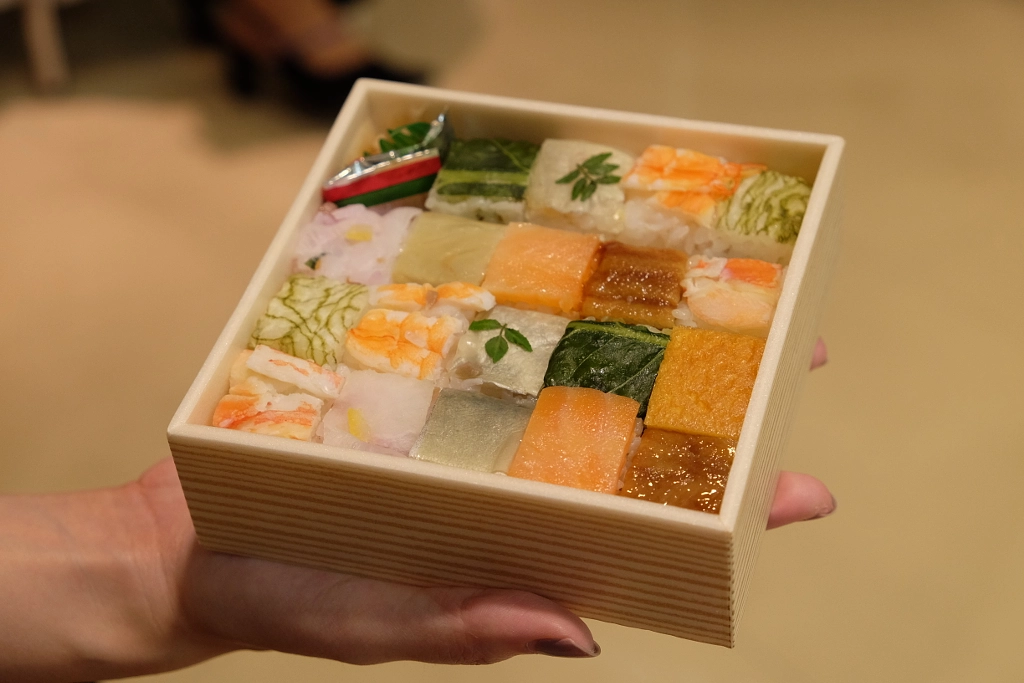
Not really having any plans in mind, we ended up inside Kyoto Daimaru, a department store and headed to the basement because by now, we know that all Japanese department stores have a basement of gourmet goodies! I decided to try this sushi box which is pressed sushi cut into squares. The top is a variety of cured fish and vegetables. It was pretty to look at, but honestly, it didn’t taste that good. Perhaps I like the fresh sashimi so this wasn’t my thing. After dinner, we were tired from a long day so just took the train back to Osaka to rest up.


[Japan Series] Day 10 Cont’d: Okonomiyaki at Mizuno 美津の in Osaka

DSCF by info9813 on 500px.com

After visiting Nara, we headed back to Osaka for the evening. We decided to go to the Dotonbori area again since it is always so lively at night. We walked around the Shinsaibashi shopping street first to check out some boutiques.


DSCF by info9813 on 500px.com

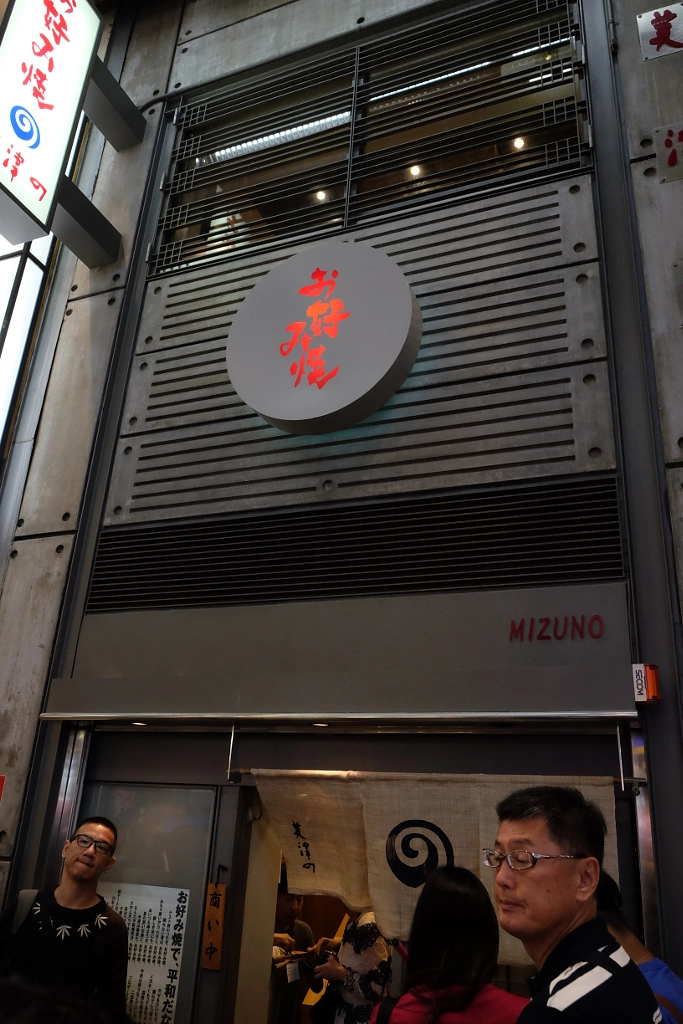
As dinner neared, we headed towards the Dotonbori area and noticed a huge line forming outside this fairly undecorated restaurant called Mizuno. We quickly got in line while Googling what this restaurant was all about. Turns out this restaurant was featured on the 2016 Michelin Guide and is famous for their okonomiyaki. The restaurant has been running for 3 generations and over 60 years.


DSCF by info9813 on 500px.com

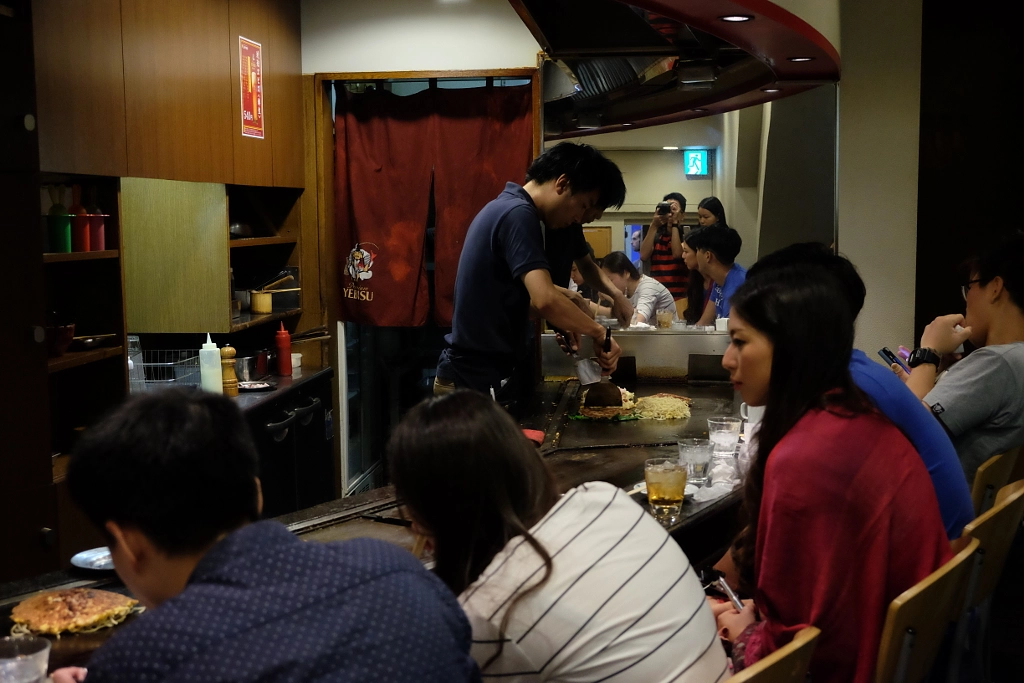
The wait ended up being over an hour long. They give you a menu and take your order while you are waiting so there are no miscommunication issues with the chef. There are only around 8 seats at the bar, but some more seats upstairs. The bar is where you can see the action so luckily we got sat here. They prepare the okonomiyaki right in front of you, so it’s pretty fun.


DSCF by info9813 on 500px.com

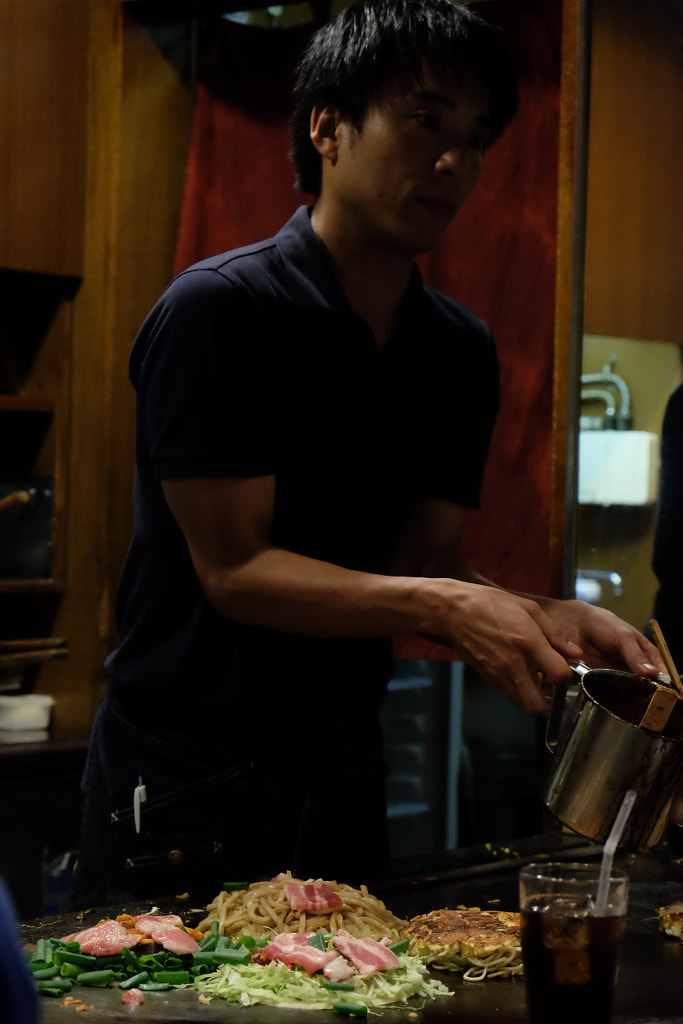
Okonomiyaki is popular in the Kansai region and Hiroshima. On this trip, we end up getting the chance to try both! Osaka-style okonomiyaki is probably what you are more used to if you’ve had it in North America. The batter is made of flour, a grated type of yam, water or dashi, eggs, and shredded cabbage. You can then add ingredients such as octopus, squid, pork belly, shrimp, or vegetables. It’s said that Osaka is where the okonomiyaki originated so it’s a must try here! The difference is that in Osaka, the okonomiyaki is prepared similar to a pancake and the ingredients are all mixed together. This is quite different from Hiroshima style, where the ingredients are layered. As you can see, at Mizuno, you can choose to have soba noodles.

DSCF by info9813 on 500px.com

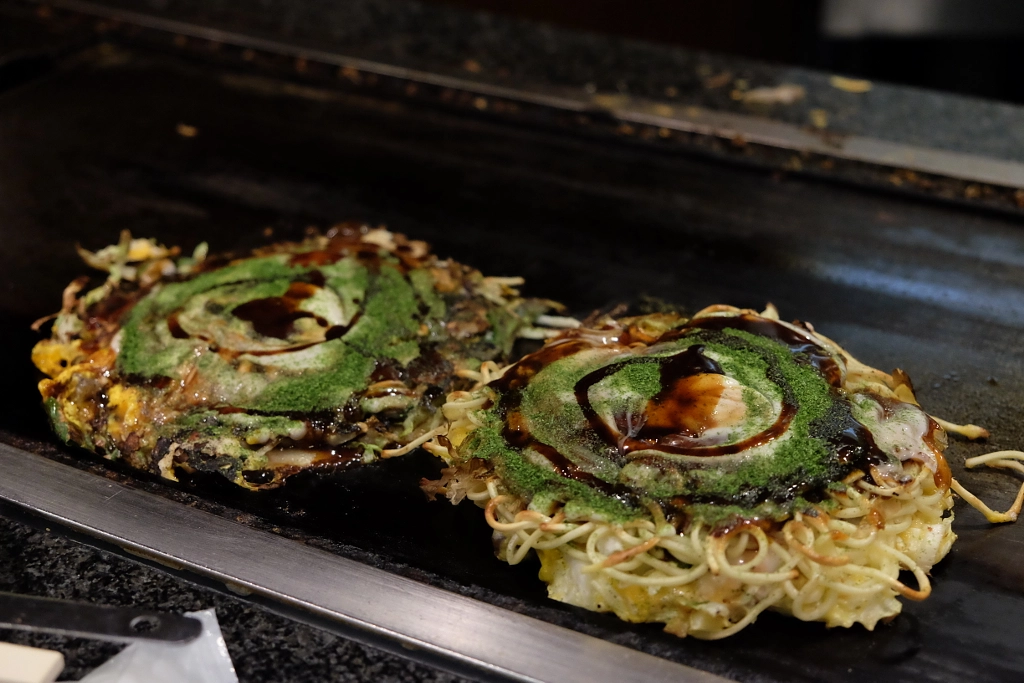
The okonomiyaki is not cheap here with most of them over 1,000 yen each. However, I think the high price is partly for the experience and show you get since you sit right in front of the teppan grill. We ended up getting two to share, which was a good amount since they are mostly carbs. We got one Mizuno-yaki with pork and one Modan-yaki. The Mizuno-yaki is what you would normally find but the flavours were way better. I have to say, this was probably the best okonomiyaki I’ve had. The okonomiyaki are dusted with seaweed powder and topped with mayo and a savoury sweet sauce. The Modan-yaki was also really good because it had crispy noodles. What I liked at the rsetaurant was that they give you a little metal spatula so you can serve yourself from the grill as you eat. The chef was kind to make sure our food did not get overcooked though when we ate too slow.

Overall, I thought the food was really good. Is it worth the 1 hour wait? Probably not if you are only visiting for a short period of time. But if you see the line pretty short, I would probably wait 30 minutes for this.

Mizuno
Address: 1-4-15 Dotombori, Chuo-ku, Osaka 542-0071, Osaka Prefecture

[Japan Series] Day 10: Day Trip to Nara 奈良

DSCF by info9813 on 500px.com

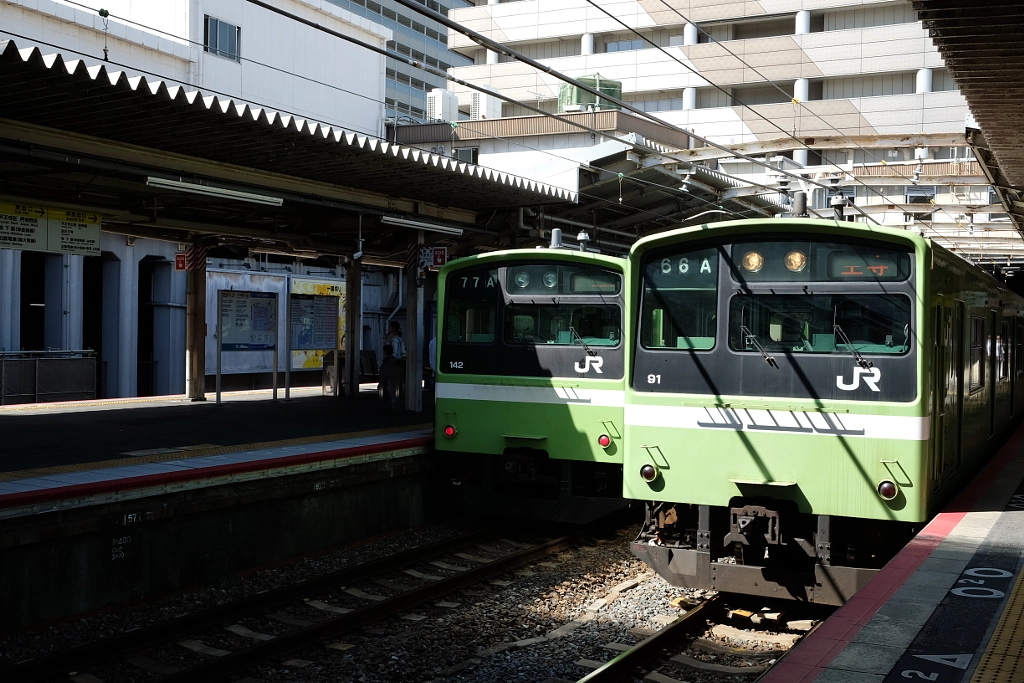
On Day 10, we set off to visit Nara 奈良. As we had the JR pass, we took the Yamatoji train from JR Osaka station to JR Nara station. This took around 45 minutes. If you don’t have the JR pass, then I suggest taking the trains by Kintetsu Railways which only take 30-40 minutes. The train we took was much older than the ones in Tokyo but gave it a rustic charm.

DSCF by info9813 on 500px.com

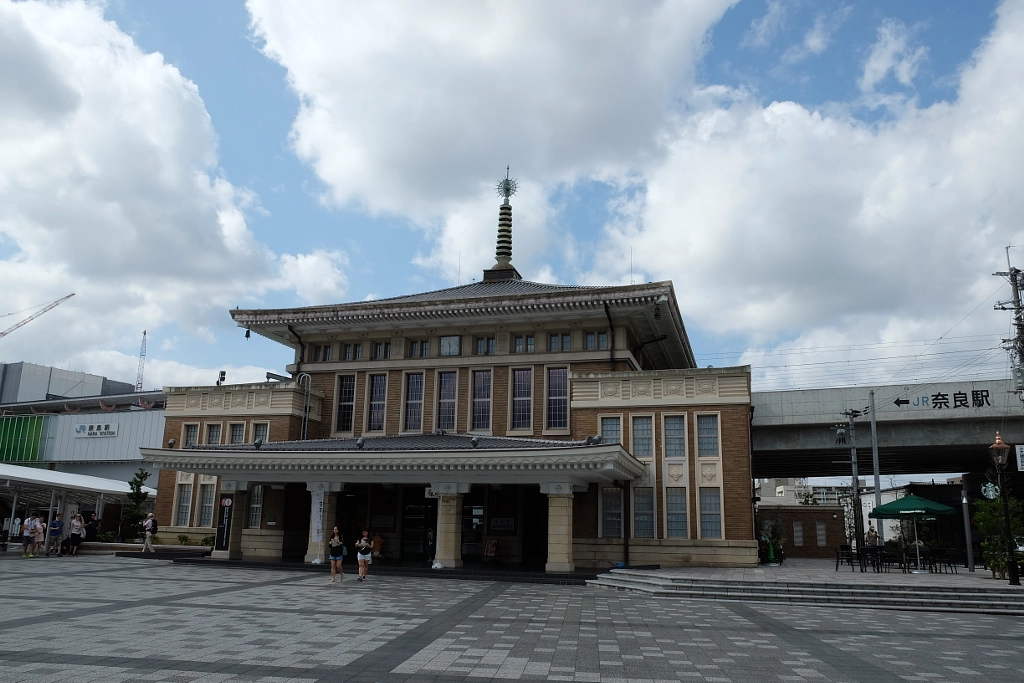
A quick ride and we arrived at Nara station. You’ll be greeted by a tourist center where you can get a map of the majority of Nara. I suggest grabbing one so you can make your way around easily.


DSCF by info9813 on 500px.com

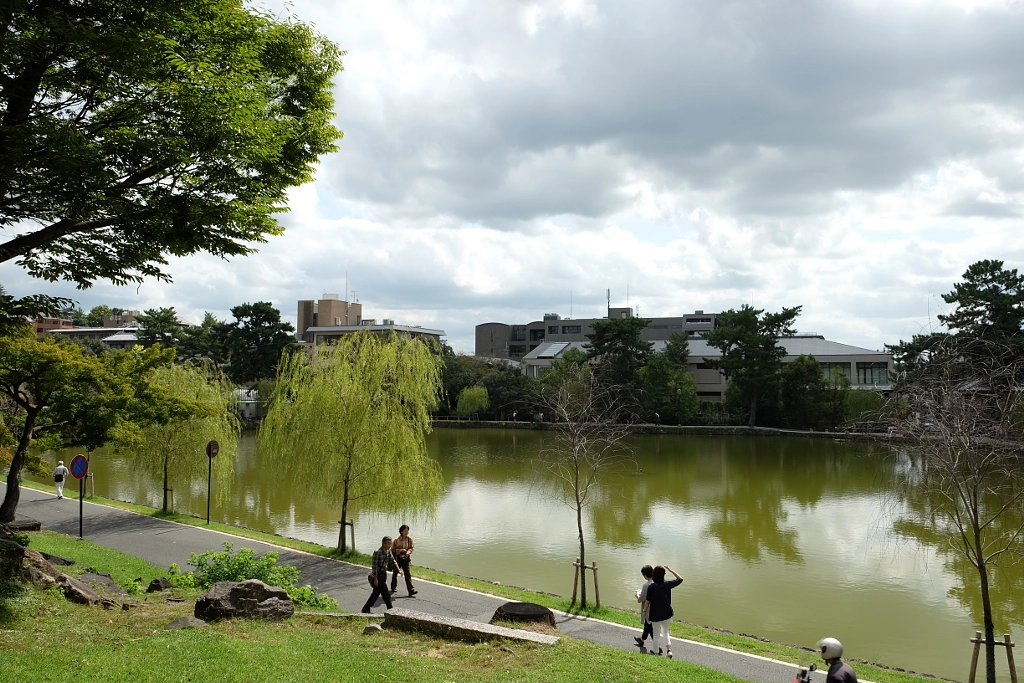
The walk to Nara Park itself takes around 15 to 20 minutes, so be prepared to walk a lot. You will pass by many shops and a beautiful lake along the way. The greenery almost makes this picture look fake!


DSCF by info9813 on 500px.com

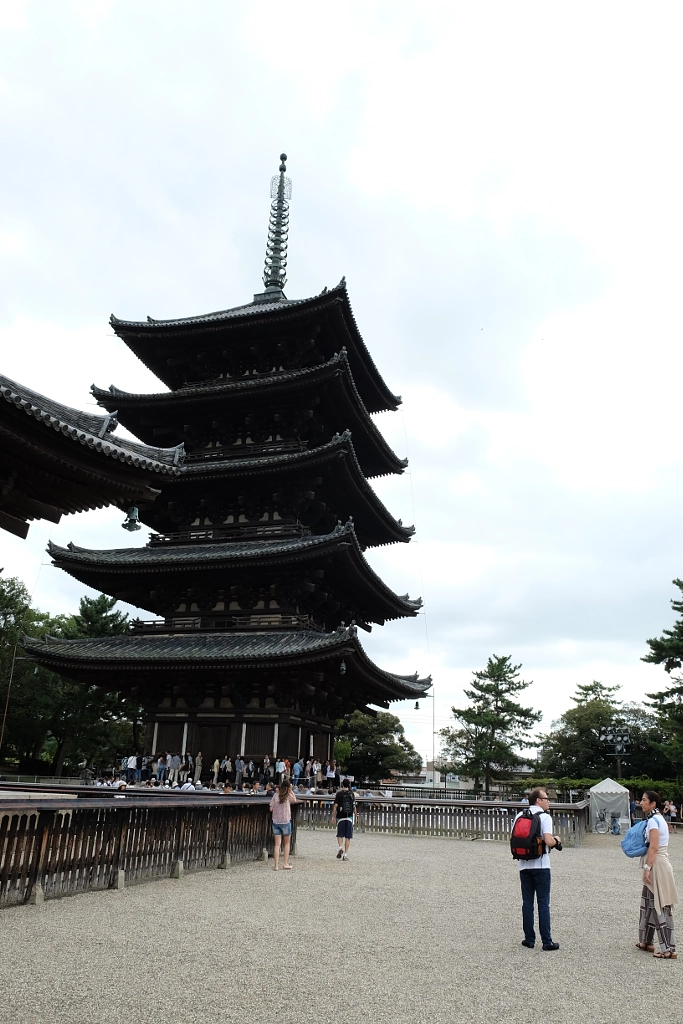
Along the way, you will also find some temples. Nara was Japan’s first capital city back in the day so has lots of history. We came upon the Kofukuji (興福寺) Temple, which consists of the five story pagoda. I believe you need to pay an entrance fee for these temples, but since we personally aren’t very interested in temples, we skipped this. There are many other temples in Nara if you are interested.


DSCF by info9813 on 500px.com

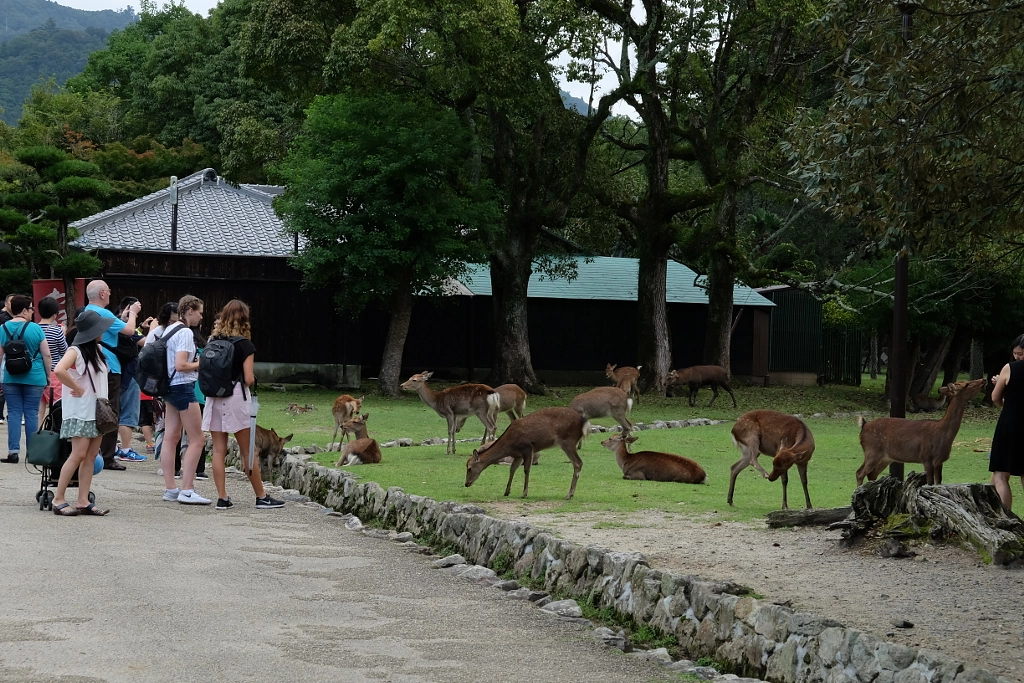
Finally, after a long walk, we arrived at Nara Park (奈良公園)! Nara Park is famous for the hundreds of wild deer that roam freely in the park. In Shinto religion, the deer are considered as messengers of gods so these deer are known as national treasure.


DSCF by info9813 on 500px.com

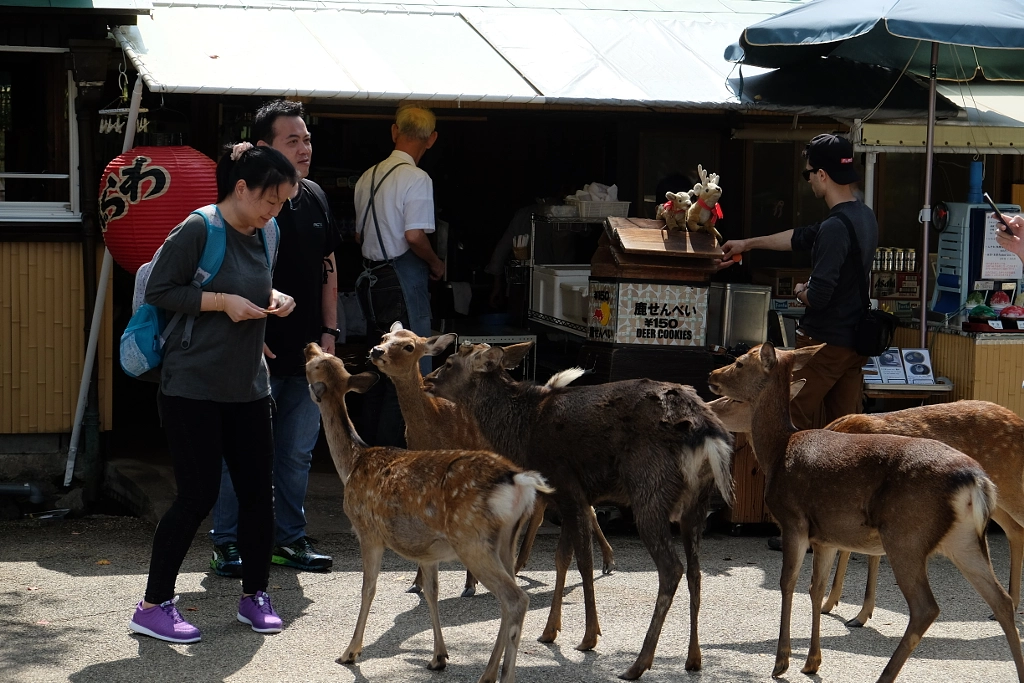
The deer are usually pretty tame, but there are some that can be quite aggressive, especially when they see you have food. You can buy deer crackers for 150 yen at many stalls, but you better hide your stack or they will all flock to you like this woman experienced!


DSCF by info9813 on 500px.com

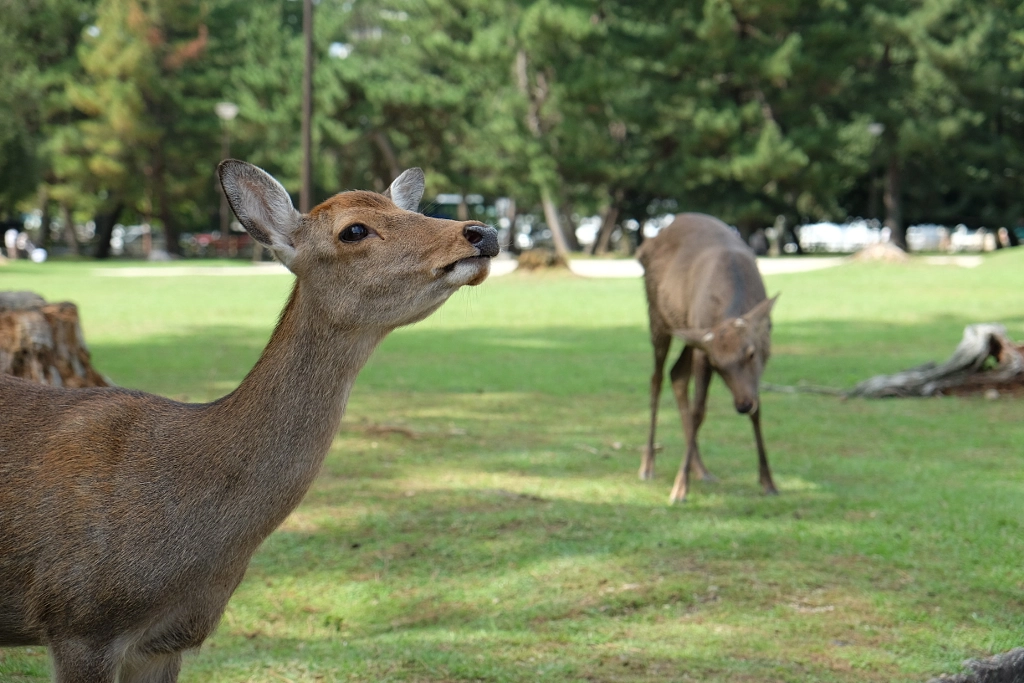
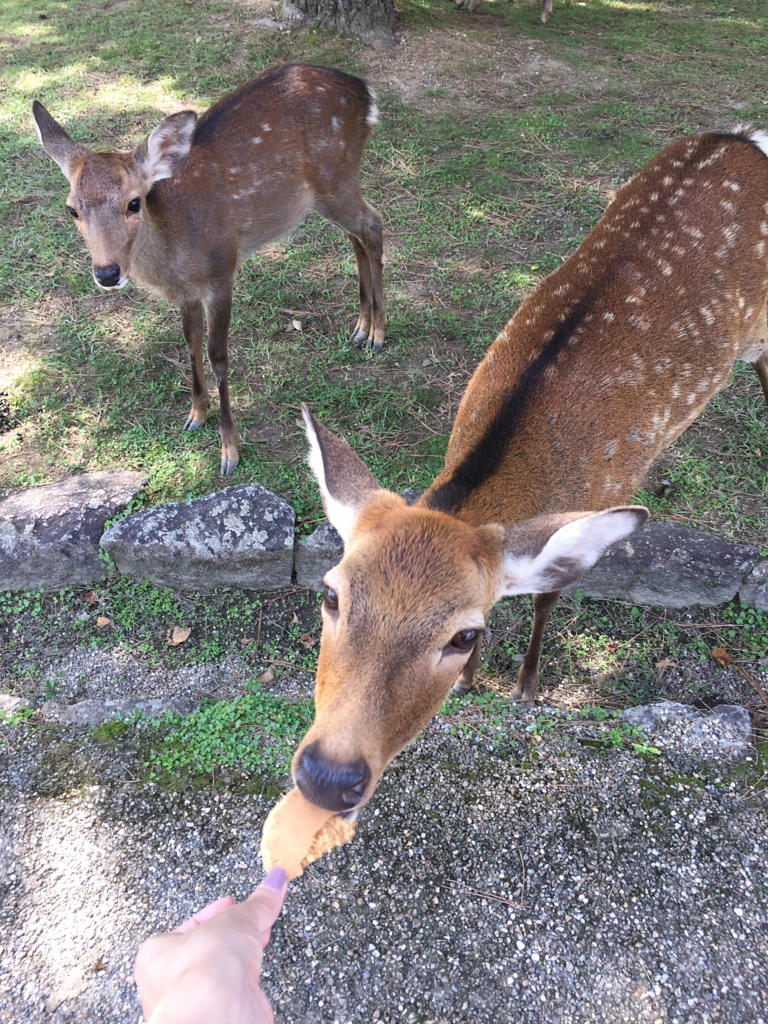
Look how cute they are! There are some baby ones that are very tame. The older deer can be quite aggressive as they probably lack attention by the tourists!


IMG by info9813 on 500px.com

I bought a stack of crackers and had a good time feeding them. A tip is to break the crackers in half so you can extend the chances you get to feed them. Also, if you move the cracker up and down, you can usually get the deer to bow to you before eating which is super amusing to watch!


DSCF by info9813 on 500px.com

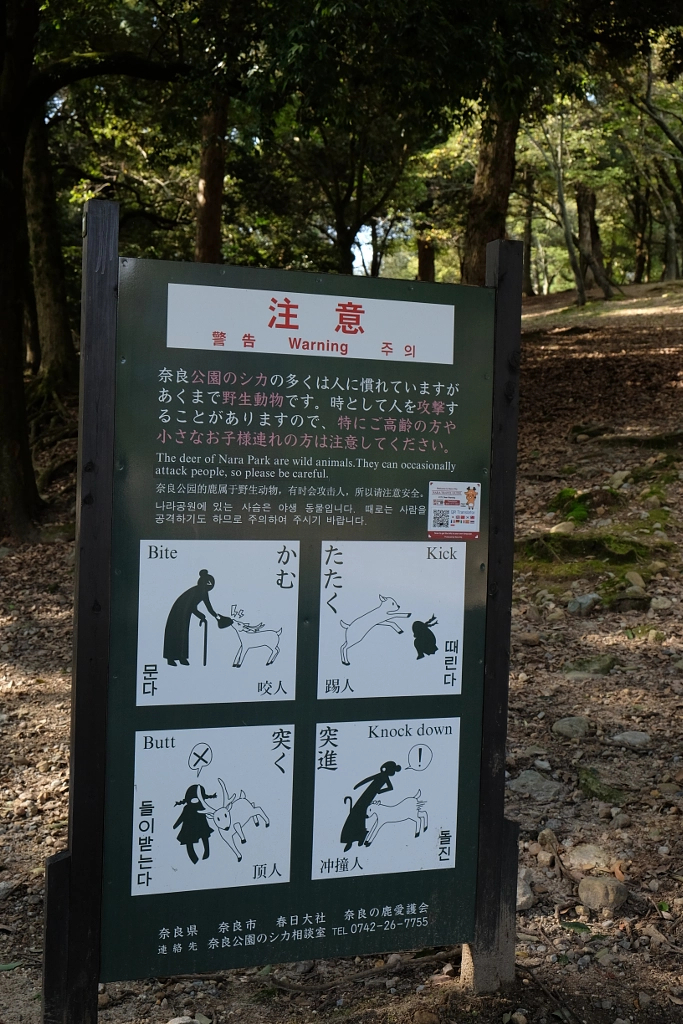
The park warns you that the deer can be dangerous though. I thought this sign was pretty funny, but I guess it can be true. I got deer head butting me from behind which was not expected! If you have kids, I would make sure they are supervised, as the bigger deer can be less tame.


DSCF by info9813 on 500px.com

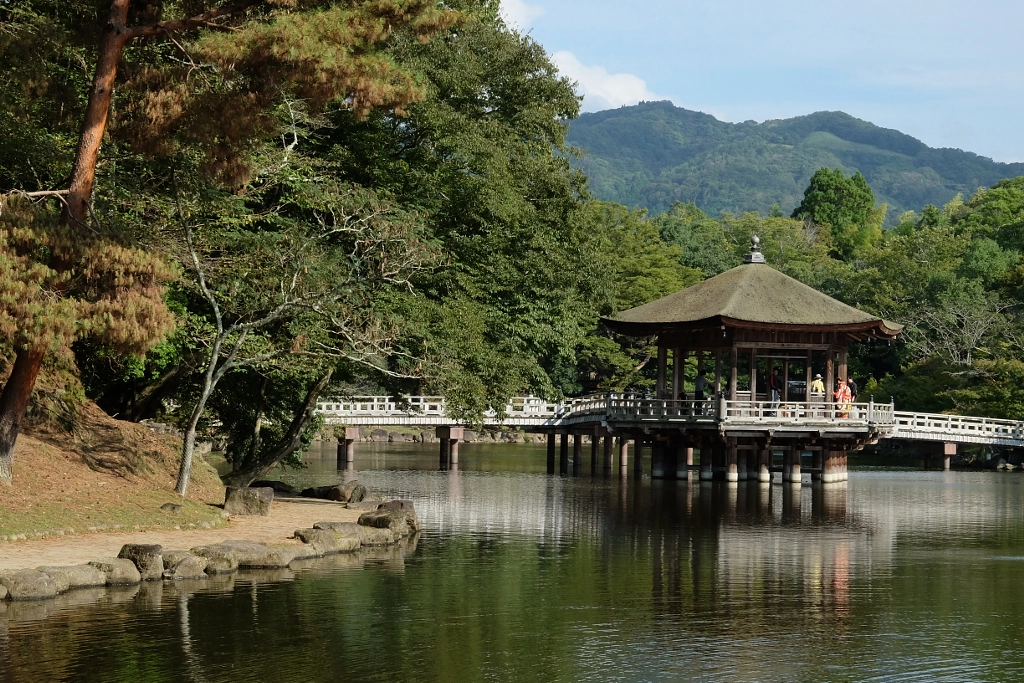
If you venture east of the park, you will find the Ukimido Gazebo. It is known as the floating gazebo and we found it to be a serene area to take pictures, especially with the reflections on the water. This area was much more quiet as most tourists only went to see the deer.


IMG by info9813 on 500px.com

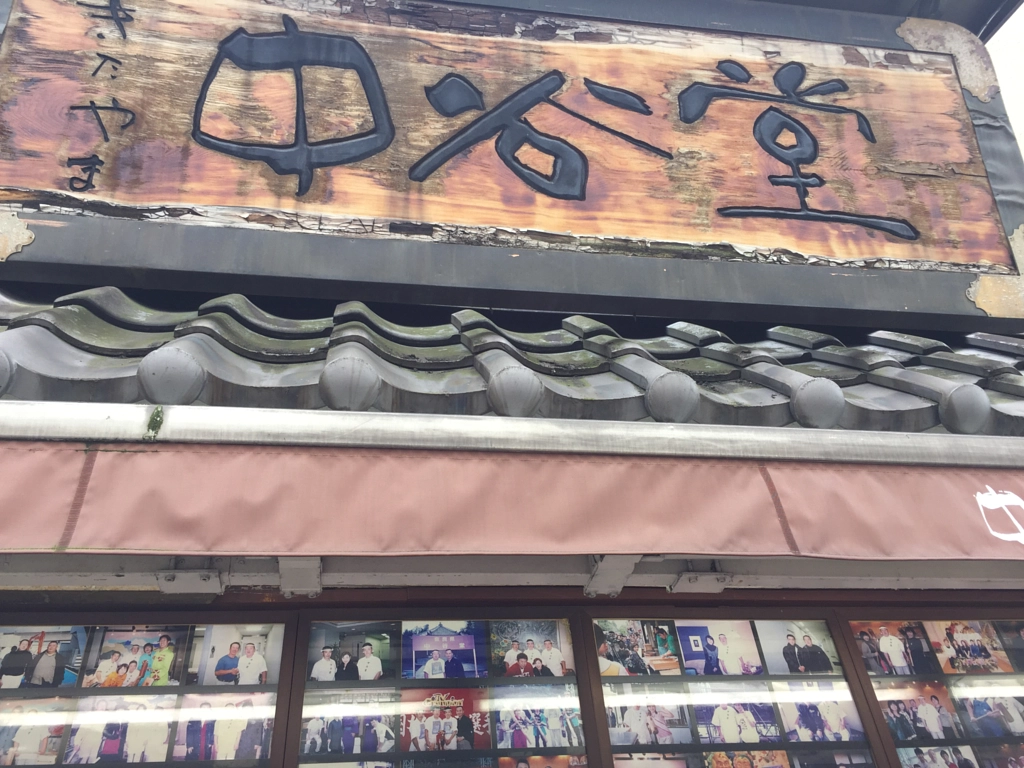
The trip to Nara can be done in half a day if your main target is to see the deers. We were able to finish the park in less than 3 hours (although keep in mind we spent a very long time taking pictures with the deers). As lunch approached, we decided to walk back towards the station to see if there was food along the way. One spot that is super popular is Nakatanidou (中谷堂).


IMG by info9813 on 500px.com

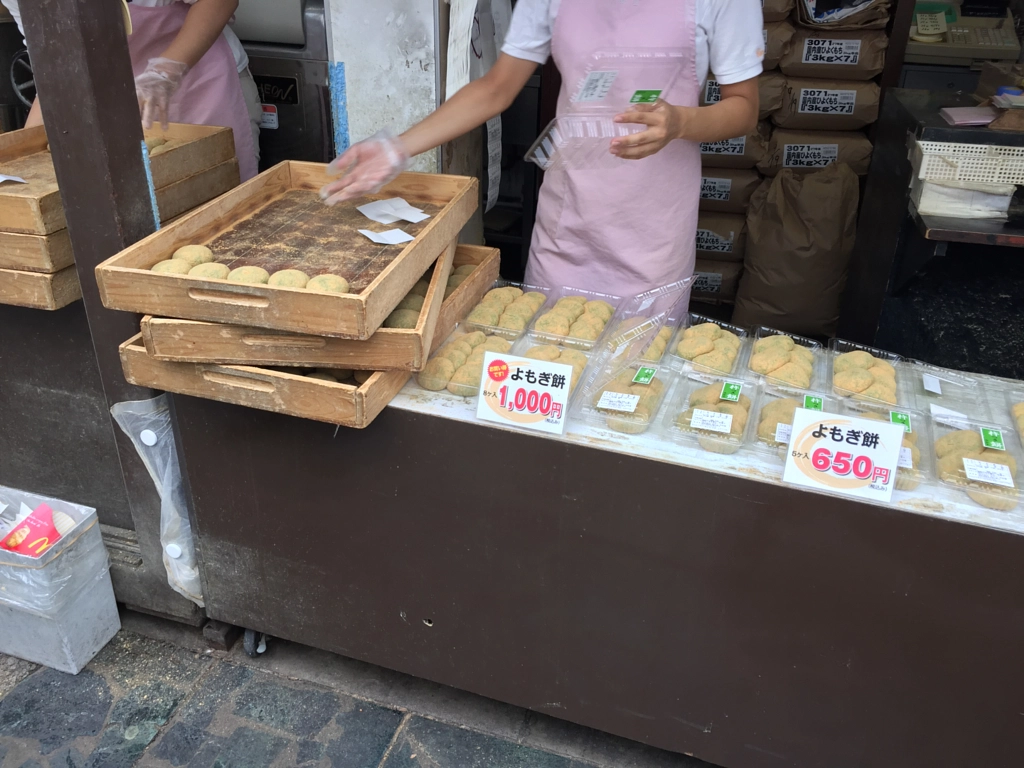
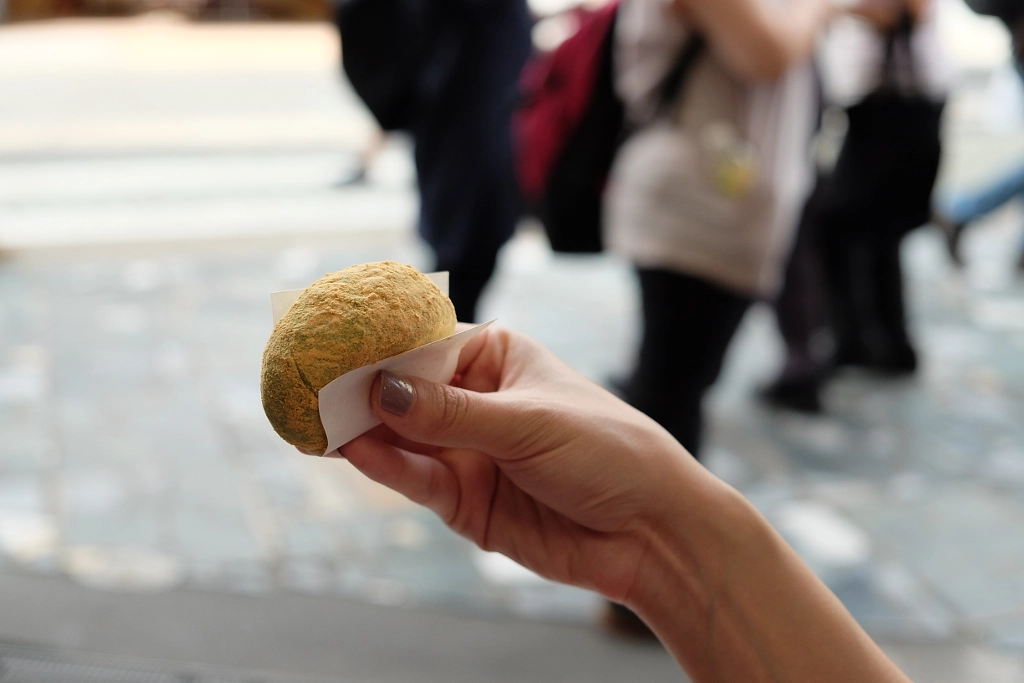
Nakatanidou is famous for mochi (Japanese rice cakes)! They specialize in yomogi mochi which is made with mugwort, a Japanese wild plant, which gives the mochi the natural green colour. The mochi are filled with red bean paste and dusted with roasted soybean powder. What is most exciting about this stall is that the workers will “perform” the pounding of the mochi every half an hour or when there are crowds of tourists. The workers use these pestles and rapidly pound the mochi while another worker stretches and flips the dough. Seriously, they do it so fast that your heart skips a beat because they are that close to pounding the worker’s hands! I forgot to get a picture of this, but be sure to give this a Google and you’ll be impressed!


DSCF by info9813 on 500px.com

One piece goes for 150 yen, whereas you can get a pack for a cheaper price. This was seriously the softest mochi I’ve ever had. I highly recommend trying this!


IMG by info9813 on 500px.com

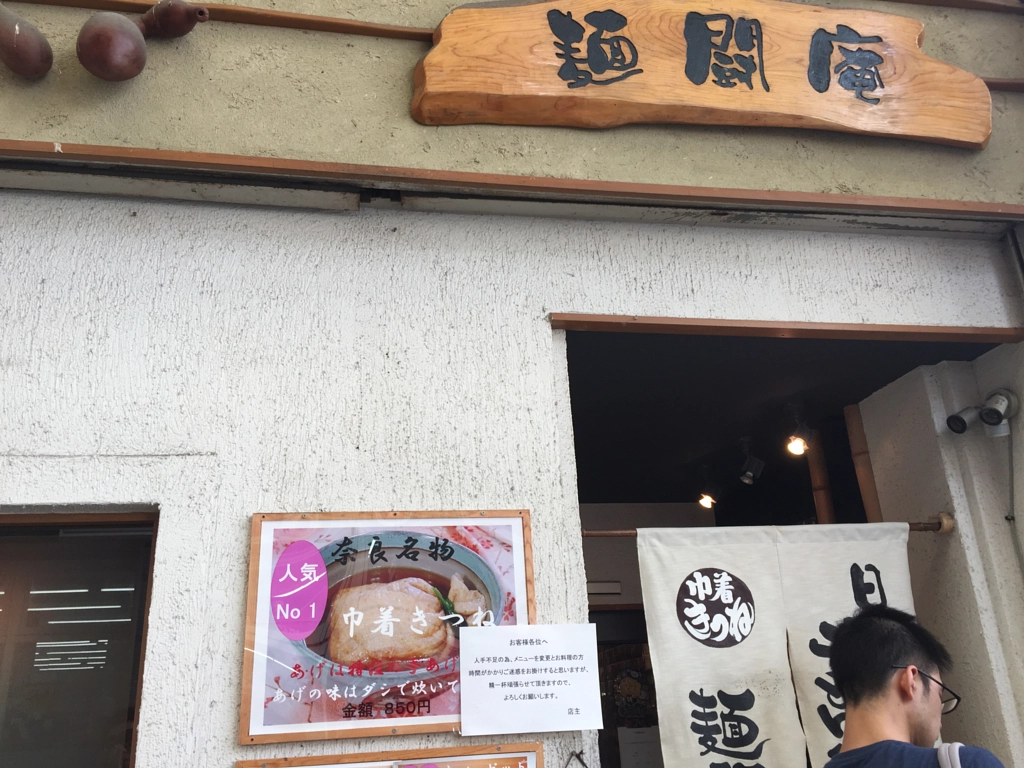
Tucked the corner street near the mochi shop is Mentouan. We noticed a small line forming so quickly got in as well. Turns out, they are famous for udon in a bean curd pocket.

IMG by info9813 on 500px.com

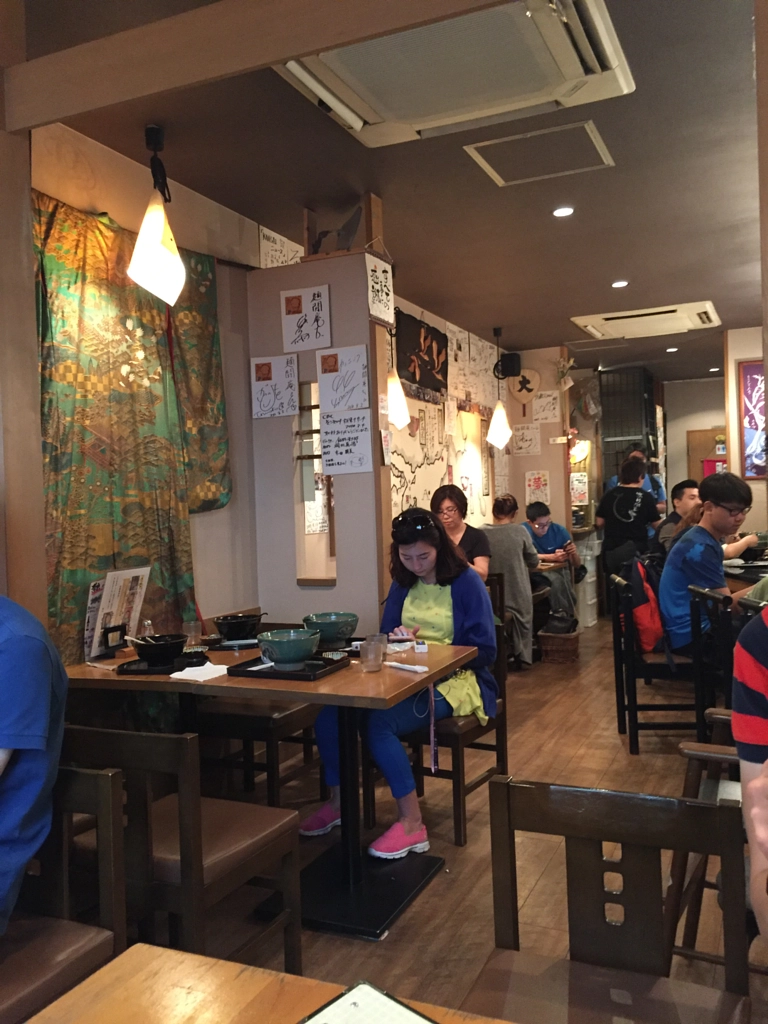
We waited probably close to 30 minutes before getting a seat. The restaurant itself is rather small, fitting perhaps only 25 people or so, but the main problem was that there are only 2 people out in the front. There is a elderly woman who is essentially running the whole dining area, so she has trouble keeping up with cleaning up the dishes.


DSCF by info9813 on 500px.com

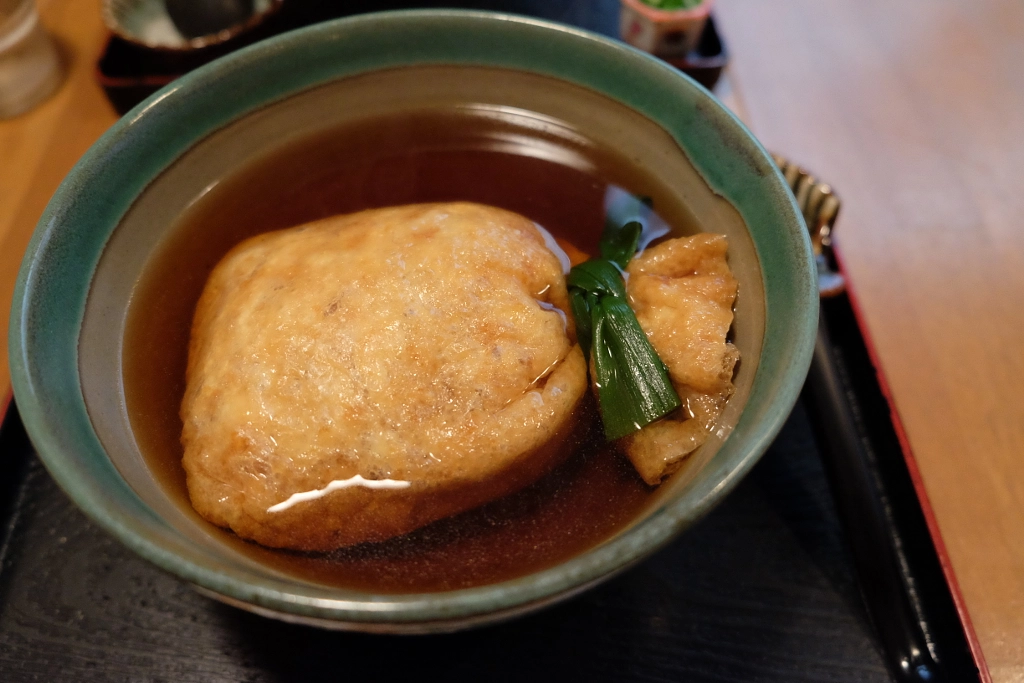
The menu is limited, so S and I both ordered the same dish. We got the No.1 which is udon filled inside a bean curd bag, tied with a seaweed tie and put in a delicious dashi broth.


IMG by info9813 on 500px.com

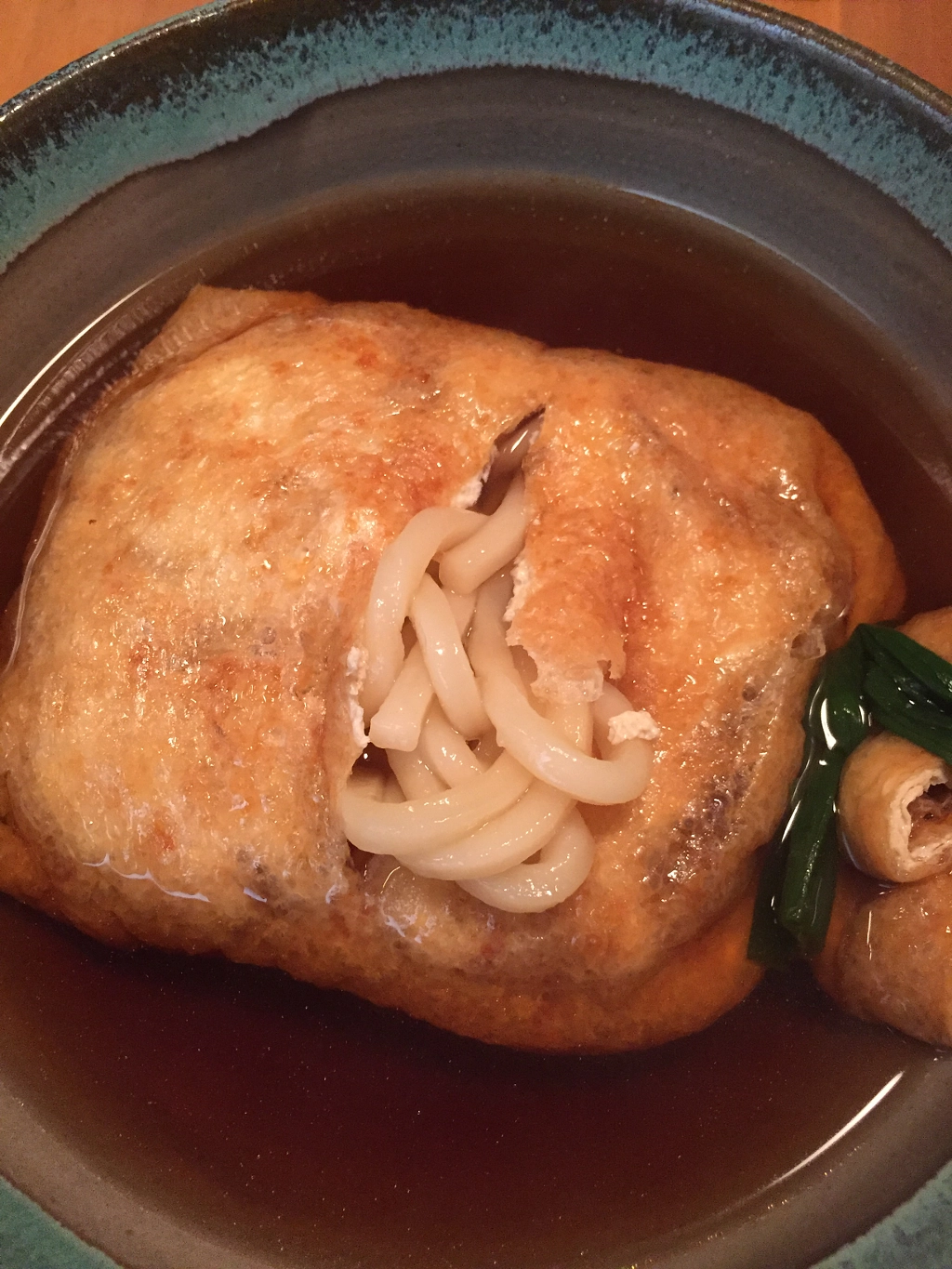
Poke a hole in the bean curd and your udon noodles spill out! Such a fun way to eat this but the udon itself was nice and chewy and the broth was sweet and savoury. I believe a bowl cost just under 900 yen. As there are not that many other restaurants in the area, I highly recommend checking this out!


IMG by info9813 on 500px.com

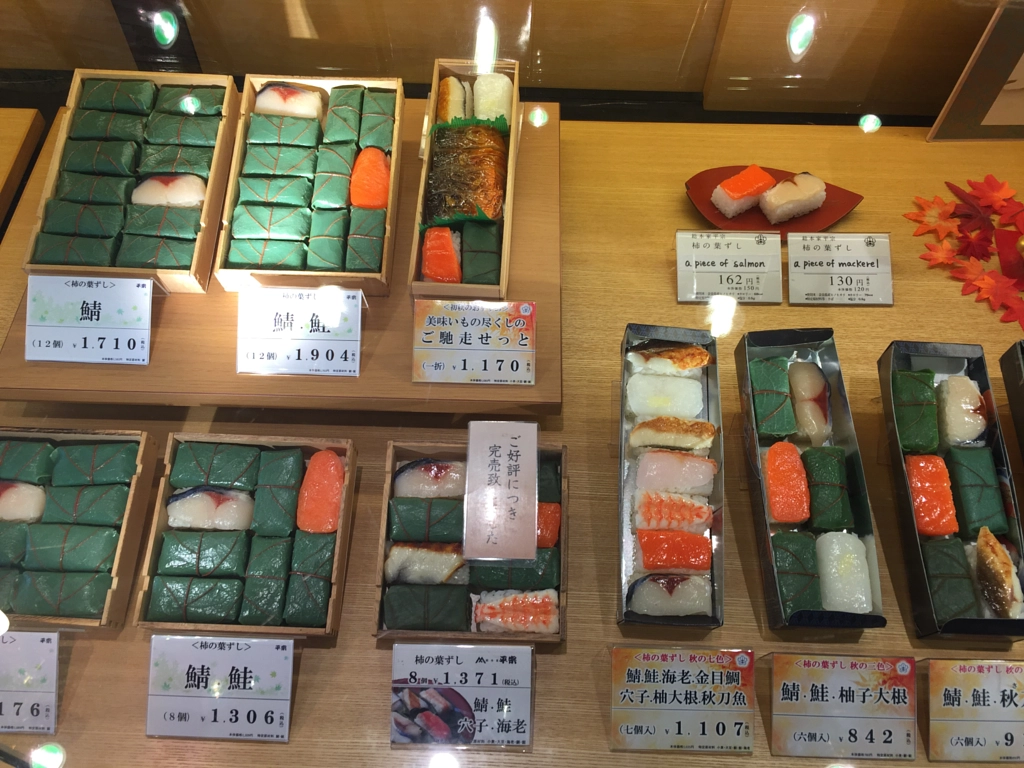
On our way back to the station, I also came across the shop called Izasa. They specialize in Kakinoha-zushi. Famous in Nara, this type of sushi is made with cured fish (usually salmon, mackerel, and trout) and are pressed into a mold filled with sushi rice. Then the sushi is cut into bite size pieces and wrapped in a persimmon leaf. This store sold a variety of boxes, but the lady kindly let me know I could try a single one as well.


DSCF by info9813 on 500px.com

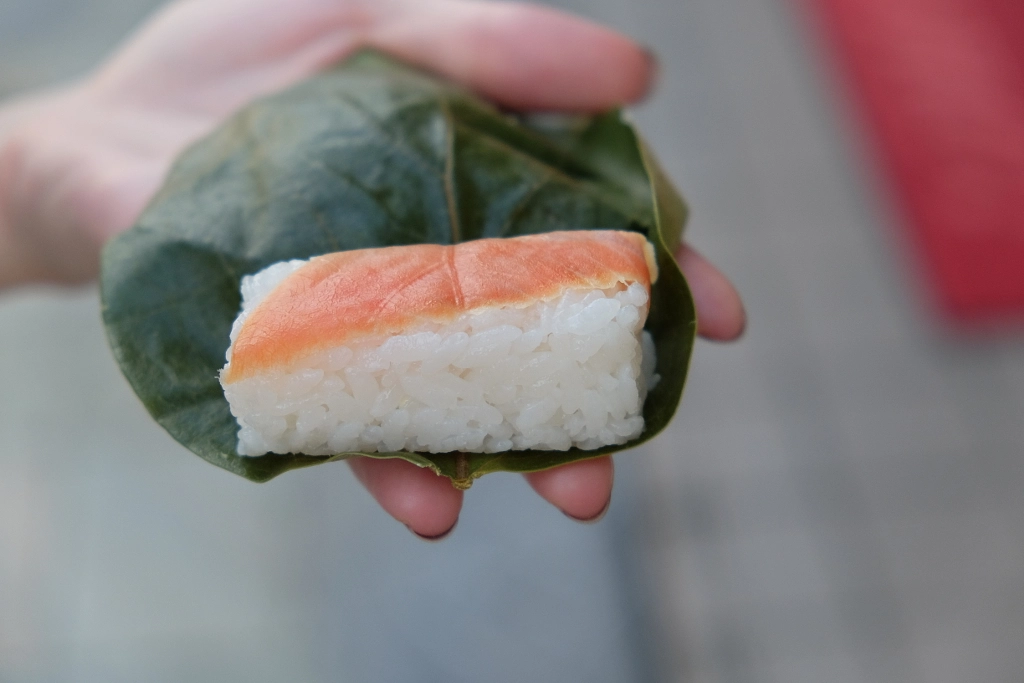
I got the Salmon Kakinoha-zuzhi which was under 200 yen. I unwrapped the leaf and revealed my sushi. To be honest, I thought this was quite average as I am not a fan of cured fish and the rice was also not as soft as normal sushi rice. I could subtly taste the persimmon leaf but it was not very strong. Still, something to try if you are in the Nara area.

Nara Park
Address: Nara Park, Nara, Nara Prefecture, Japan

Nakatanidou
Address: Japan, 〒630-8217 Nara Prefecture, Nara, 橋本町29

Mentouan
Address: Japan, 〒630-8217 Nara Prefecture, Nara, 橋本町30−1

Izasa
Address: 16 Kasuganocho, Nara, Nara Prefecture 630-8212, Japan

[Japan Series] Day 9: Kuromon Market 黒門市場 and Umeda Sky Building 梅田スカイビル

DSCF by info9813 on 500px.com

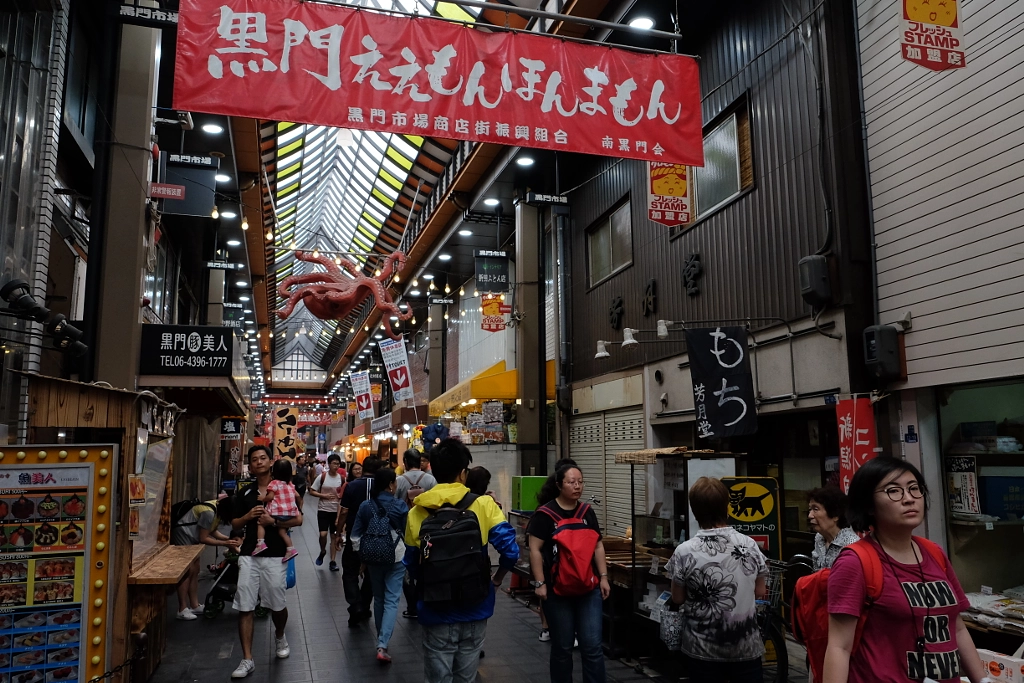
The next morning, I suggested we check out the Kuromon Ichiba Market (黒門市場). The covered market stretches over 500 meters and is a 2 minute walk from Nippombashi Station. Turns out this was only a 5 minute walk for us so we got here relatively early so we could brunch.

DSCF by info9813 on 500px.com

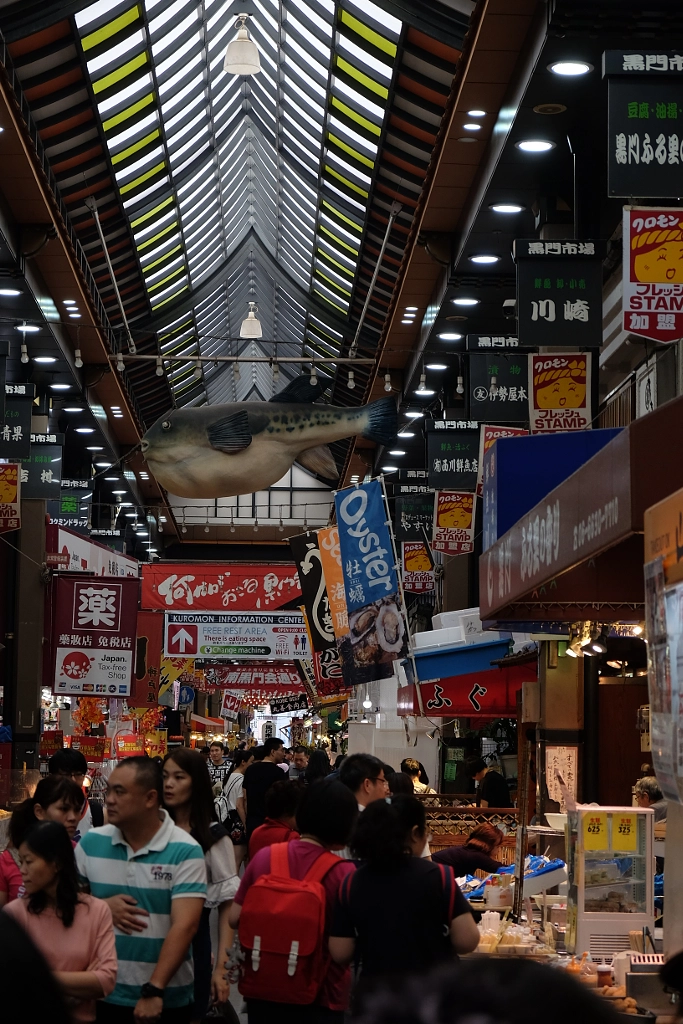
The market is famous for its fresh seafood and meats. Many locals and restaurant chefs come here to purchase their ingredients. However, it has become a tourist spot so can get very crowded during lunch hours. What’s great is that the stalls can prepare the food for you right at the market.


DSCF by info9813 on 500px.com

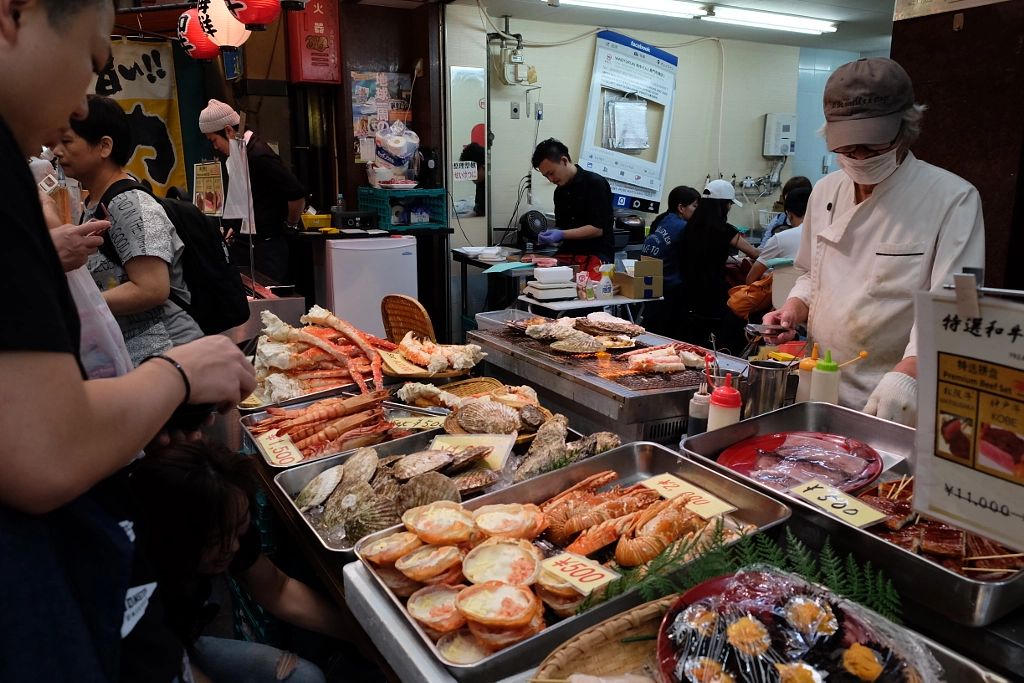
You will find stalls grilling seafood like crab, prawns, scallops, and oysters.


DSCF by info9813 on 500px.com

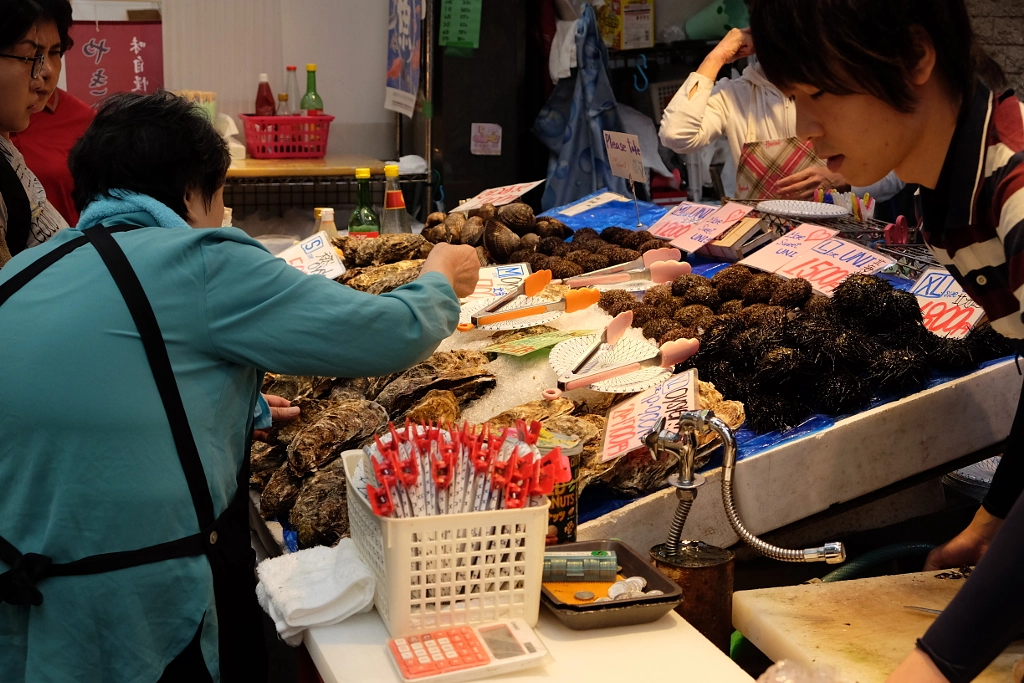
Any many stalls with fresh sea urchin!


DSCF by info9813 on 500px.com

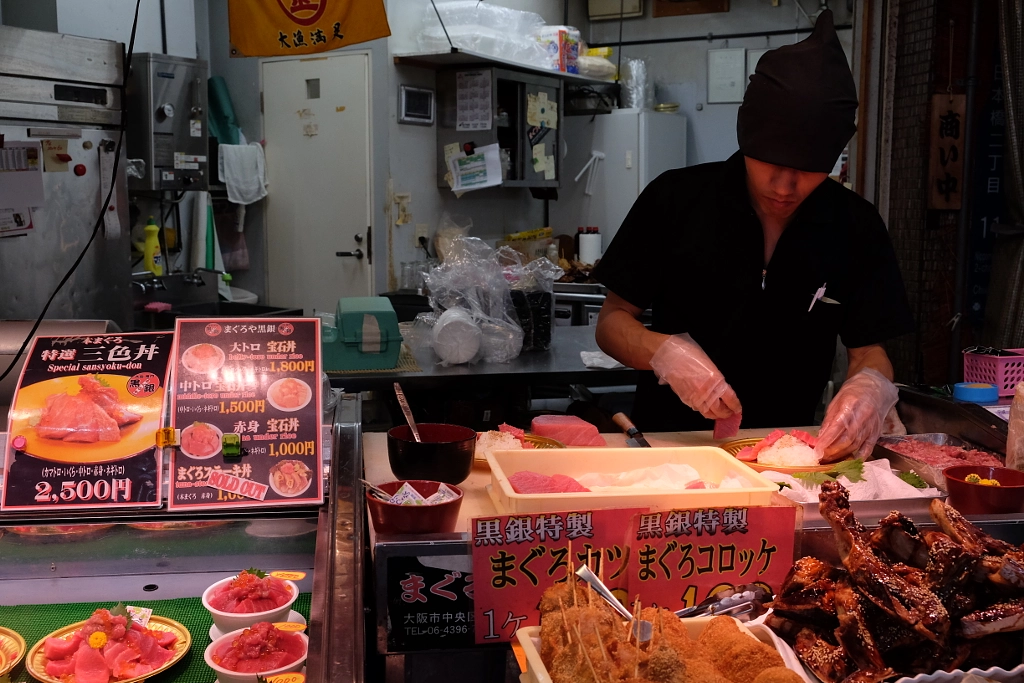
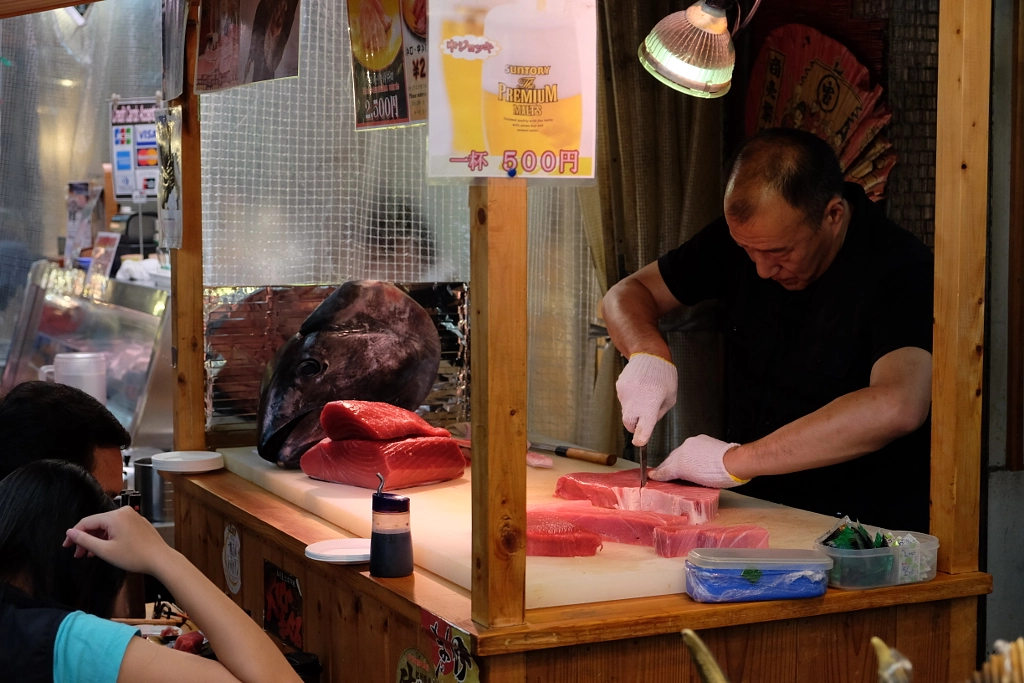
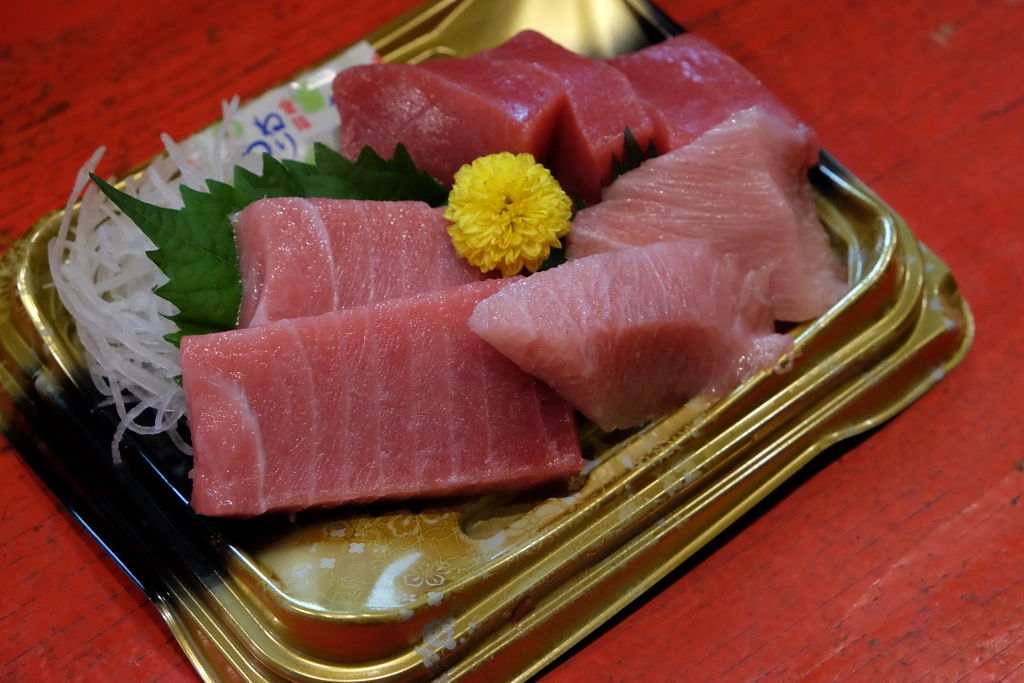
One of the famous stalls is this tuna stall at the corner inside the market. They have all things tuna and you will find delicious fat chunks of tuna sashimi.


DSCF by info9813 on 500px.com

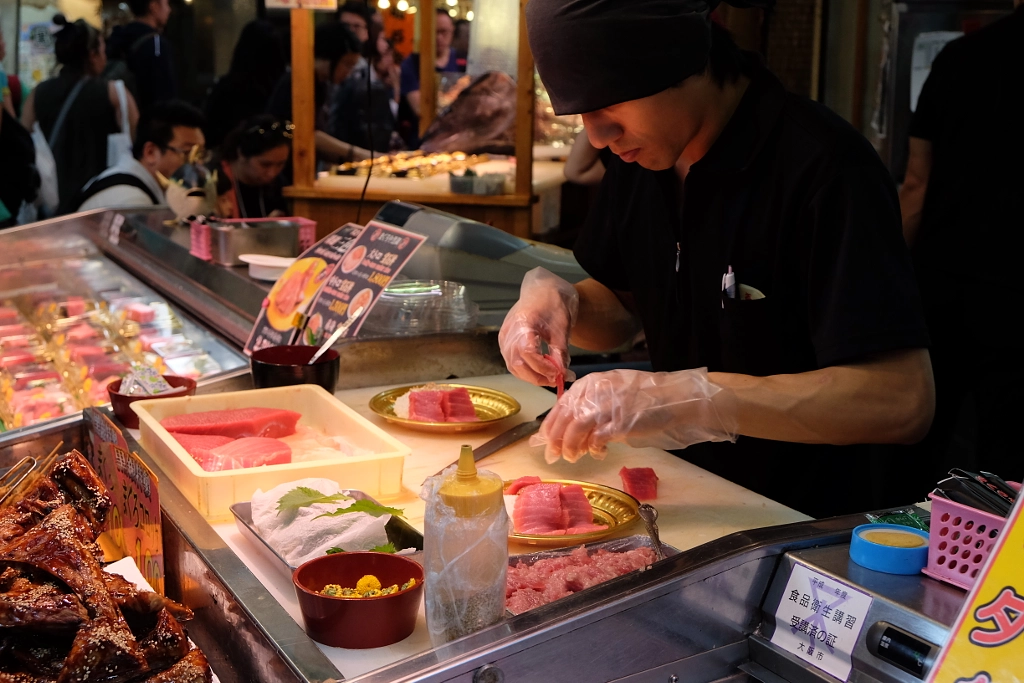
Watching the chef cut the tuna is already quite fascinating. They have around 4 spots at this stall where you can sit. However, they have these ready made take out boxes as well. Turns out, they have some seating area around the corner, so when you purchase the take out box, just let them know you want a seat, and they will direct you to this other seating area.


DSCF by info9813 on 500px.com

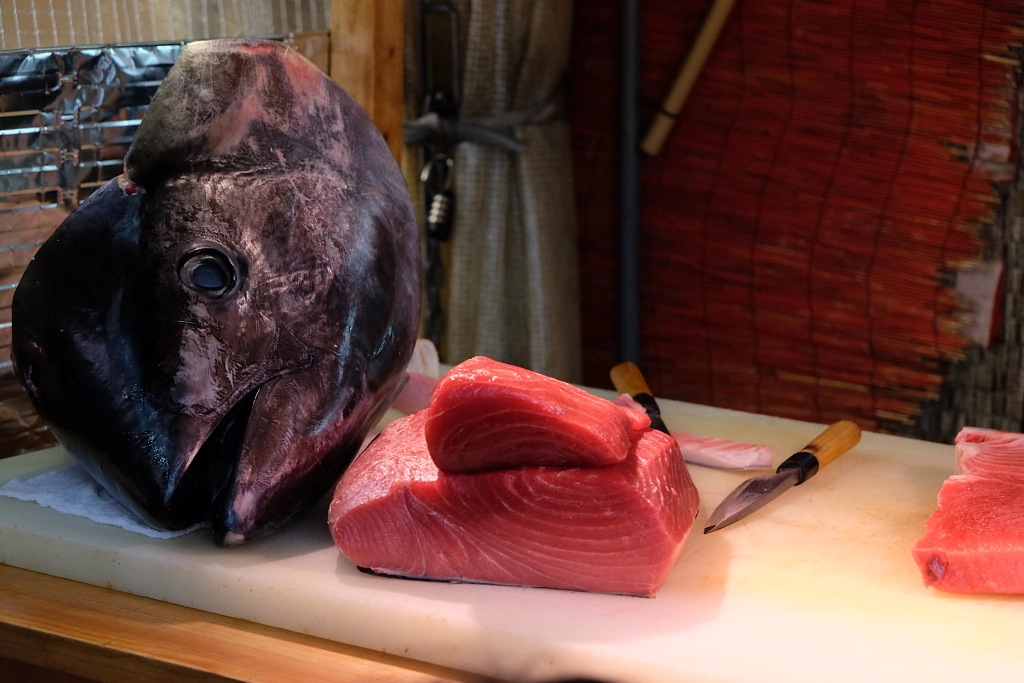
Look for this big fish head and you find this stall!


DSCF by info9813 on 500px.com

There are many chirashi bowls, but also sashimi only plates available.  The price is quite good at around 2,000 – 2,500 yen for many of these take away boxes. Some are higher priced depending on the cut.


DSCF by info9813 on 500px.com

I enjoyed tuna sashimi take away box which featured three cuts. Honestly, I don’t know exactly what type of tuna I got, but it was very delicious! The tuna is cut much thicker than restaurants though so some may find that it is not as appealing. Some of the cuts are also more of the “scraps” but they are pretty good for this price!


DSCF by info9813 on 500px.com

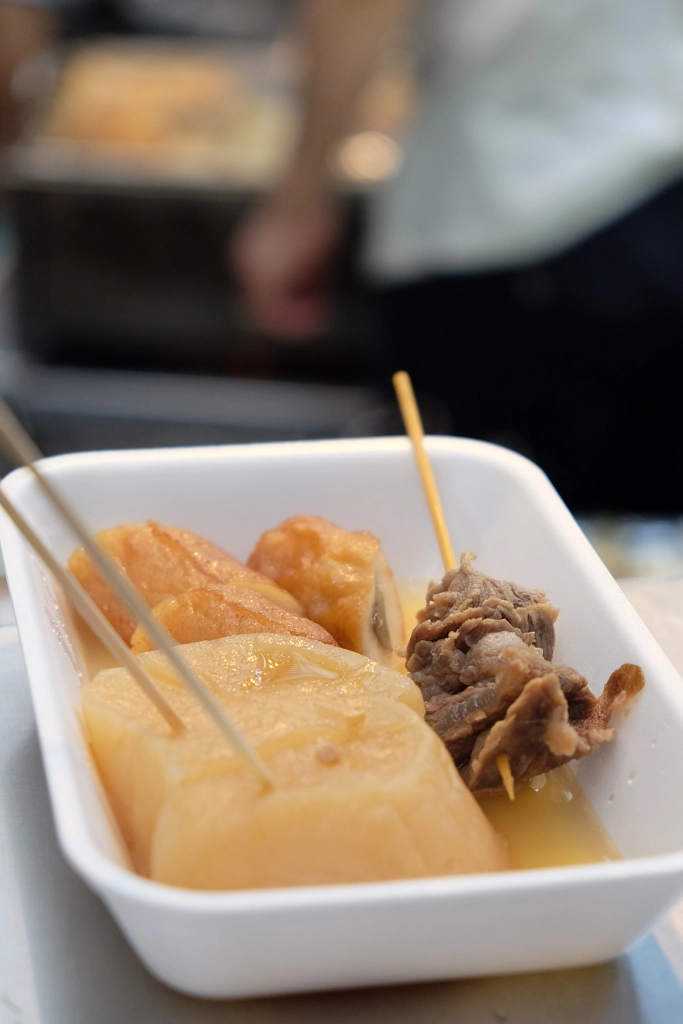
Moving on, I found a small oden shop run by a granny. I got some daikon radish, fish cake stuffed with burdock and beef skewer. The radish was the sweetest I have had. The broth itself was light but sweet from the radish. Very homey and warming.


DSCF by info9813 on 500px.com

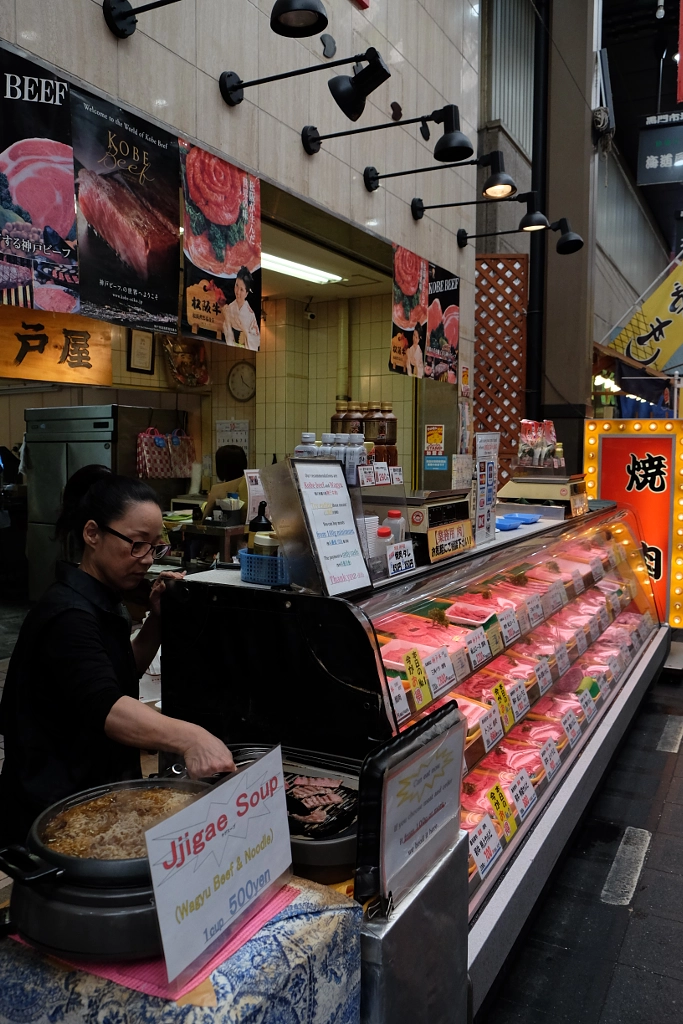
Last but not least, we were told that we had to try the kobe beef at the market. Yes, kobe beef is famous in Kobe, but Kuromon market also sells it and at a relatively cheap price. There were quite a few stalls selling it and some were very fancy looking catering to tourists. My sister told me to try this stall though as they are not as decked out but still good. Prices are lower possibly because of less advertising.


DSCF by info9813 on 500px.com

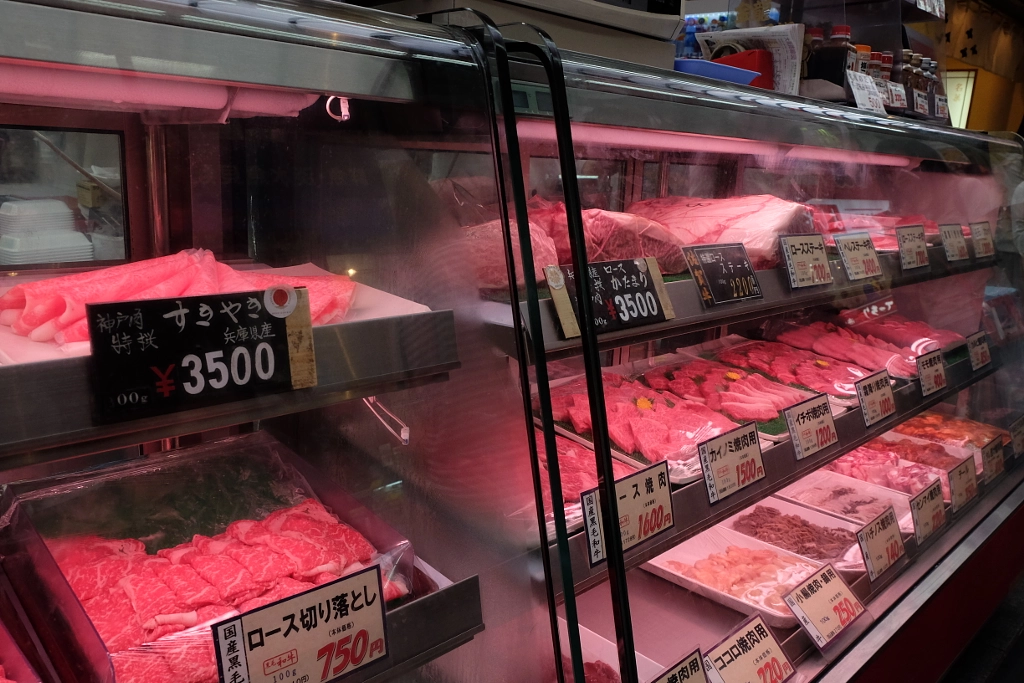
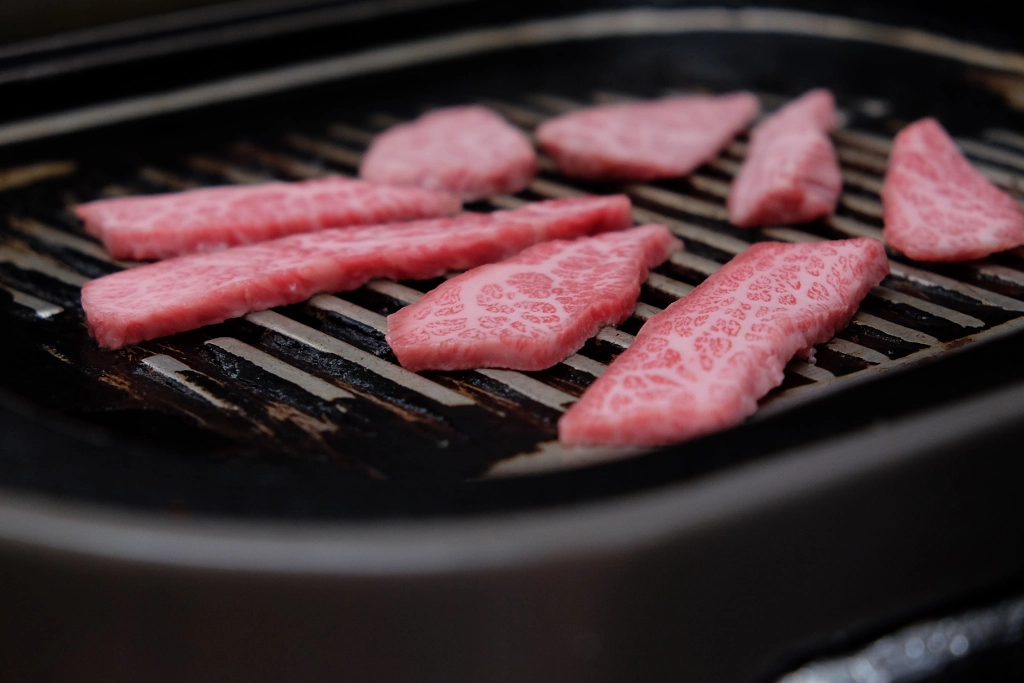
As you can see, there are a variety of kobe beef. Honestly, we didn’t really know how to choose them. My sister said to get the middle range and it would be pretty good. I think the ones we got were around 1,800 yen per 100 gram. They ask that you purchase a minimum of 200 gram. Many of the other shops will ask for more so this was also a plus.


DSCF by info9813 on 500px.com

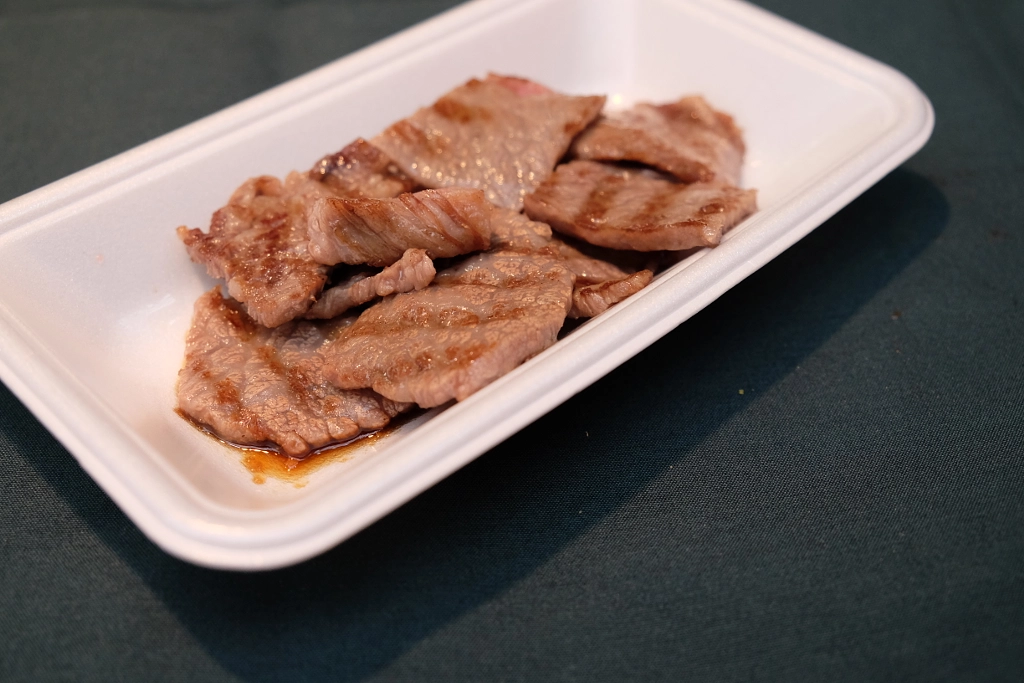
Look at that marble! They grill it for you right away. Because the meat is so fresh, they really don’t need much seasoning.


DSCF by info9813 on 500px.com

They give you the plate of kobe beef and add some light soy and tell you to add the steak salt to your liking. At this shop, you will have to stand on the side to eat, but who cares because the kobe beef is much cheaper than at a restaurant. The beef was absolutely delicious and melted in our mouth. No regrets in spoiling ourselves for brunch!

I highly recommend coming to Kuromon Market if you are a food lover. Be prepared to spend much more here as the types of food found here are pricier but are considered a good deal for the quality you get.


DSCF by info9813 on 500px.com

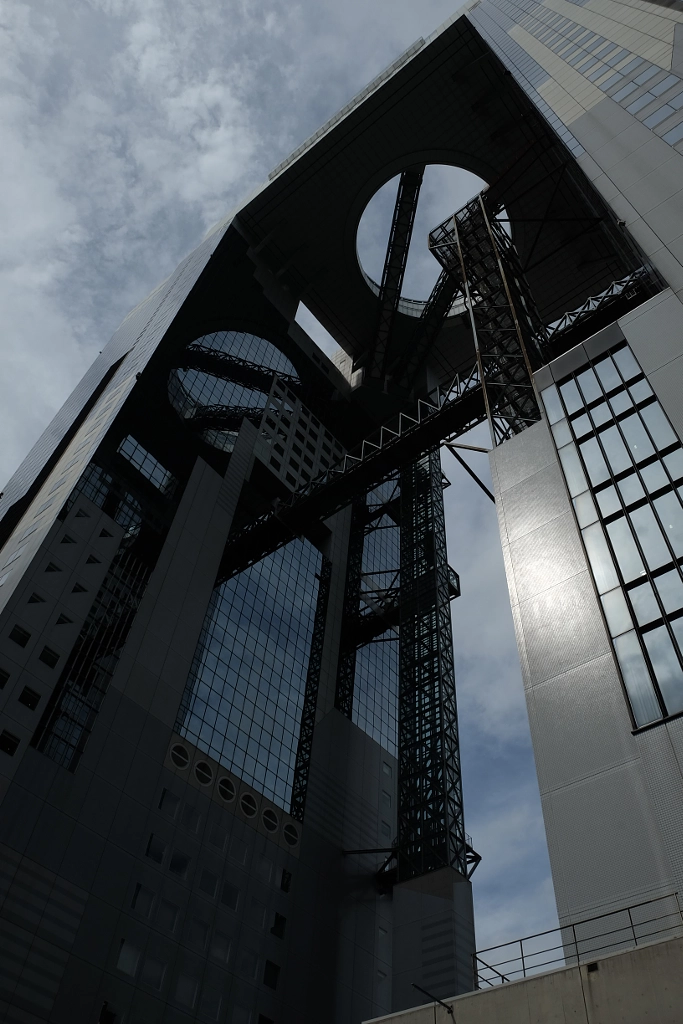
Up next, I wanted to check out the Umeda Sky Building (梅田スカイビル). It is not the tallest building in Osaka, but it has a very unique design. The closest station is Umeda station and even then you still have to walk at least 10 minutes to arrive here. But check out the architecture of the building! Pretty cool!


DSCF by info9813 on 500px.com

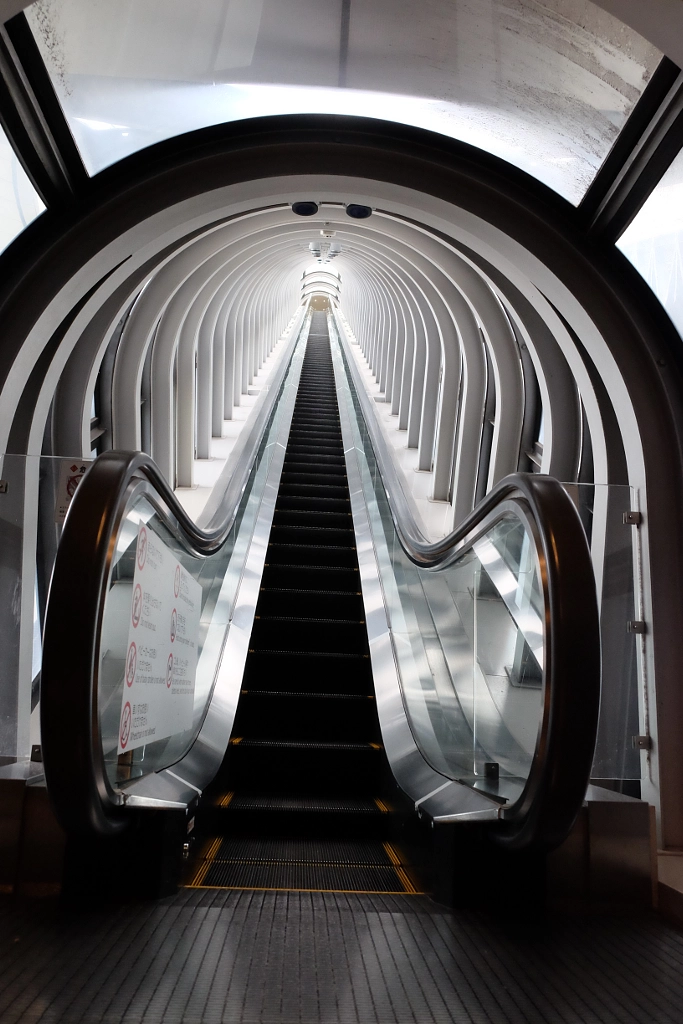
Admission for adults is 1,000 yen but the 360 views at the top are amazing. The escalator to go up is also really cool. As you go up, look to your right and left as you can see views of the city as well.


DSCF by info9813 on 500px.com

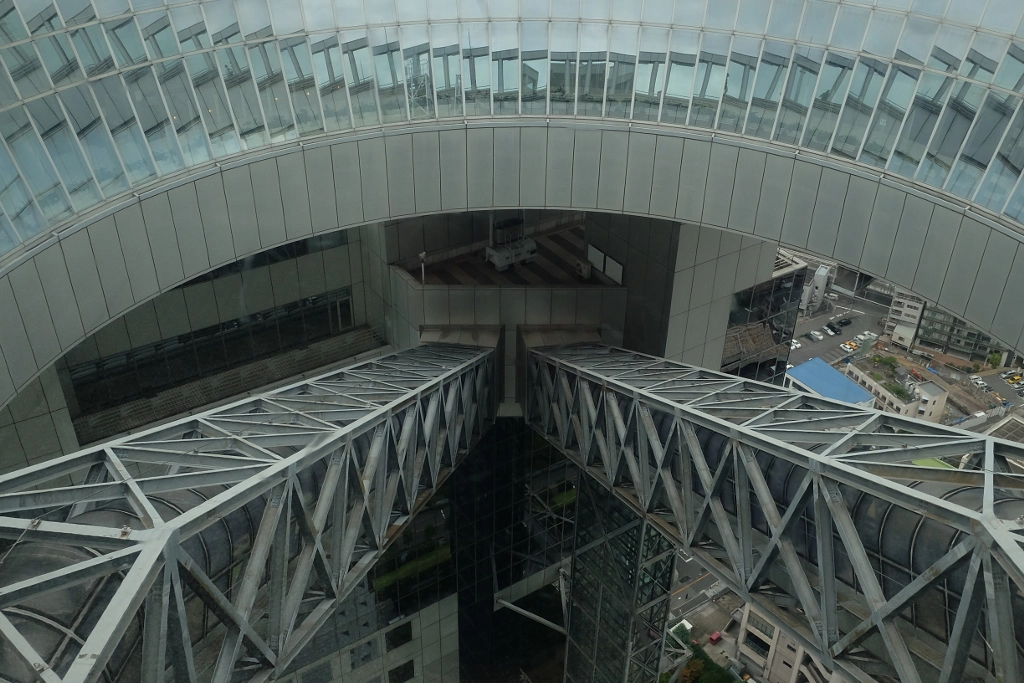
The escalator we were in are in these two bridges. The building has two towers and is connected by the Floating Garden Observatory on the 39th floor.


DSCF by info9813 on 500px.com

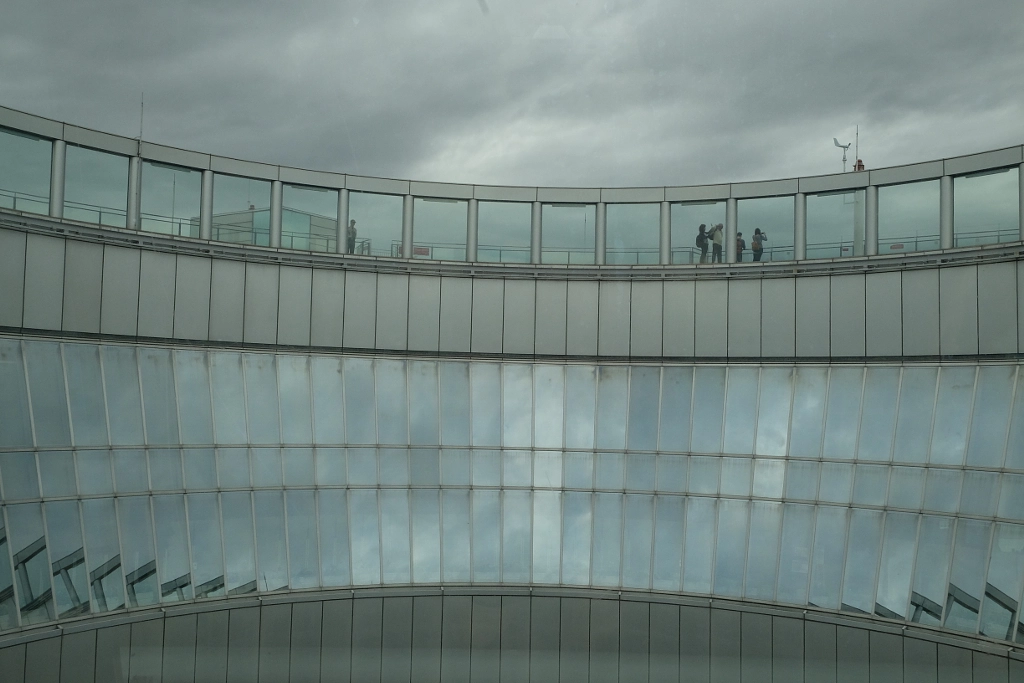
Isn’t this cool? This is the middle of the dome and you can also go to the top for the outdoor observation deck.


DSCF by info9813 on 500px.com

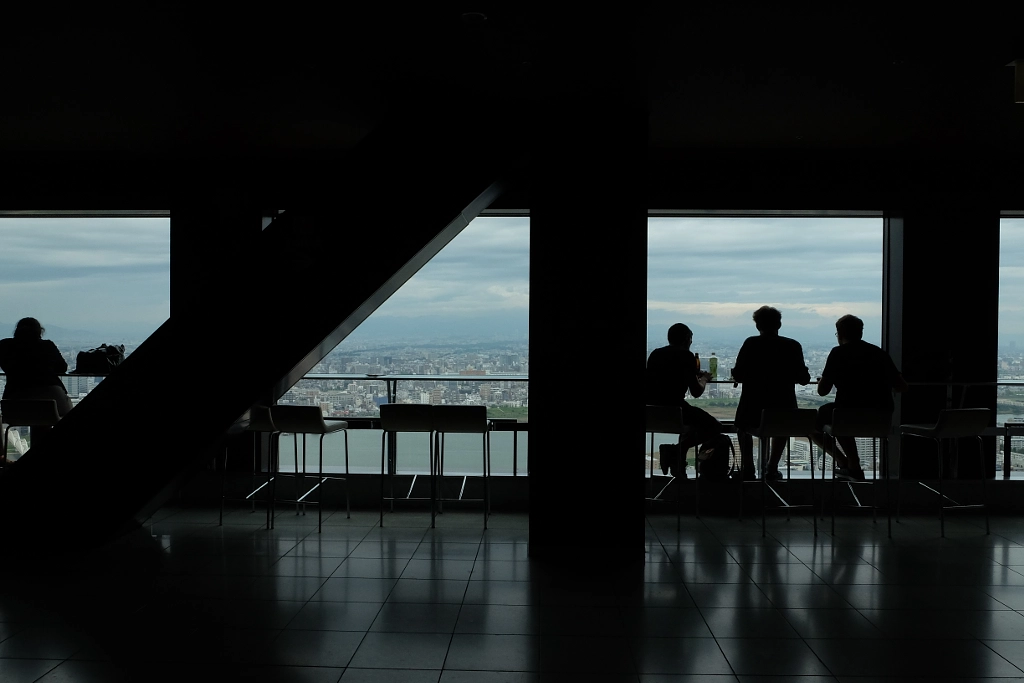
As you can see, there are seating area surrounding the observatory so you can get a 360 view of Osaka. Enjoy a cup of coffee here and you can literally sit here forever.


DSCF by info9813 on 500px.com

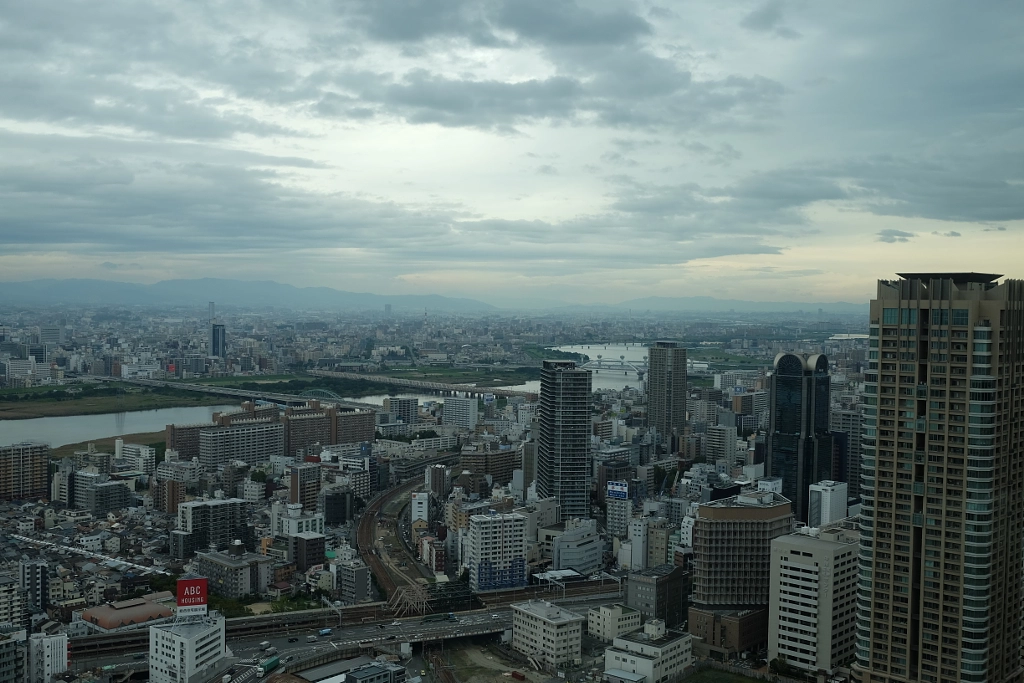
The views are pretty amazing!


DSCF by info9813 on 500px.com

I can imagine this being perfect at night time too.


IMG by info9813 on 500px.com

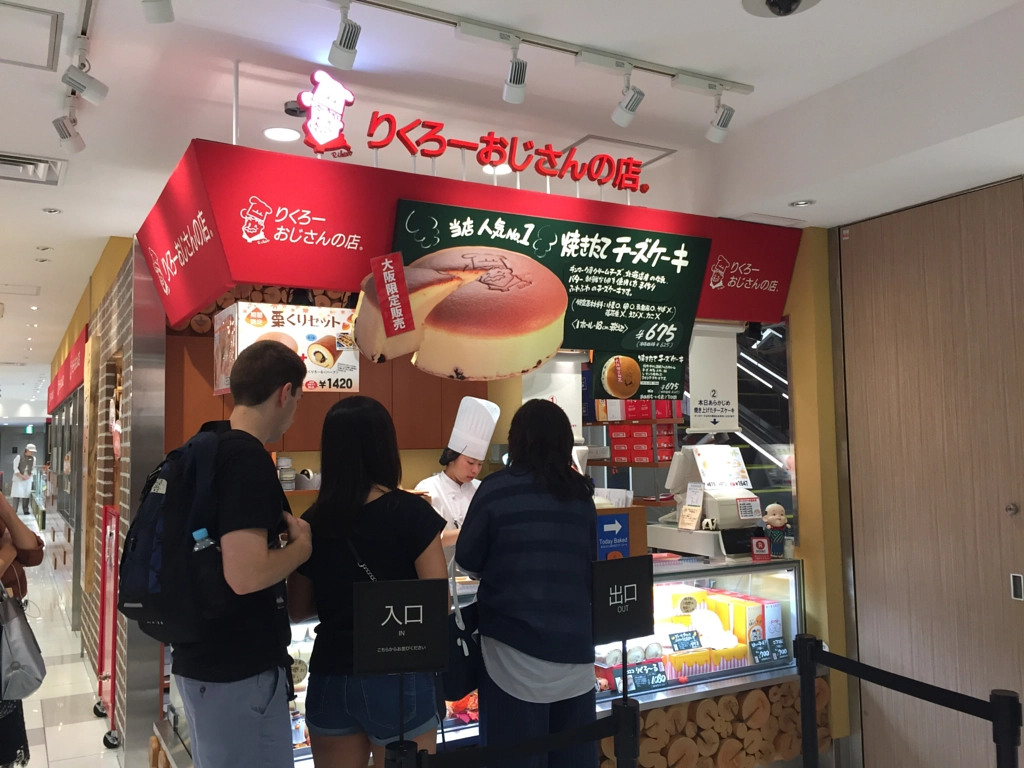
After taking in the views, we headed to Daimaru at Umeda station, which is a department store. Of course we had to check out the basement floor which is full of food. There, I found Rikuro りくろーおじさんの店 大丸梅田店 which is famous for their fluffy cheesecakes. The whole cake is only 675 yen! They bake them fresh and make batches at a time so sometimes you may have to wait a while once the batch is sold out. If you hear the bell ring, be sure to get in line because that means a new batch is ready!


DSCF by info9813 on 500px.com

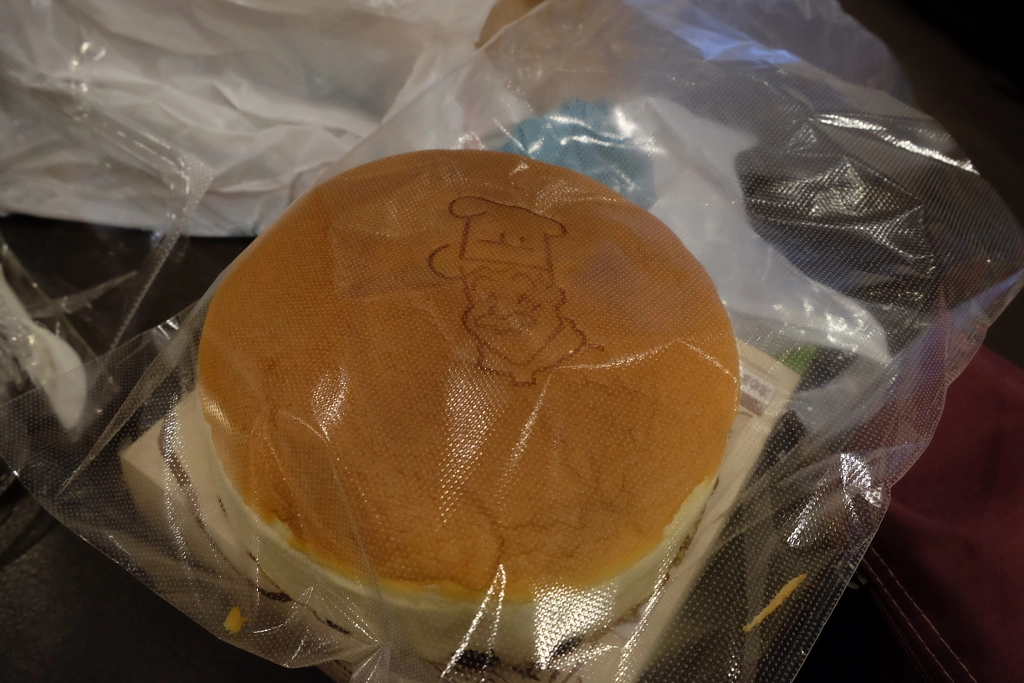
I bought the whole cake for myself…since S does not really like cheesecake, but for under 700 yen for a whole cake, I could not resist. A slice of cake here is already $7! You get the cute chef stamp on the cake and the bottom is filled with raisins. The cake was light and fluffy and melts in your mouth. Highly recommend trying it!

Kuromon Market
Address: 2-4-1 Nippombashi, Chuo-ku, Osaka 542-0073, Osaka Prefecture

Umeda Sky Building
Address: 1-1-88 Oyodonaka, Kita-ku, Osaka 531-6023, Osaka Prefecture

Rikuro Cheesecake at Daimaru
Address: 3-1-1 Umeda, Kita Ward, Osaka, Osaka Prefecture 530-8202, Japan

[Japan Series] Day 8: Dotonbori 道頓堀 in Osaka 大阪市

IMG by info9813 on 500px.com

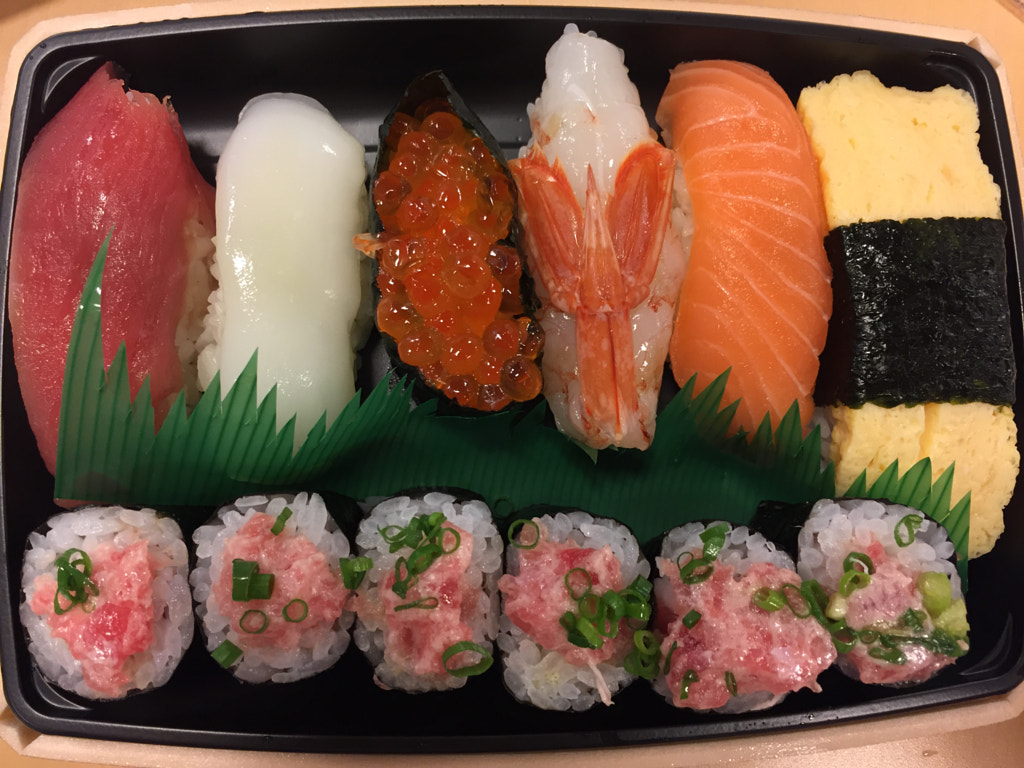
On day 8, we headed to Tokyo Station so we could catch our shinkansen (bullet train) to Shin-Osaka station. We had purchased the JR pass since it was a better deal given we were going to visit Hiroshima as our last stop. I only recommend using the JR pass if you are visiting over 3 cities and doing some calculations on whether the individual tickets are cheaper. For example, if you are visiting Tokyo, Osaka and Kyoto only, then I don’t think the JR pass is that worth it. Anyways, because we had the JR pass, we were able to reserve our seats in advance at the Narita airport (or you can even do so on the day of or just take the non-reserved seats). The Tokyo station is huge and was a bit overwhelming at first, but we arrived early to give ourselves enough time and were able to find our platform. Then we headed back inside the station to see if we could grab some lunch. There are lots of bento boxes available, but to be honest, the items in the boxes didn’t really appeal to me. Instead, I got a quick sushi box that was already prepared ahead of time. Not the most amazing, but this was still fairly good for the price (around $15).


DSCF by info9813 on 500px.com

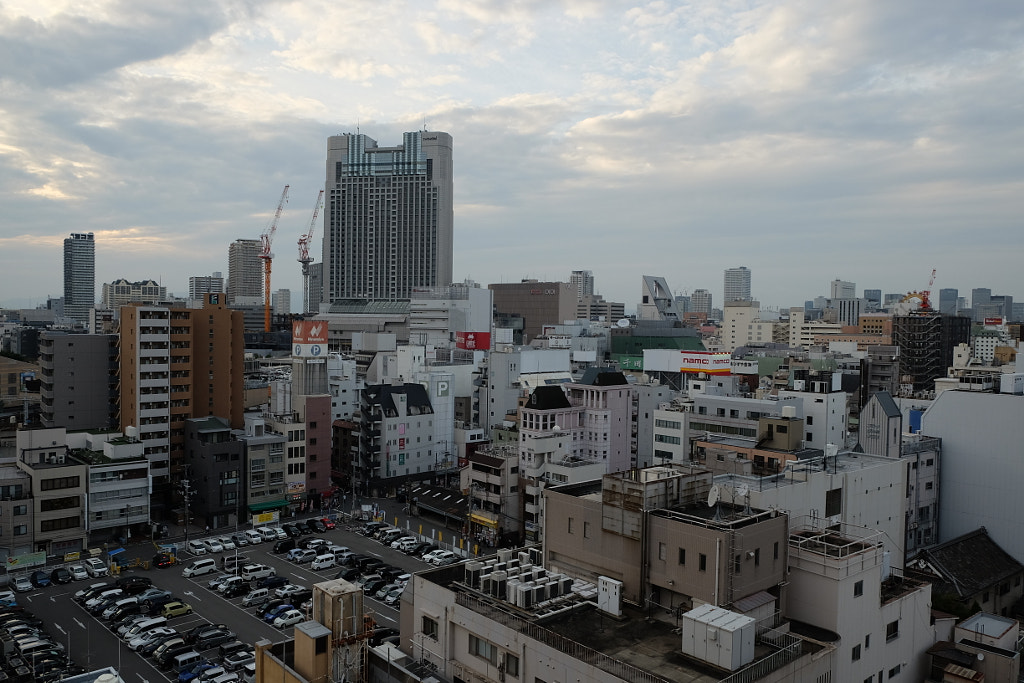
We took the Hikari which is included in the JR pass and it took roughly 3 hours. The Nozumi is another bullet train which only takes around 2.5 hours but is not included in the JR pass. Finally we arrived in Osaka (大阪市) and we had booked an Airbnb in the Namba area. I highly recommend booking accommodation in the Namba/Umeda area as this is the central station for your trains, especially if you are planning on visiting Kyoto or Nara. Plus, there is so much to see around this area. Our accommodation was unfortunately a 10 minute walk from the station, and the streets in Osaka are not as luggage friendly, so it took a bit of effort to lug our huge luggage to our Airbnb. Finally, we arrived and this was the view from our apartment. Not the most amazing view, but we weren’t expecting much.


IMG by info9813 on 500px.com

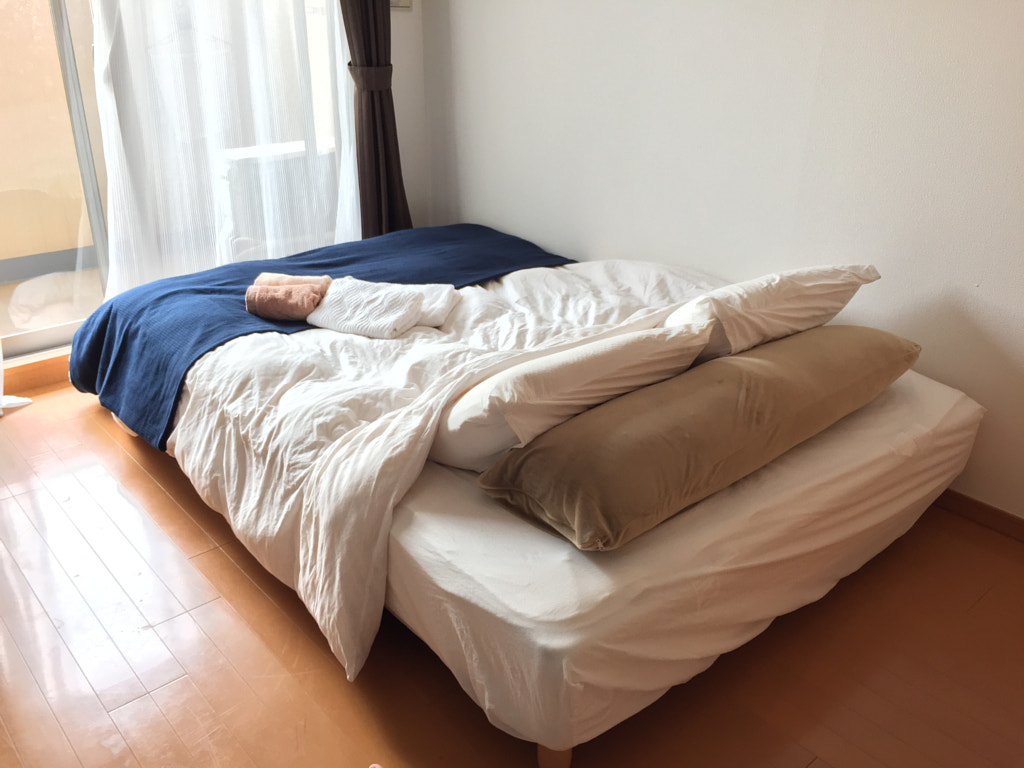
Our Airbnb was actually closer to the Nipponbashi area also known as Den Den Town. Here, there are lots of electronic shops, similar to Akihabara in Tokyo. It was actually a pretty safe and quiet area and only a 10 minute walk to Namba station which we often took. Our flat was simple with a double bed, small kitchen, and a comfortable sized bathroom. Nothing really to complain although we wished we had lived slightly closer to the station as walking home can be tiring after a long day.


DSCF by info9813 on 500px.com

By the time we settled in, it was getting dark and we were hungry for dinner. I suggested we take it chill and check out the nearby famous Dotonbori (道頓堀).


DSCF by info9813 on 500px.com

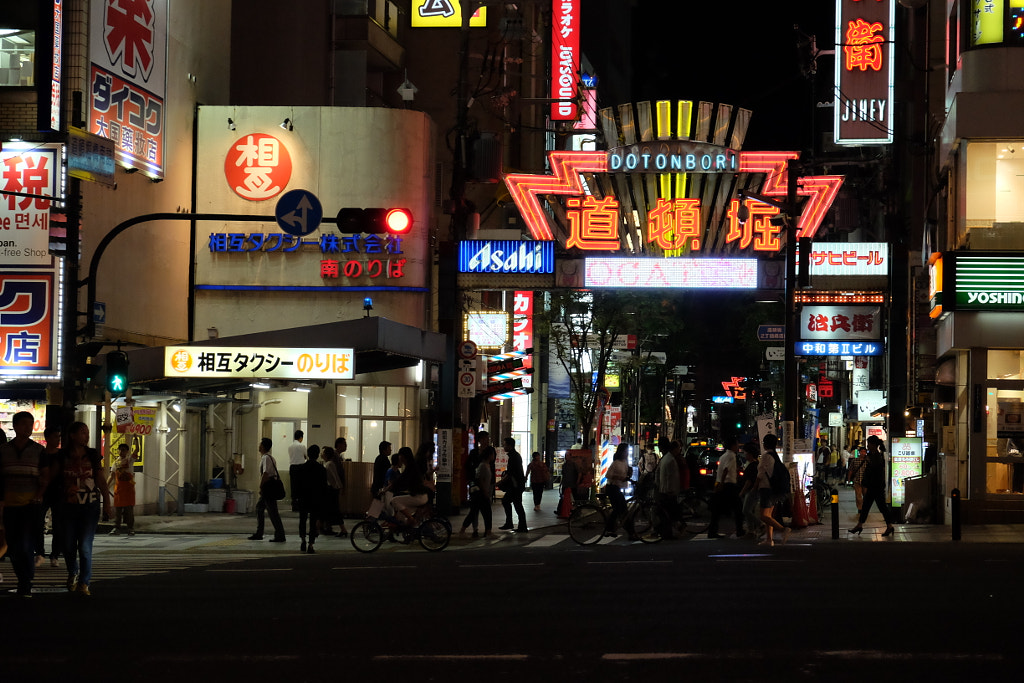
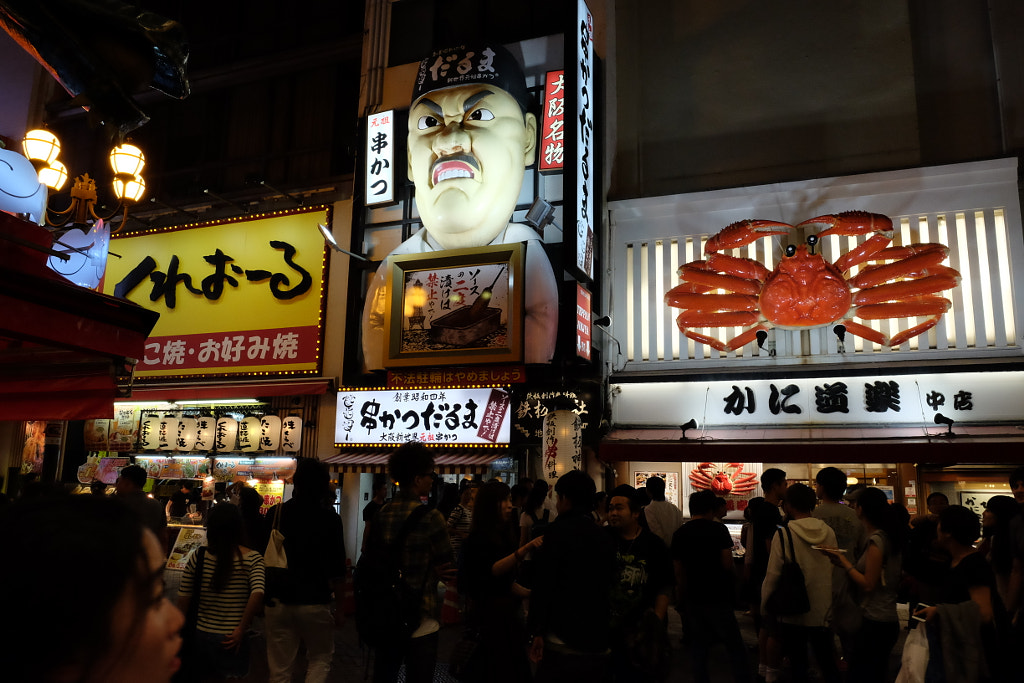
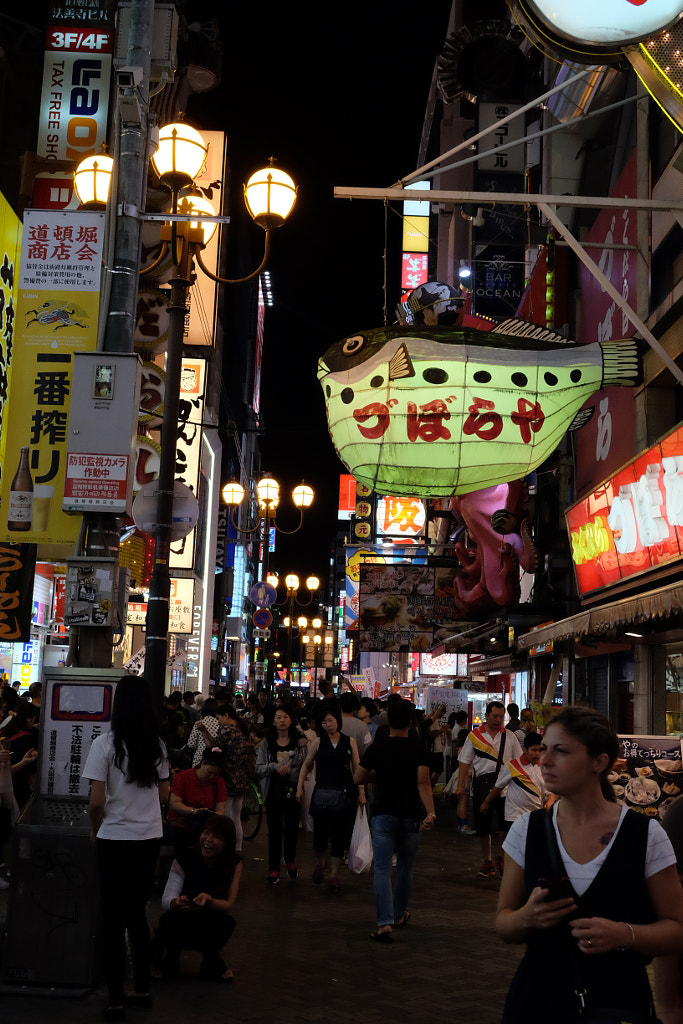
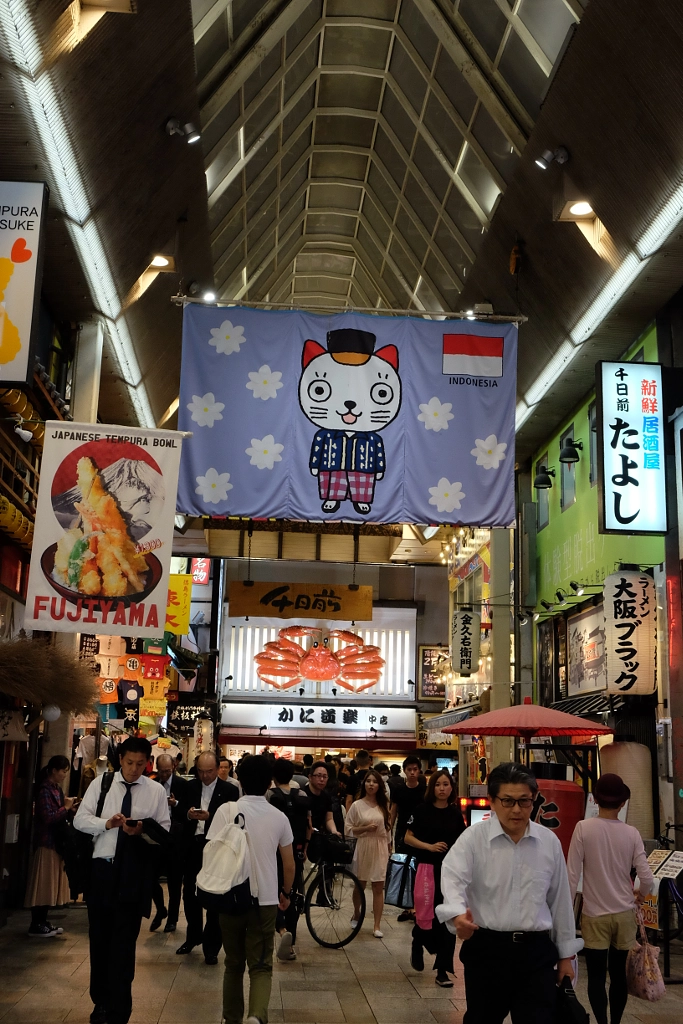
Dotonbori is probably one of Osaka’s most visited tourist spots. It is best visited during the evenings as the neon lights are a sight to see and reminds me of a night market. It seems that the evening is focused on food, whereas the afternoon is more for shopping, although I believe both restaurants and retail stores are open day and night.


DSCF by info9813 on 500px.com

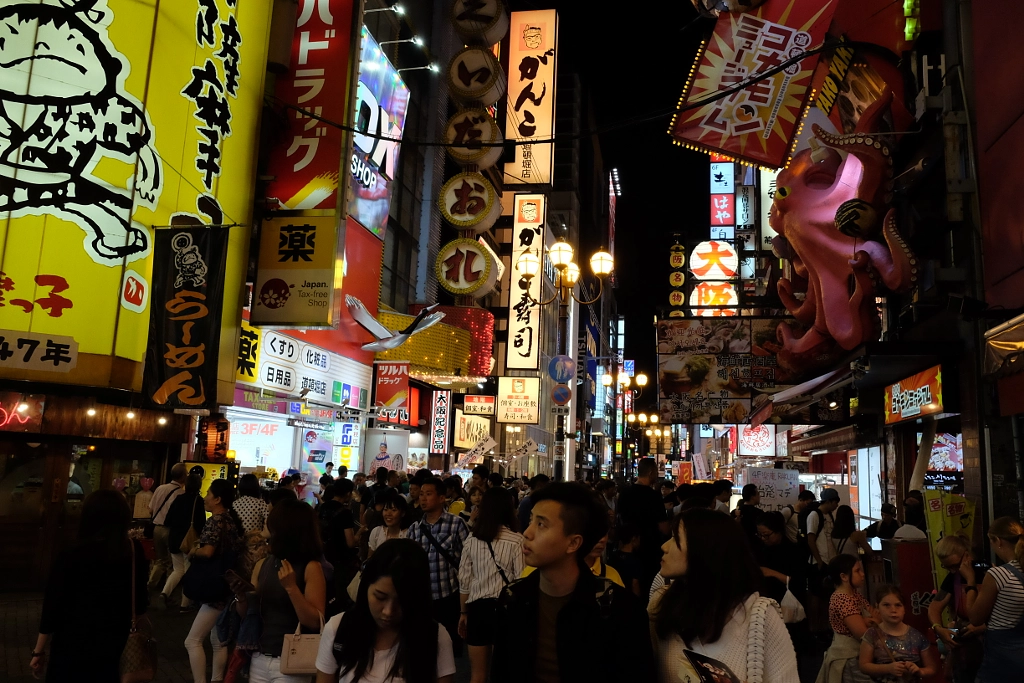
I mean, look at the restaurants signs? Aren’t there already a sight to see?


DSCF by info9813 on 500px.com

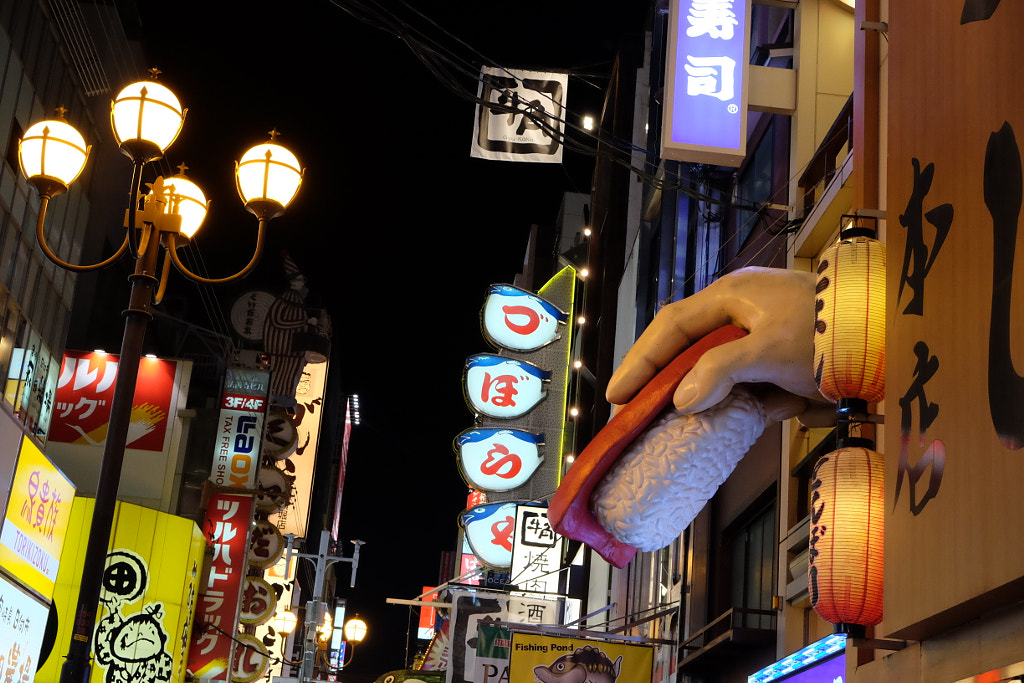
Love the 3-D type of signage they use here, which I felt like Tokyo didn’t really have much of.


DSCF by info9813 on 500px.com

Pufferfish (fugu 河豚) sashimi is famous to eat here. This is a delicacy because it takes skills of a highly trained chef to prepare this fish. It has a toxin that if not correctly prepared can kill you! If you are going to try this fish, then Osaka is likely the place for you as they are rather famous for it. As S does not eat much sashimi, I didn’t want to eat this on my own, so skipped this.


DSCF by info9813 on 500px.com

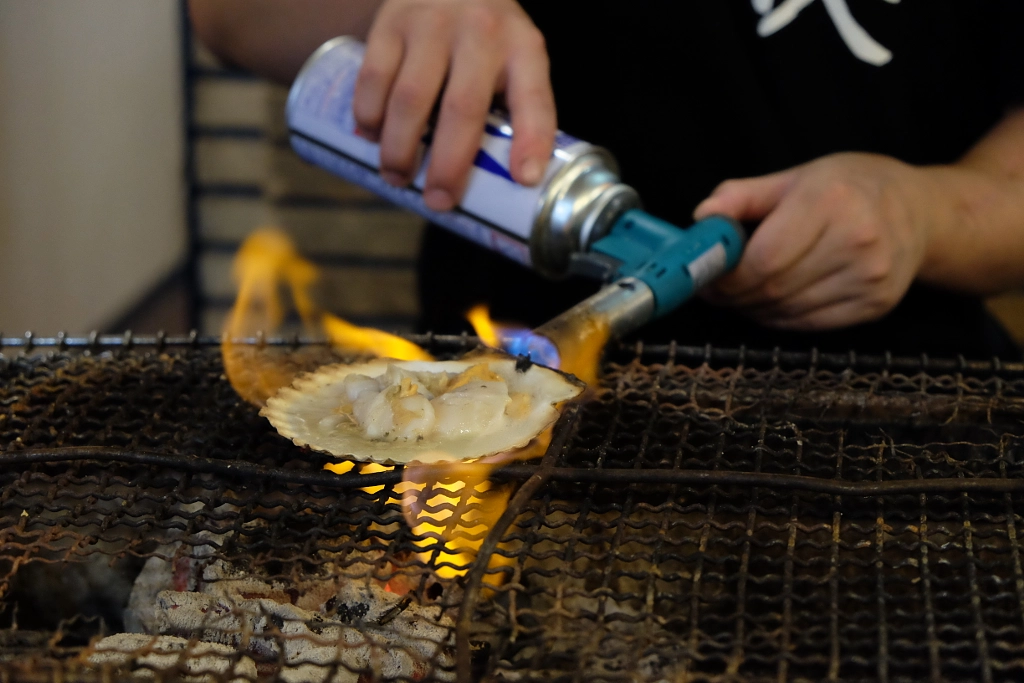
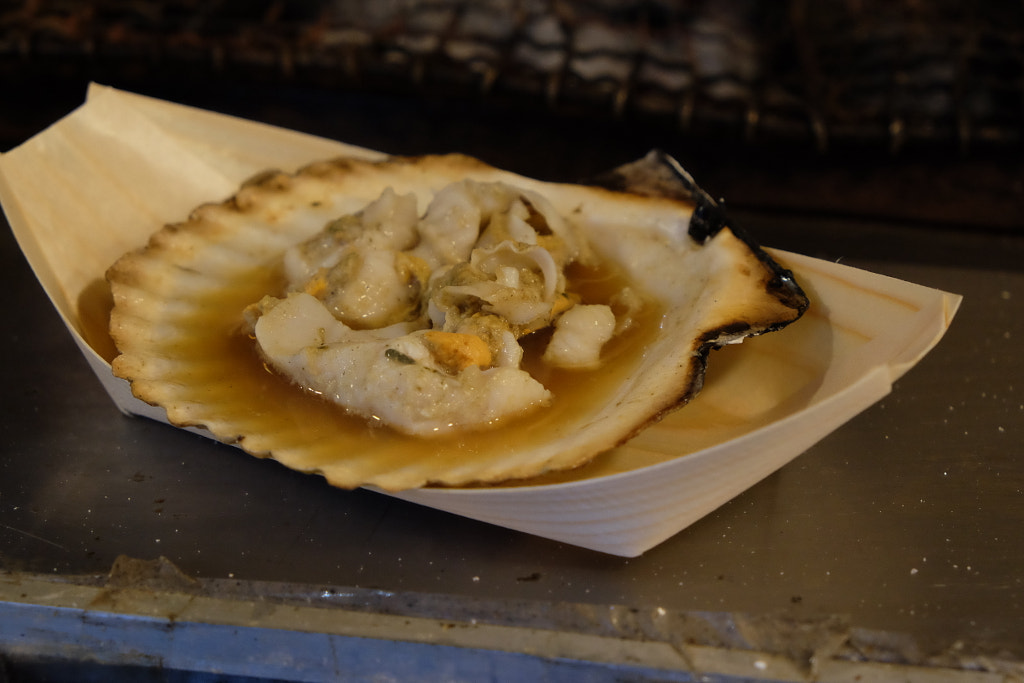
After wandering the streets for a while, I decided to try the grilled scallop. They prepare this to order and it involves some large flames!


DSCF by info9813 on 500px.com

This was actually quite average as the scallops was slightly too chewy and it also had some sand in it. I guess it was not washed well.


DSCF by info9813 on 500px.com

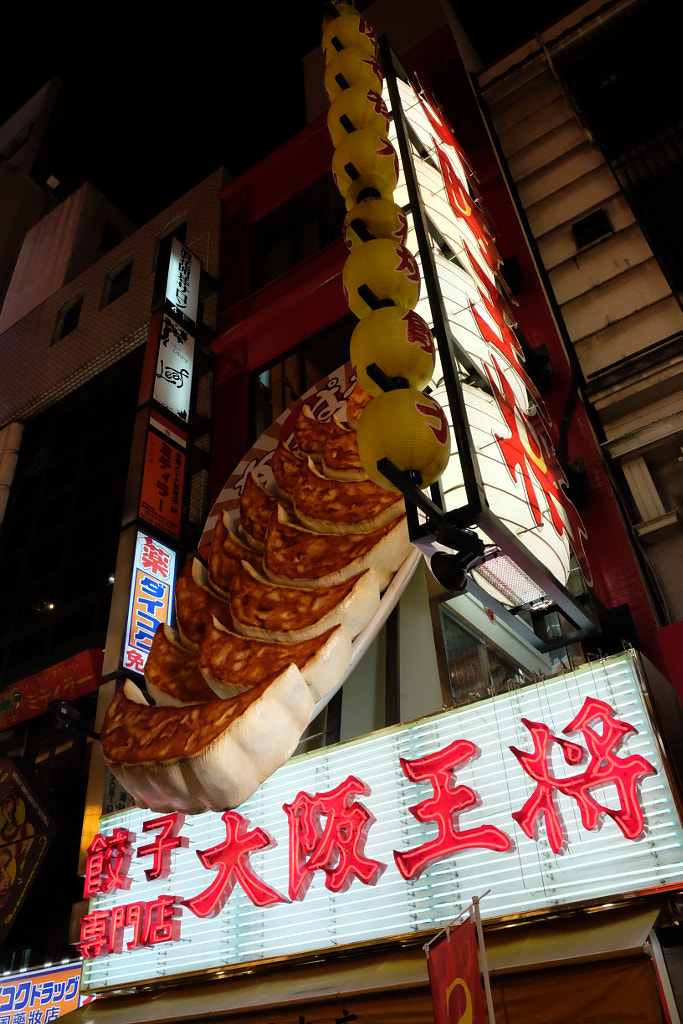
Continuing on, we tried Osaka Ohsho (大阪王将 道頓堀本店). They claim themselves as the king of gyozas and you will not miss this shop as there is a huge gyozo signage (a sight to see itself!).


DSCF by info9813 on 500px.com

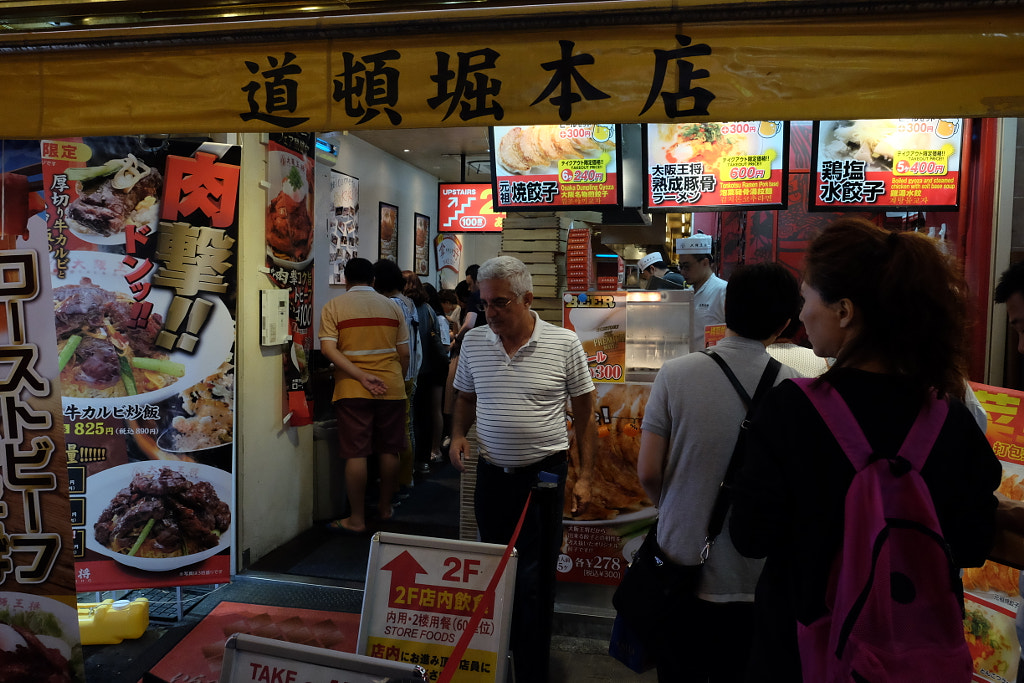
They seem to cater to tourists as there is English on the menu, but at 6 pieces of gyoza for only 240 yen, it is a deal of itself. As you can see, the shop is a standing gyoza bar though, and you must stand on the left where there is a bar table with some condiments to eat. The good thing is people eat this quickly, so you will find a spot easily.


DSCF by info9813 on 500px.com

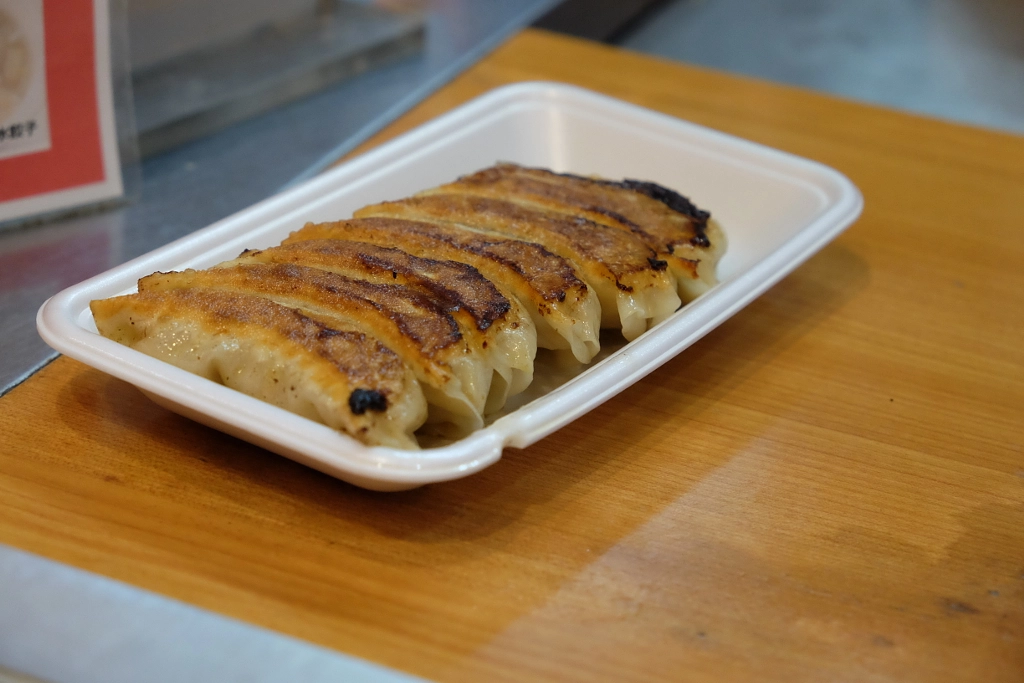
I wasn’t expecting much of these gyozas, but we actually found these to be really good. They are made fresh and there is a generous amount of filling. The bottom was fried crispy and along with the gyoza sauce, it was a perfect snack.


DSCF by info9813 on 500px.com

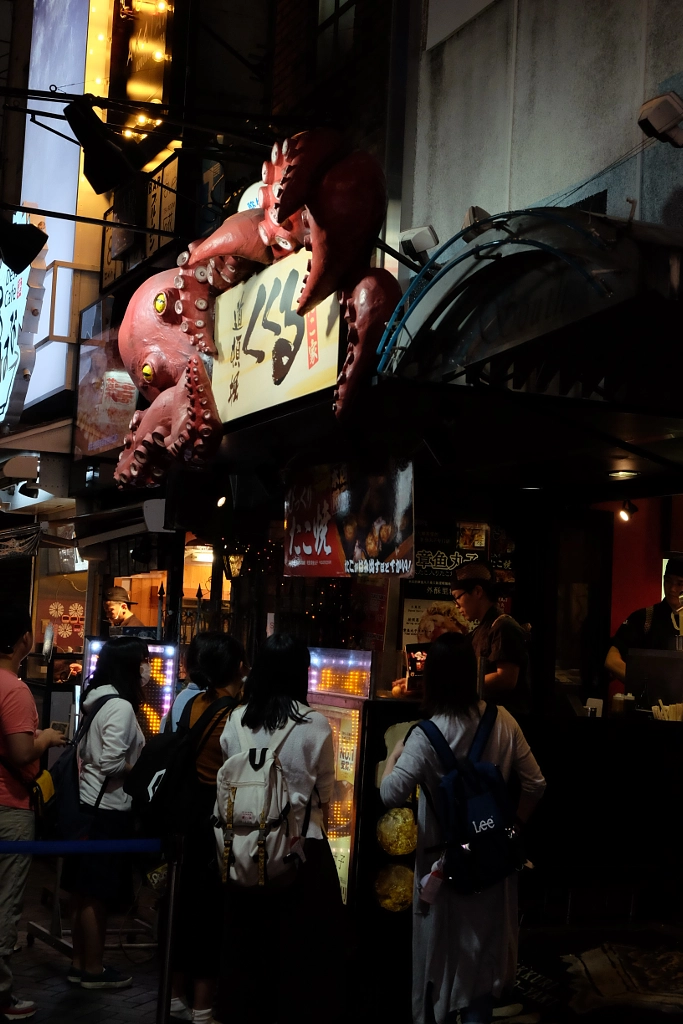
Given Dotonbori has more street food, we had to give the Takoyaki a try. There are quite a few stalls but we settled on Kukuru (たこ家道頓堀くくる 本店) just because we saw a huge line up. Turns out, this is a spot that has been featured on TV. The line actualyl was quite long and we waited probably almost 30 minutes. They make batches at once but there are so many people, so we still had to wait a while. You can also sit in where you can try other flavours of takoyaki, but I believe the take out box is cheaper.


DSCF by info9813 on 500px.com

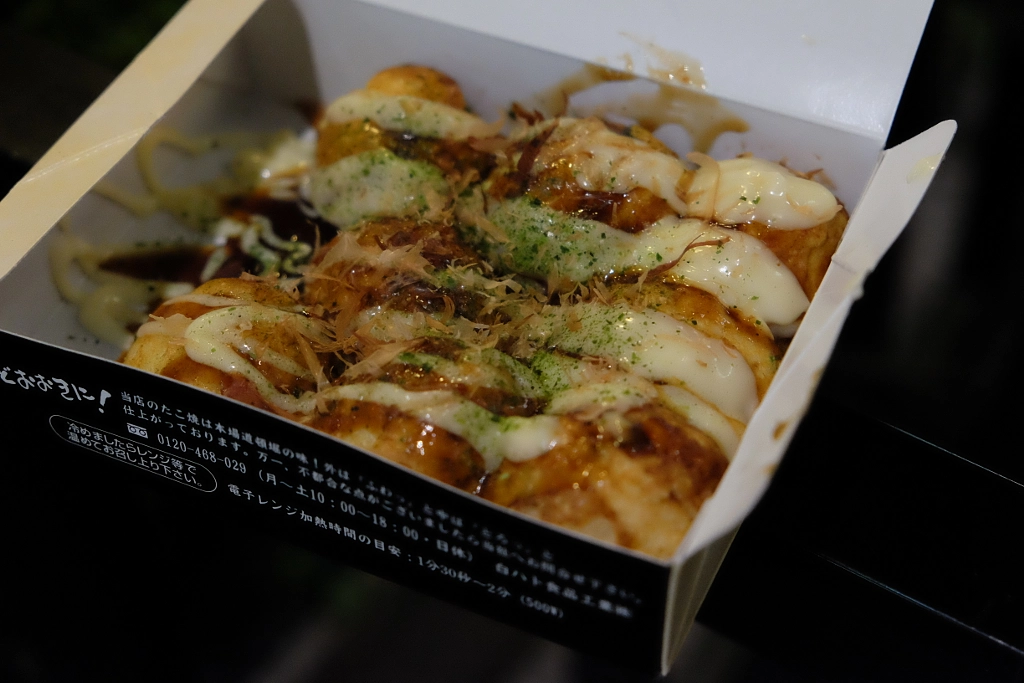
We got the minimum order of 8 takoyakis which cost around 600 yen. Not super cheap, but I like how they make them fresh. It is topped with some japanese mayo, bonito flakes and seaweed powder. There was octopus in every ball and the inside was a nice gooey chewy texture. My only complaint is that I wish they were more crispy on the outside as I found they sort of stuck together. Would I line up for it again? Probably not. But if the line is short, then these are not bad.

DSCF by info9813 on 500px.com

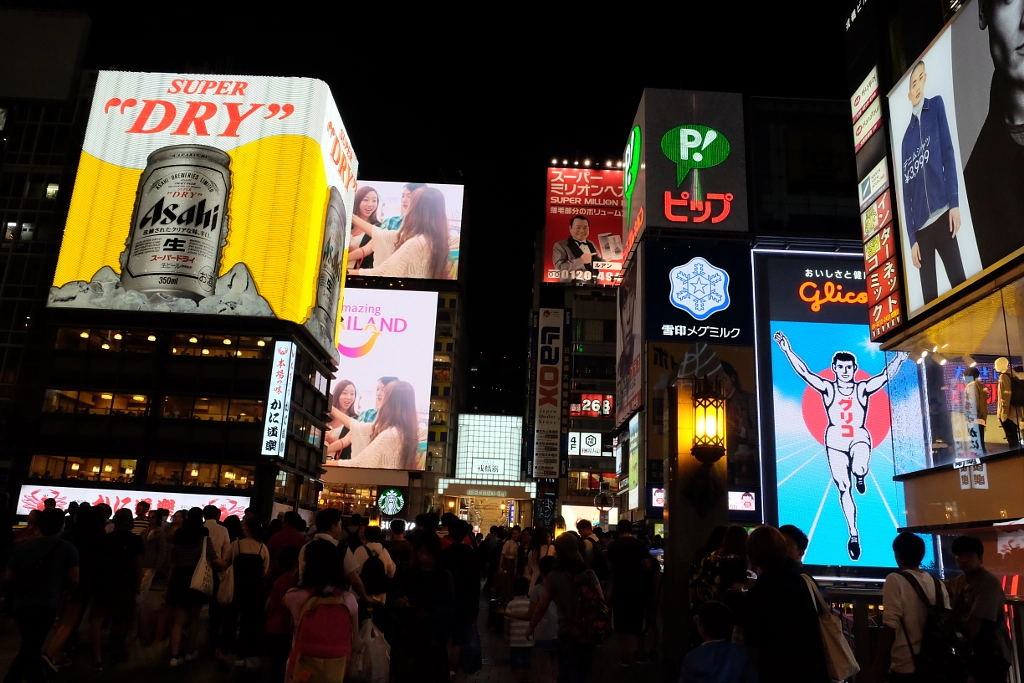
A must see in Dotonbori is the Glico running man sign! Head towards the center of the Dotonbori streets where you will find a bridge above Dotonobori river and you will find all these advertisements. The Glico man ad has actually been around for 70 years (longest standing ad, although there have been many versions of it).


DSCF by info9813 on 500px.com

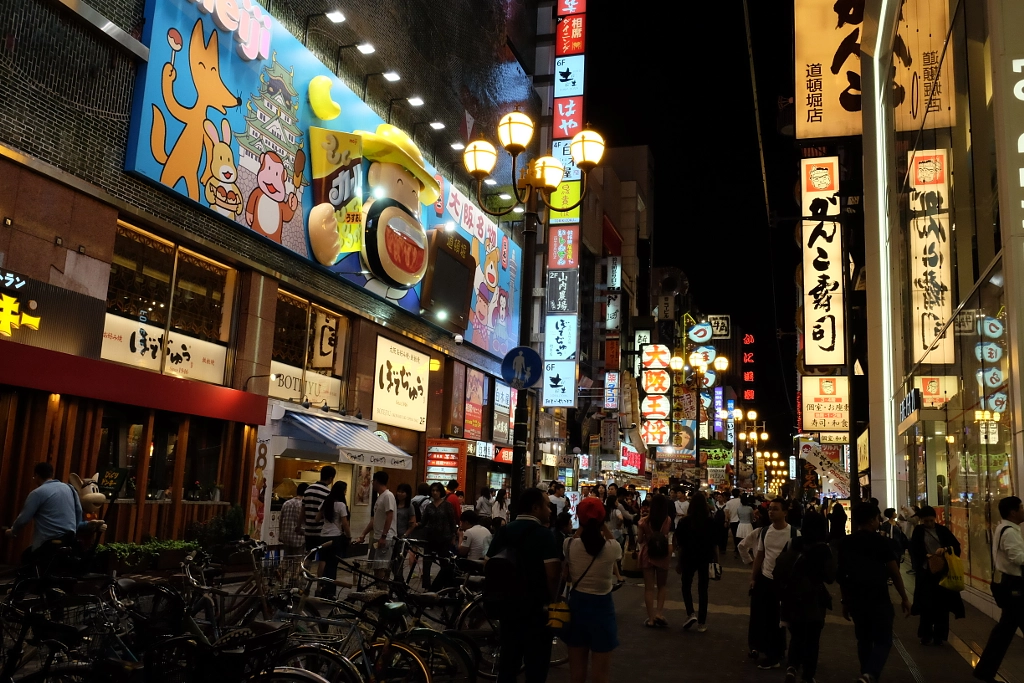
There are seriously so many eateries in this area. Even if you stray further away from the crowds, you will find many stores and restaurants.


DSCF by info9813 on 500px.com

As we headed back to our Airbnb, we saw a fried chicken stall, and of course S wanted this. It wasn’t very busy but S craved it.


DSCF by info9813 on 500px.com

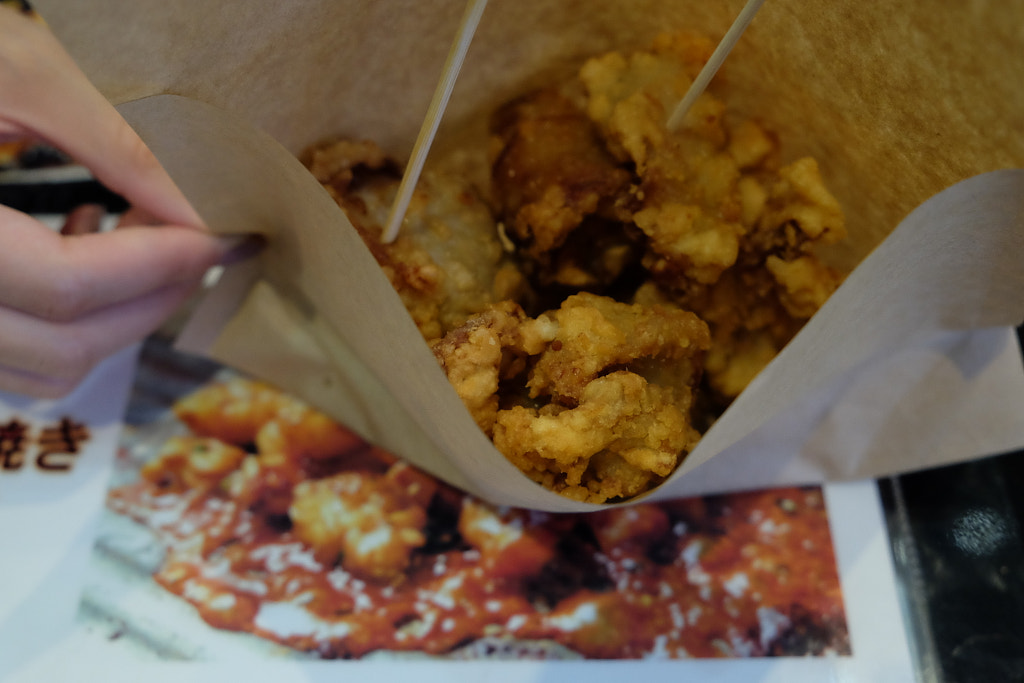
We got a bag of Chicken Karaage which was piping hot. Chicken was moist and batter was crispy. Not bad.


DSCF by info9813 on 500px.com

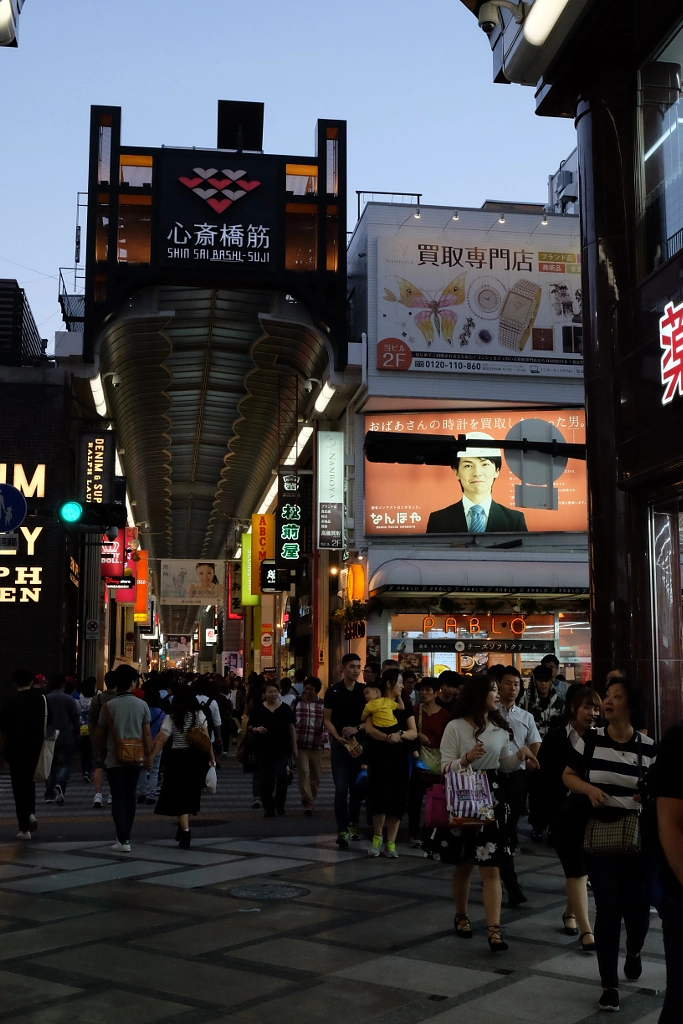
Heading back, we actually wandered into the Shinsaibashi Shopping Arcade. It is a covered area with boutiques, retail stores and restaurants. A less quiet area during the evenings, but very busy during the day time. With our tummies full, we headed back to rest and prepare for our next day!

Dotonbori
Address: Dotonbori, Chuo Ward, Osaka, Osaka Prefecture 542-0071, Japan
 

Osaka Ohsho (Gyozas)
Address: 1-6-13 Dotombori, Chuo-ku, Osaka 542-0071, Osaka Prefecture

Kukuru (Takoyaki)
Address: 1-10-5 Dotonbori, Chuo-ku, Osaka, Osaka Prefecture

[Japan Series] Day 7 Cont’d: Namja Town at Sunshine City in Ikebukuro (池袋)

DSCF by ukijojo on 500px.com

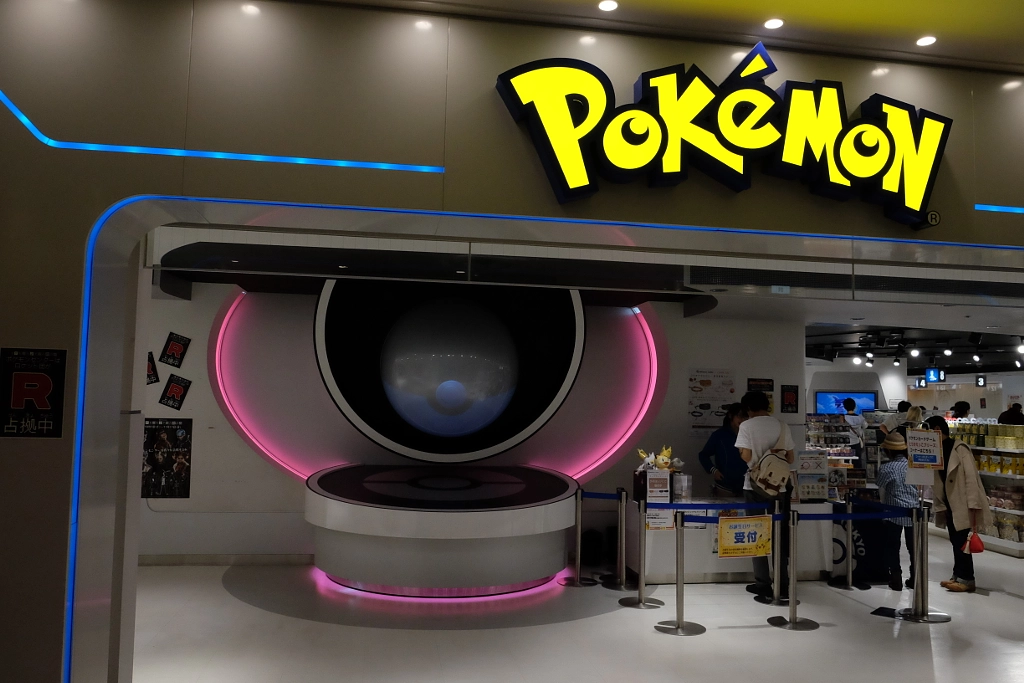
Being the jam-packed traveler that I am, on the way back from Odaiba, I suggested to S that we check out one more district. This was Ikebukuro (池袋). It has the second busiest railway station in Tokyo and offers entertainment, shopping and dining. The destination this night was to Sunshine City (サンシャインシティ) though, a shopping mall near the station. I actually remember living in a hotel near here back when I traveled with my parents. We stumbled upon the Pokemon Center while walking through the mall. They feature lots of Pokemon merchandise, many which I think are exclusive to Japan. I swear S had a really good time looking at the merchandise here!


DSCF by ukijojo on 500px.com

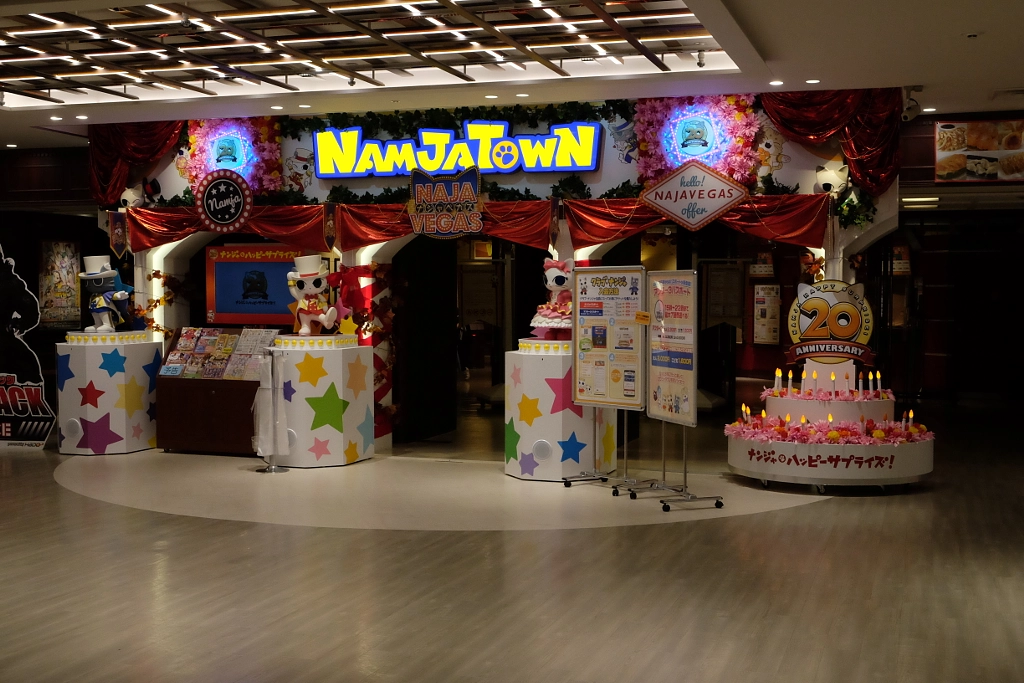
The real reason I cam here was because my sister had suggested we visit Namja Town. This is an indoor theme park by the creator of Pacman and houses some interesting attractions. However, admission is 500 yen.

DSCF by info9813 on 500px.com

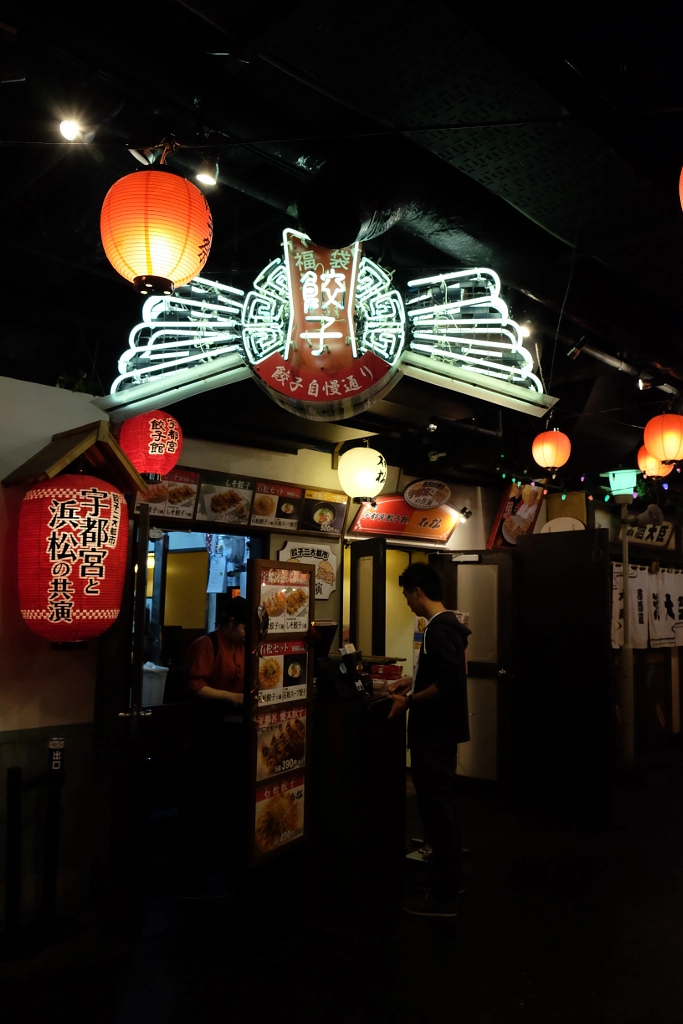
One attraction is the Gyoza Alley. Inside, there is a lane of gyoza shops. However, when we arrived, there were barely any people (probably because it was dinner time). It felt like a ghost town. Gyozas were also quite pricey here, especially after paying the admission to get inside.


DSCF by ukijojo on 500px.com
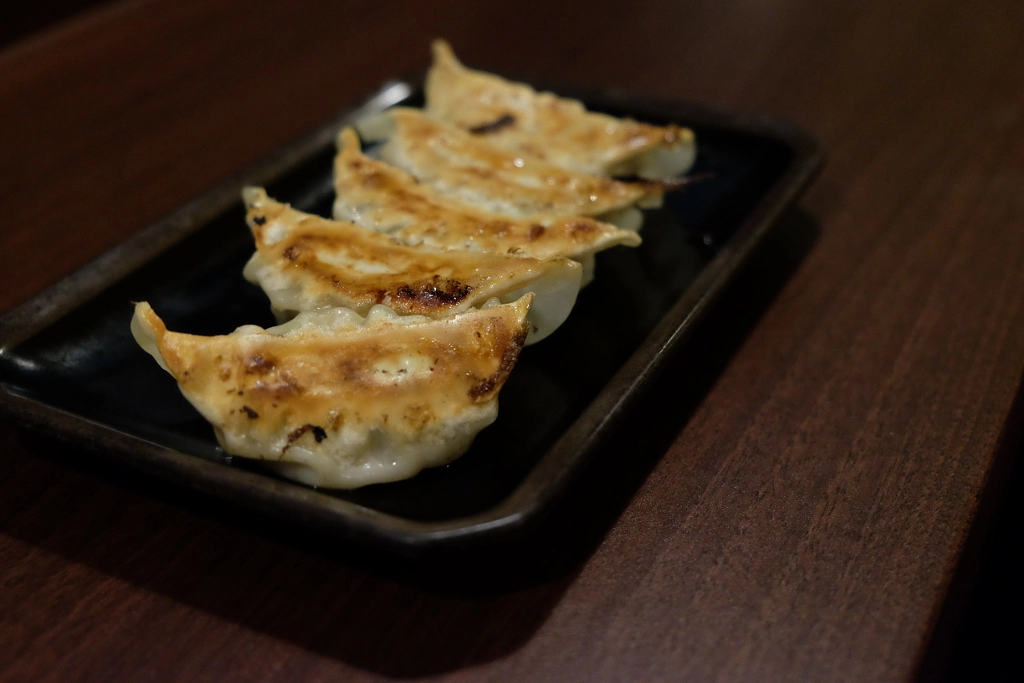
Since we were here, we decided we should still give it a try. We shared a plate of gyozas, and they were pretty good. I feel like any gyozas in Japan are good compared to in Vancouver though…
IMG by info9813 on 500px.com

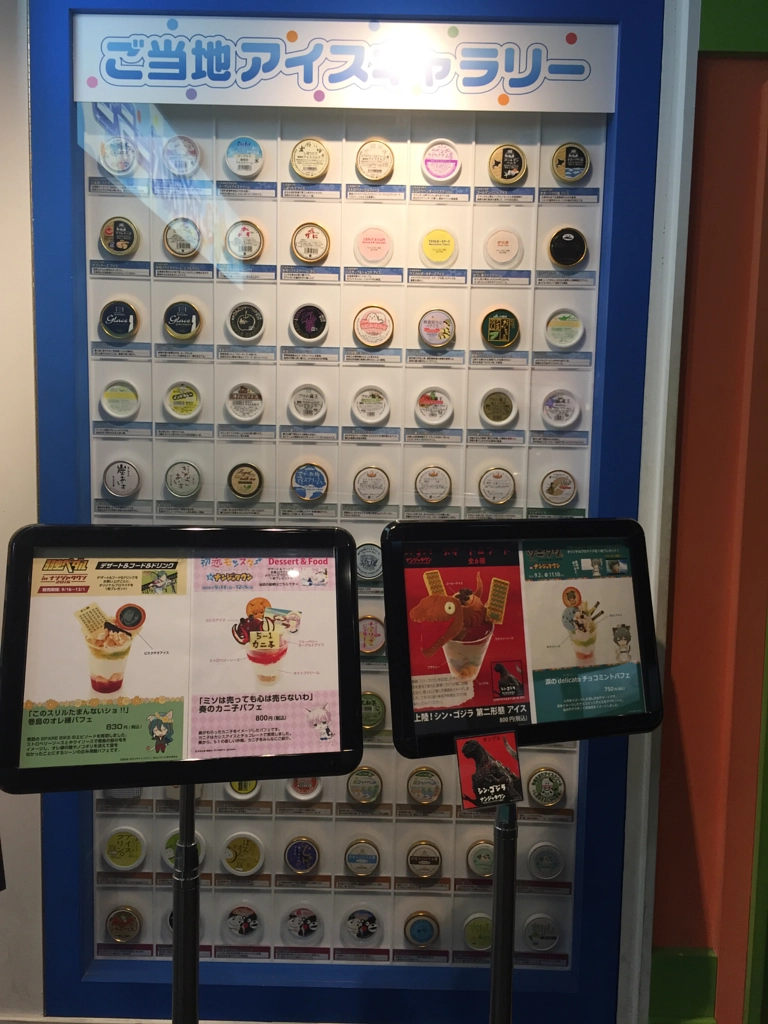
The second attraction that made me want to visit was the shop at Ice Cream City. This ice cream shop features the weirdest flavours. You can choose from a collection of 50! There are normal flavours too, but of course I had to go for the unusual ones!
 

IMG by info9813 on 500px.com

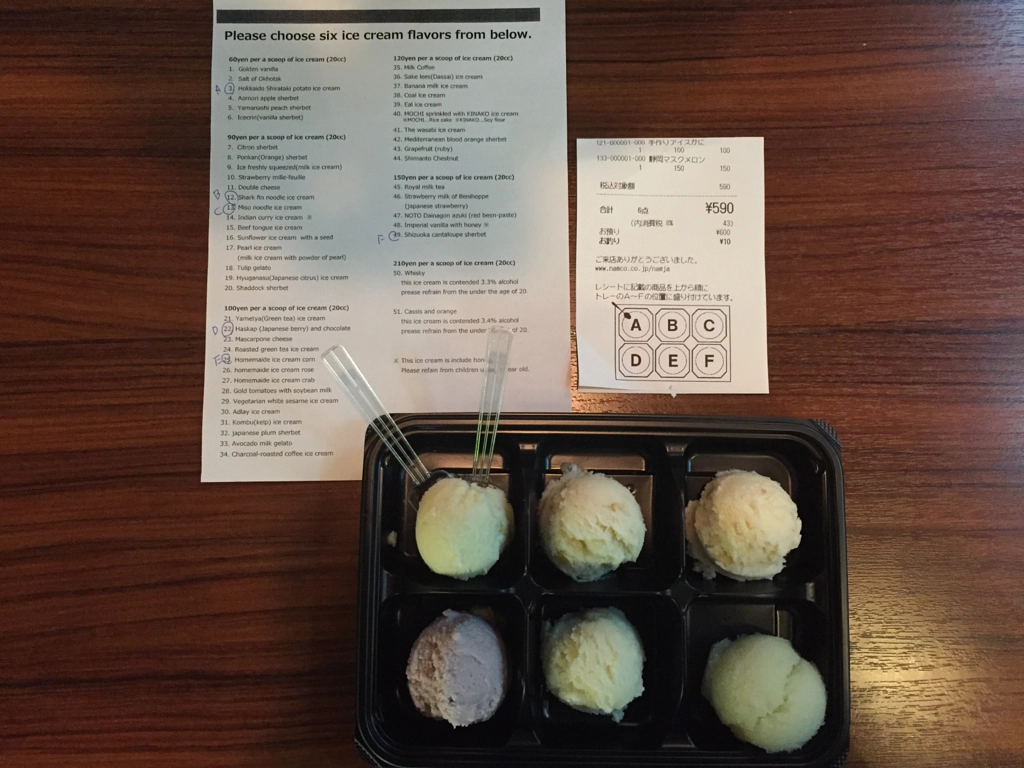
The ice cream here is not cheap. To get a tasting of 6 different flavours, it costs 590 yen. But as you can see, the scoops are quite small.  Here is what I tried: Hokkaido Shirataki Potato Ice Cream, Shark Fin Noodle Ice Cream, Miso Noodle Ice Cream, Japanese Berry and Chocolate, Homemade Ice Cream Corn, and Shizouka Cantaloupe Sherbet. And guess what? The ice cream literally tasted just like each description. The shark fin had some fake noodles in it, and the miso was like eating ramen. The Japnese Berry and Cantaloupe were delicious but the odd flavours were the highlight for sure. Would I order a whole scoop of these? Probably not.
Namja Town was a bit of a disappointment to be honest. All the games inside are only in Japanese and are not included as part of the admission price. The food inside is interesting but if you add the admission and the cost of the food, then it’s quite expensive. I would skip this unless you have kids or can actually read Japanese.


IMG by info9813 on 500px.com

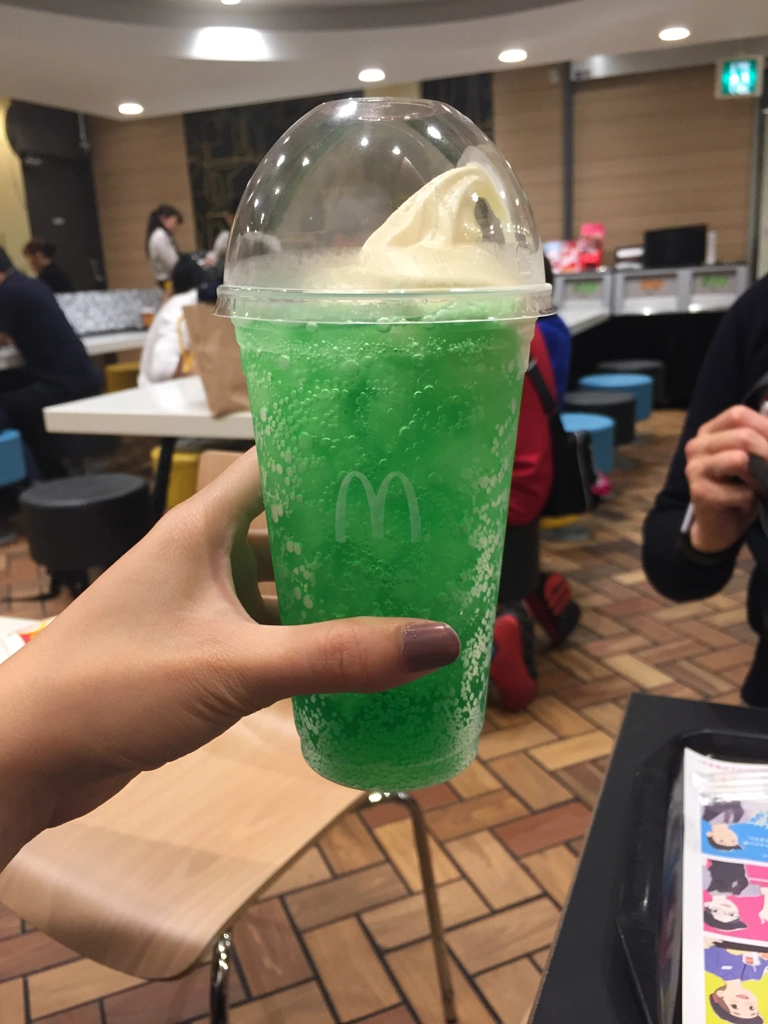
We didn’t find that there was too much to do in Ikebukuro. The area was quite similar to other areas with lots of shops and dining. However, we were sort of craving some snacks and walked past a McDonald’s… Ok I usually don’t like to eat McDonald’s when I travel, but in Asia, the menu items at McDonald’s is always so interesting. Here, the Fanta Melon Ice Cream Float caught my eye. Fizzy and bright green, the drink was a bit of a disappointment. The soft server melted in quickly and the flavour was just average. Nothing special.

IMG by info9813 on 500px.com

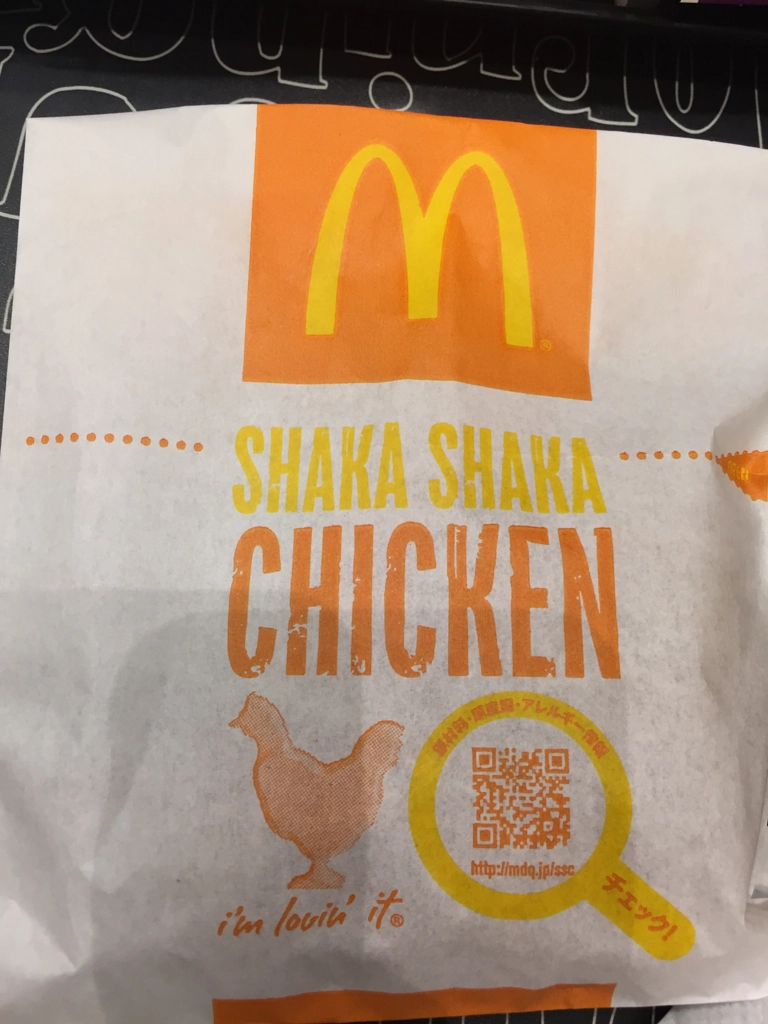
S opted for the Shaka Shaka Chicken which is sort of like a shake shake fried chicken. You can choose flavours like cheese or spicy, and they give you this packet of power which you dispense in and you just hold the bag and shake it. The chicken cutlet was pretty good and this was fairly cheap.


IMG by info9813 on 500px.com

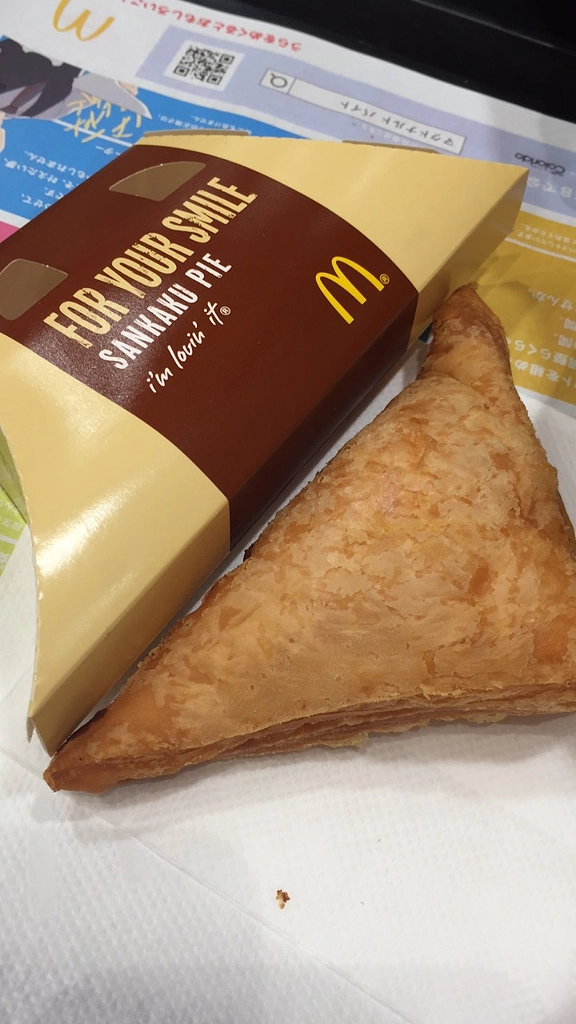
I suggested we try the Sakura Peach Pie. The pie is flaky and quite different from the ones in Vancouver. The filling inside was delicious. Don’t expect real peaches, but it tasted just like those Japanese peach candy! Probably artificial but I love that flavour!

And with McDonald’s to end our last day in Tokyo, we headed back to our Airbnb to pack up. Off to Osaka!

Sunshine City
Address: Sunshine City, 3丁目-1番 Higashiikebukuro, Toshima, Tokyo 170-0013, Japan