Yuu Japanese Tapas (Revisit #2)

IMG_8724

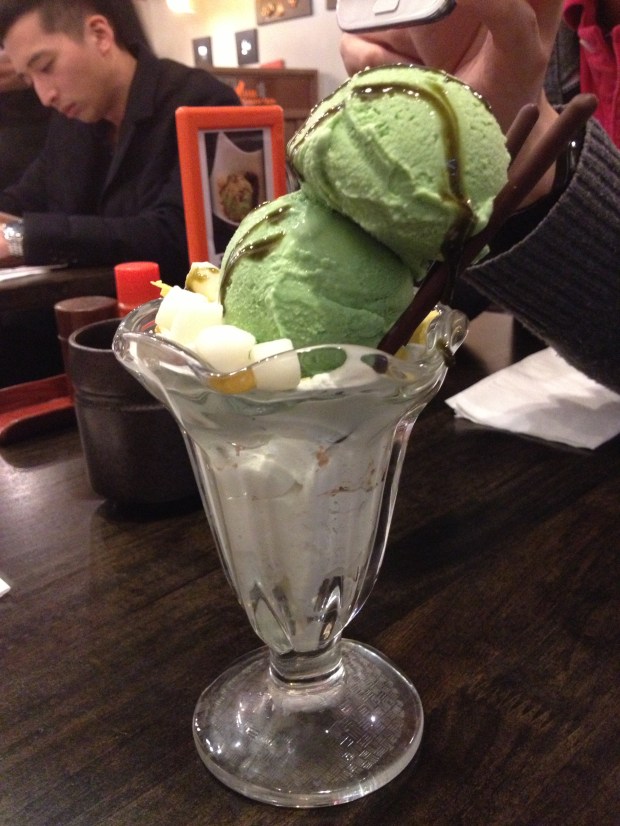
Green Tea, Red Bean Parfait

After some sushi, K was craving some deserts – specifically a parfait. Since we didn’t want to drive all the way to Vancouver, we decided to go to Yuu Japanese Tapas. We remembered that they had a large assortment of desserts, and I had also tried their parfait before. I warned K that it wasn’t amazing, but she still wanted to satisfy her parfait craving. She went for the Green Tea, Red Bean Parfait, which I had also ordered before. She, too, felt like it was a disappointment.

IMG_8725

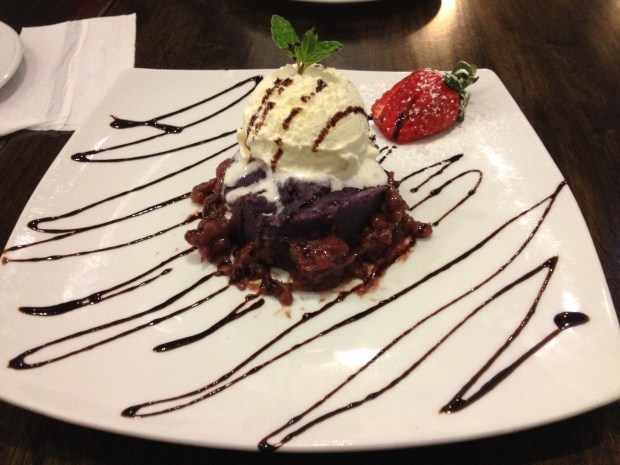
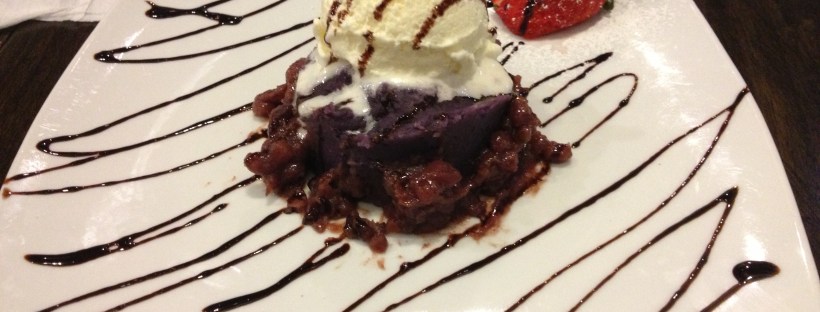
Warm Sweet Yam with Ice Cream

For myself, I wanted to try something unusual. I went for the Warm Sweet Yam with Ice Cream, and it was definitely really odd. It was purple yam that was mashed, with red bean surrounding it and topped with a scoop of vanilla ice cream. We all agreed that it was something that we could probably make ourselves and definitely not worth the money.

IMG_8727

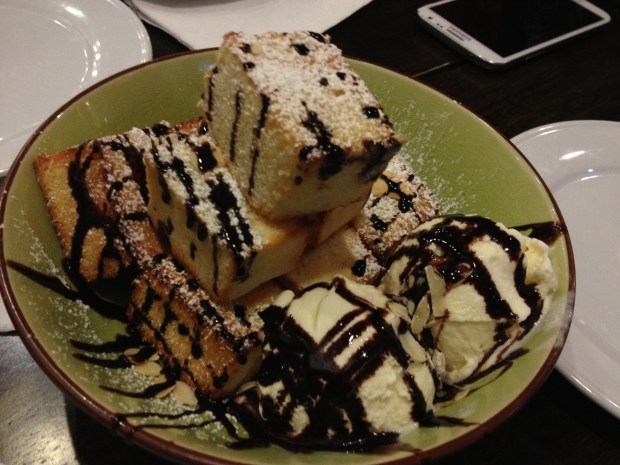
Crispy Toast Cube with Chocolate, Almond & Ice Cream

Lastly, E got the Crispy Toast Cube with Chocolate, Almond & Ice Cream. This was probably the best one out of the bunch. Essentially toast that had been lightly fried and drizzled with lots of chocolate sauce.

Overall, we didn’t find that their desserts were any amazing. Desserts cost around $7 each, which is quite pricey what they were. Probably won’t be visiting here again for their desserts.

Yuu Japanese Tapas 優 on Urbanspoon

Alice Pizza and Vatican City

IMG_8357

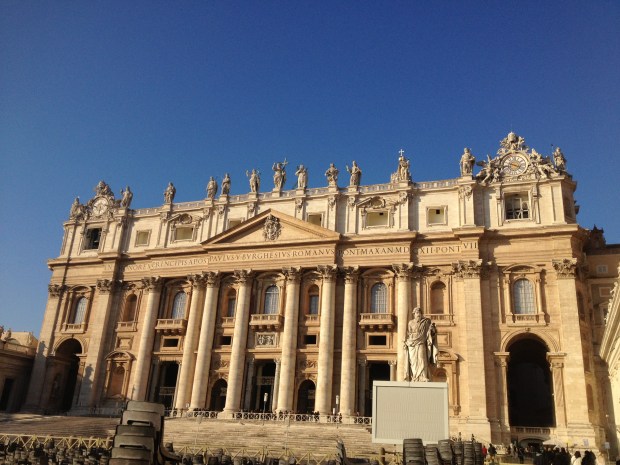
Day three in Italy was a trip to Vatican City. I’ve been here as well, and my deepest memory is losing one of our classmates in this busy square. Luckily, we found her somehow. Anyways, this time I understood so much more about the history again. I guess things just make more sense when you’re older. Vatican City is actually the smallest independent state in the world in area and population size. A size of around 44 hectares and a population of 840! The State is basically ruled by the Bishop of Rome or the Pope. First stop was St. Peter’s Basilica, which does not require admission fees. However, you do need to line up, but it moved quite quickly for us.

IMG_8358

St. Peter’s Basilica is located at St. Peter’s Square. It’s a Late Renaissance Catholic church and was designed by architects including Michelangelo. It is one of the largest churches in the world and is known to be one of the holiest and greatest churches in the Christian world. I’m an atheist, so visiting these churches isn’t really my thing, but I think it’s worthwhile to just see the architecture here. It’s seriously magnificent..

IMG_8360

Here is the altar of the basilica, and Saint Peter’s tomb lies just below the altar. You’ll also be able to see the dome of St. Peter’s and it’s the tallest dome in the world.

IMG_8364

Then, we took a short walk over to the Vatican Museums. You need to pay for this museum, but you’ll see some incredible work in here. You’ll find Renaissance sculptures, paintings, and other artwork here. For instance, here is just part of the ceiling. If I remember correctly, this ceiling is completely flat, but the artist painted it so you feel like it’s 3D and sculpted. Seriously, how do people even do this!? Crazy.

IMG_8365

I’m not an art person, and I forget who did this painting, but its pretty impressive how you see paintings all over the walls. Seriously, you won’t find a blank wall anywhere in these rooms. My favourite rooms had got to be the Raphael Rooms, with my personal favourite – The School of Athens. I learned about this in school, and it was so cool seeing Aristotle and Plato in the picture. After the Vatican Museum, you can connect to the Sistine Chapel, which does not allow photography. The chapel is in the Apostolic Palace, which is the Pope’s official residence. It’s basically famous because of the frescoes, the ceiling and The Last Judgment created by Michelangelo. You’ll also find the Creation of Adam here! Michelangelo was definitely a pure genius.

IMG_8369

After an afternoon of arts, we looked for some afternoon snacks. We found Alice Pizza, just minutes away from the Vatican Museum. I believe the store is actually outside of Vatican City though. The pizza was so good! It’s not your normal toppings, but with toppings like arugula, zucchini, eggplants, and more. You’ll see trays of pizza and you just let them know how much you want, and they slice them up for you. It’s priced by weight. Luckily, we were able to snatch the last few slices, because people were buying them so quickly and I think they had just taken out their last batches. So get there early and be aggressive about what you want! Some of the best Italian pizzas I had in Rome.

Bodega Santa Cruz – Seville

IMG_8336

The previous night after dinner at the terrible La Tradicional, we saw that Bodega Santa Cruz had a lot of people having drinks and tapas. We decided to go back the next afternoon for a quick lunch. It wasn’t as packed during this time, and we were able to find a seat, contrary to how many say you must stand. What I really enjoyed about Seville was the fact that they spoke Spanish, whereas in Barcelona, they speak Catalan and I often cannot understand the menu. In Seville, I was really able to put my Spanish to use and it seemed to work! Glad that I could at least sort of order food and have basic communication with the locals.

IMG_8330

They have a chalkboard full of tapas, and most of them are only 2 euros, which is a pretty good deal. Almost all of the tapas also came with these little bread sticks. First, we had the Spanish Omelette, which is a very typical Spanish dish. I actually ate this in a sandwich at school a lot. It’s basically a thick egg omelette which is made of potatoes and then deep fried. I wish it was served hot, but I know that this is typically served cold.

IMG_8331

Next, we had the Russian Salad, which was basically potatoes and corn. It had tons of mayonnaise which made it tasty. This was a very basic Russian salad.

IMG_8332

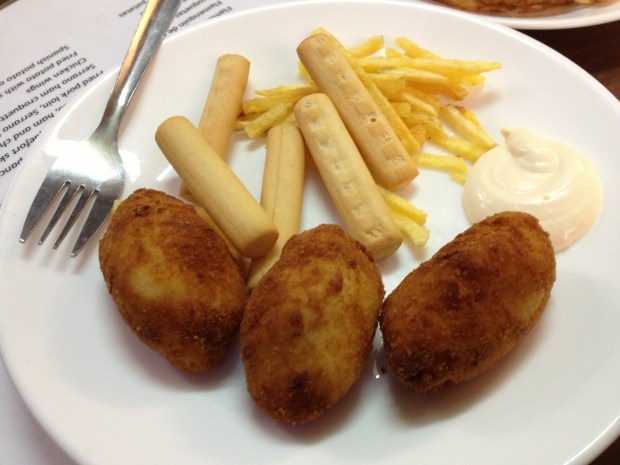
Croquettes were a must order. They weren’t as fresh as other restaurants, but were still decent. These also came with some fries and mayo. Again, the fries were thinly cut, something that seemed typical in Seville.

IMG_8333

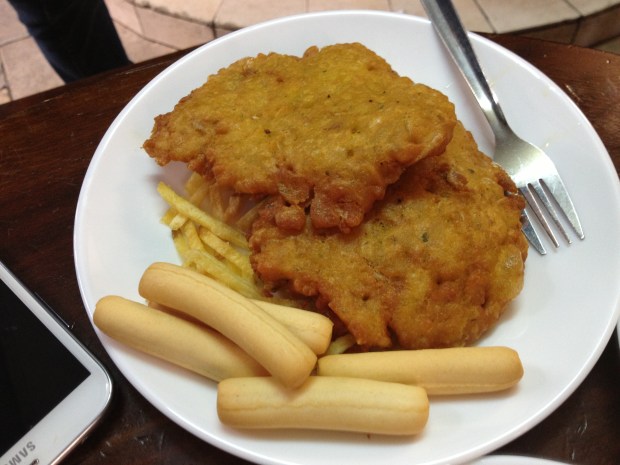
Someone suggested to order the Seafood Pancakes. They were sort of odd… They were basically a potato patty with shrimps in it. I believe they put the whole shrimp, still with shell in to deep fry, so we actually bit into pieces of shell. I guess you could technically eat the shell, but I found it a little odd.

IMG_8334

Patatas Bravas are also a must in Spain. This one came with tons of sauce. A mix of mayo and ketchup. These deep fried potatoes are always a pleaser.

IMG_8335

And lastly, we had the Smoked Salmon Molletes. Andalucia is famous for molletes, so it was no surprise that we were having molletes in Seville. Lightly grilled buns with cream cheese and smoked salmon. Definitely not as a good as Ciudad Condal’s salmon montadito, but not bad.

Overall, Bodega Santa Cruz was a very down to earth bar to grab some cheap tapas. Don’t expect amazing quality, but you’ll get to sort of experience some typical Spanish tapas at a local joint. Next stop, Italy!

Alfama District and Santa Rita – Lisbon

IMG_8243 - Copy

On our last day in Lisbon, we decided to go on a free walking tour hosted by our hostel. She showed us around the Chiado district, where we got to try some Ginjinha or Ginja which is a typical liqueur in Portugal, especially in Lisbon. The liqueur is made by infusing ginja berries which are sour cherries in alcohol and adding sugar to it. The store A Ginjinha is famous for having cheap shots of these to try although our tour guide bought us a whole bottle to share. It’s actually pretty good! Sort of like a brandy and worth trying.
IMG_8245

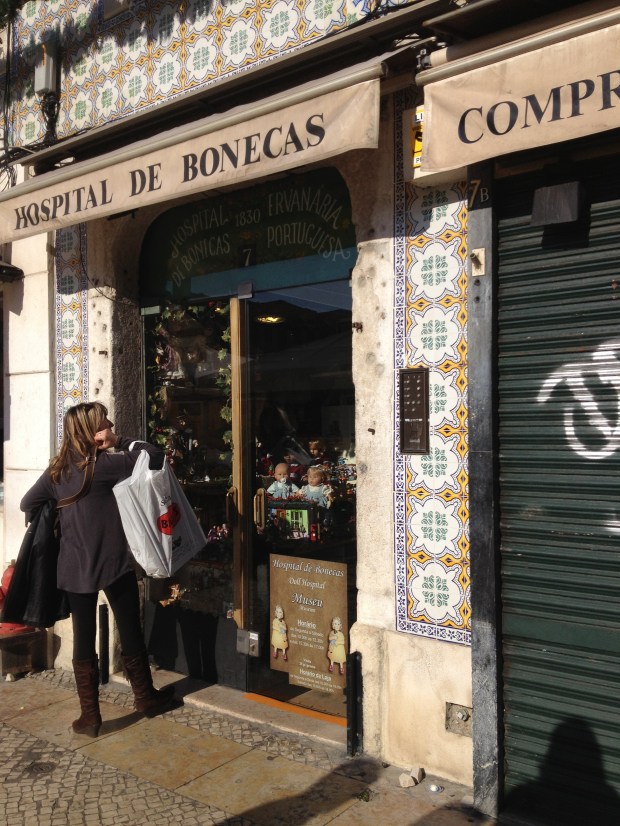
We were also shown the Hospital de Bonecas or the Doll Hospital, which is a store selling dolls since 1830! They’re known for restoring and repairing wounded toys and even have a museum! Pretty neat.
IMG_8248

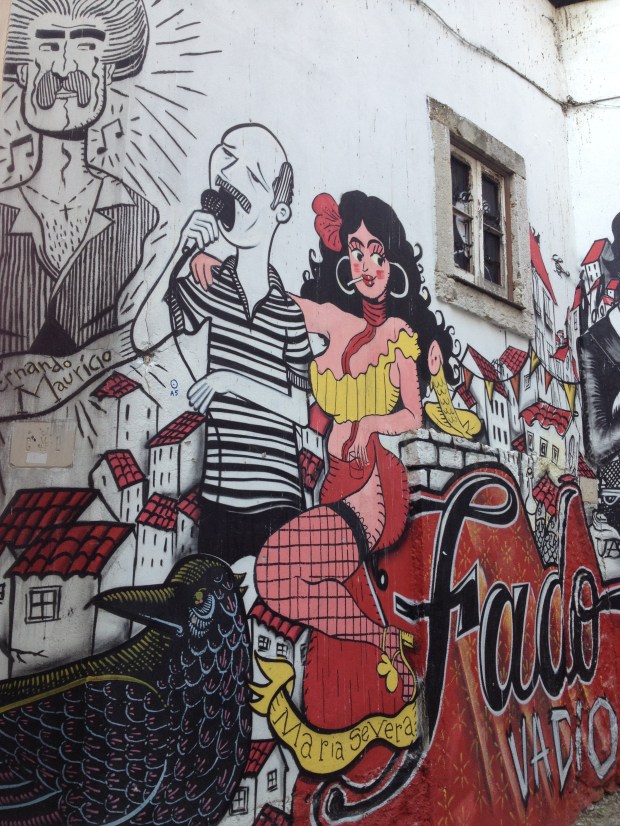
Then we started to take a little uphill trek up the Alfama district. Alfama is the oldest district of Lisbon and was an area that was not destroyed by the famous Lisbon earthquake. Along the way, we saw many beautiful graffiti art, including this one that showcases Fado, which is a music genre that originated in Lisbon in the 1820s. The music is usually linked to a feeling of melancholia, loss, or longing. There is often a man who plays the Portuguese guitar accompanied with a singer. In the Alfama district, you will find many bars and cafes with Fado performances.

IMG_8259

Also, the first thing I noticed about Lisbon was the amount of tile art on buildings. Almost all the buildings have at least a section of tile on the walls and it’s absolutely beautiful. I know tiles are very popular in the interior of buildings, but I have never seen so much on the exterior of a building. You will also see many “azulejos” which are painted, tin-glazed, ceramic tile work. They often show images of Saints and are placed in the front entrances to protect the inhabitants.
IMG_8260

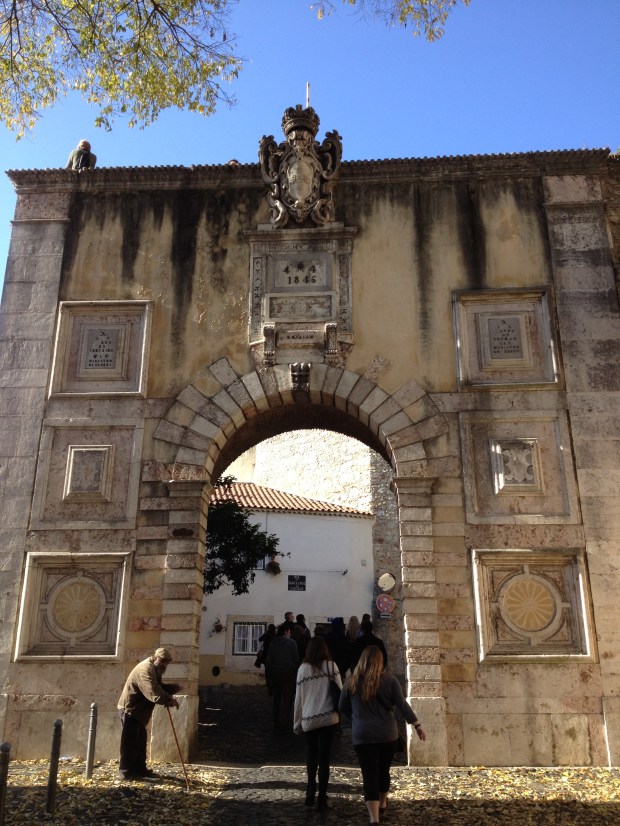
Then we made it to Sao Jorge Castle. It’s a Moorish castle back in the mid-11th century. Today, you do need to pay an entrance fee to go in. We didn’t go in, but we were able to see the exterior which was pretty cool. It actually looked like a fortress in movies!

IMG_8269

We were then taken to a viewpoint to look down at the Alfama district. So beautiful! Sunny day and blue skies with white houses and red rooftops. After we went downhill and also saw the Lisbon Cathedral, which was not too special, although it is the oldest church in the city.

IMG_8285

Our last stop was at the Commerce Square, also known as the Palace Square. This is because the location used to be the Royal Ribeira Palace until it was destroyed by the Lisbon earthquake. I believe the buildings here today are government bureaus. There is also a significant statue of King Jose I in the center as well as the Arco da Rua Augusta, which is an arc that opens into the shopping streets.

IMG_8286

After the tour, we decided to head over to grab lunch at our tour guide’s recommended restaurant. It’s on Rua sao Mamede, very close to our hostel and was actually such a hidden gem. There was no sign on the outside saying Santa Rita, but only a piece of paper with the menu and the name printed on it. I would’ve walked past it without knowing a restaurant existed here! When we arrived, it was very busy with a whole group of policemen eating. We waited a few minutes and luckily got a seat.

IMG_8287

First, we had the Vegetable Soup which was basic and simple, but so delicious! It was a medium consistency and filled with carrots and greens.

IMG_8288

We then had the Portuguese Seafood Rice, which I am still dreaming about 4 months later. It’s like soup in rice, but it was so damn good! There was also so many shrimps in it and they were fresh and big! I could eat this every day. A must order! I believe it was only 7 euros and you could split just this between two and be filled.

IMG_8289

The Portuguese curry is also very well known, so we ordered the Portuguese Curry Cuttlefish. Holy, it was huge! We also got rice with it and we were beyond stuffed. The squid was tender and the curry sauce was so delicious! Portuguese curry isn’t very spicy, which I really like.
IMG_8290

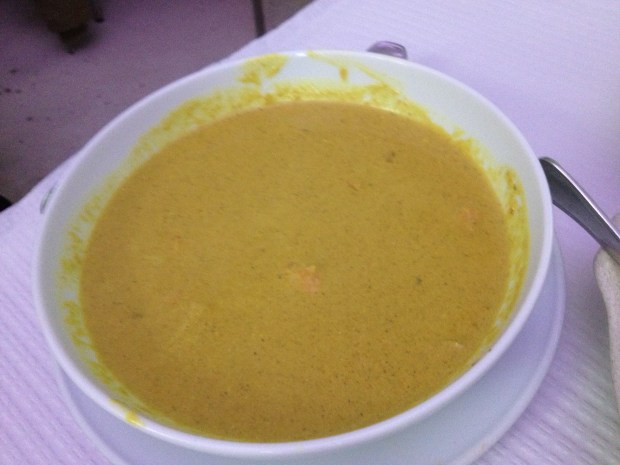
This just looks like curry, but it was really the Portuguese Curry Shrimp. It’s basically the same curry sauce as the cuttlefish dish, but with shrimps in it. There were so many pieces of shrimps and they were so fresh!

At the end of our meal, we were in a food coma and could not even finish all our food. Pretty much all the entrees were around 7 euros, and we still had leftovers to take home. Definitely share the food here since you’ll be so stuffed! Santa Rita gives you such quality local food at such a reasonable price. They definitely don’t cheap out on the ingredients! Recommend to all visitors!

And that was our trip in Lisbon. Later the day, we took the plane back to Barcelona to meet up with K and E. A nice sunny trip before we hit the cold parts of Europe!
Casa das Bifanas – Lisbon

IMG_8222

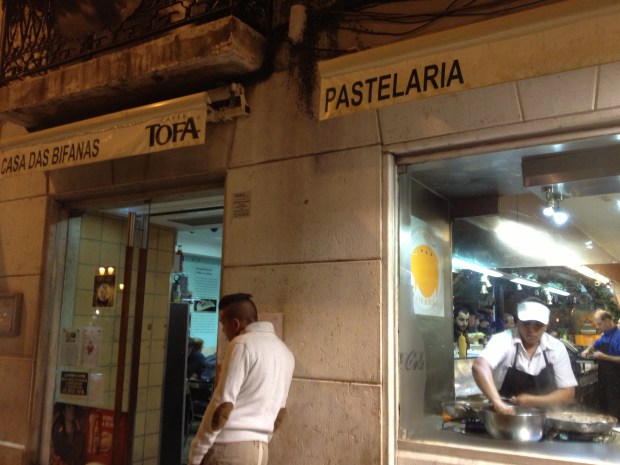
Casa das Bifanas is located in Rossio Square, and it doesn’t look fancy at all. We got drawn in because of the lady at the window preparing the bifanas or Portuguese pork cutlets. Don’t expect much service here though as they are extremely busy! Some people come here and sit at the bar and just order a soup or a bifana and then quickly leave, while others actually enjoy their meal here. Regardless, there are not many seats.

IMG_8218

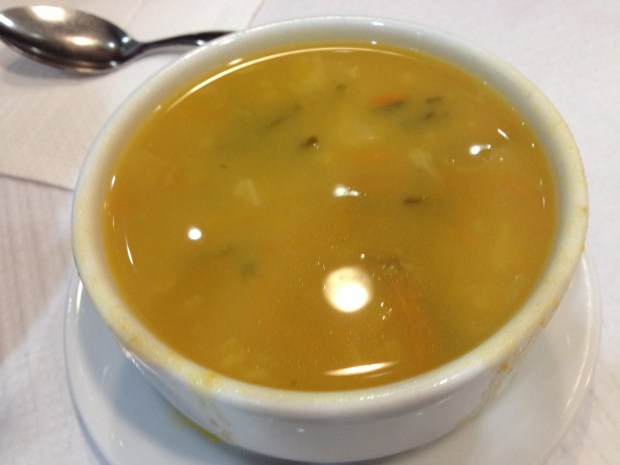
First we got the Vegetable Soup. This was very simple with just some typical veggies like carrots in it. Nothing too special, but it still tasted pretty good.

IMG_8219

The Fish Soup was much better and our favourite. It came with pieces of bread on top, which were delicious when soaked in the soup.

IMG_8220

Underneath there were loads of macaroni and pieces of fish. Very good and most tables had also ordered this!

IMG_8221

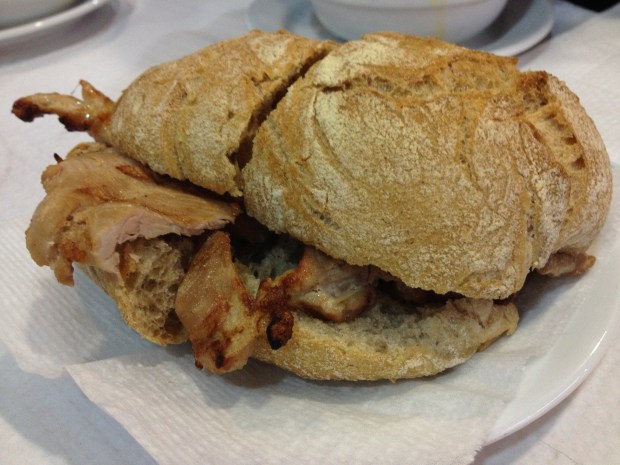
And then we had the Bifana or the Portuguese Pork Cutlet. This was so good! The bread wasn’t the softest, but the pork cutlet was well marinated and grilled to perfection. So tender and juicy! This is a must try in Portugal and the prices at Casa das Bifanas were very affordable.

Santini Gelati – Lisbon

IMG_8208

At night or even afternoon, head over to the Chiado district of Lisbon for some shopping and entertainment from street performers. Also try the roasted chestnuts at the street vendors.

IMG_8213

Walking along the streets, we found a bunch of people around this gelato shop. Some say that Santini Gelati makes the best gelato in the world! It began in 1949 and is one of the oldest gelato shops in Lisbon. We decided to go in and give it a try.

IMG_8210

They have a large menu of flavours, with some being sold out! They also have other desserts too, but most people come here for the gelato. You pay first and are given a receipt to hand over to the person who scoops your ice cream. The gelatos are a bit more expensive, but well worth it. Definitely really good!

IMG_8211

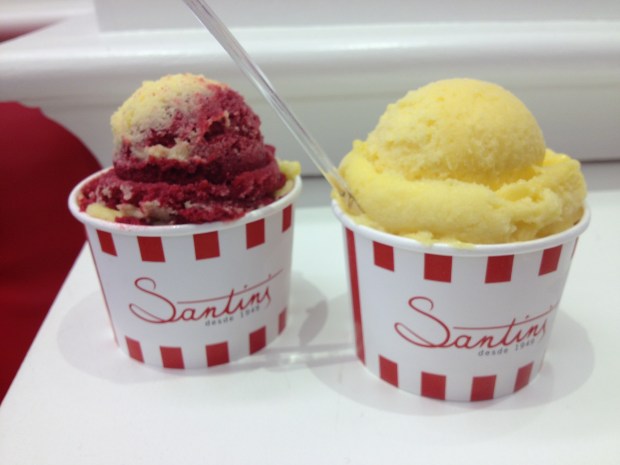
Here we have a Raspberry and Passionfruit, and a cup of just Passionfruit. The fruit flavour ones were basically like sorbet and very refreshing. Made of real fruit too! Delicious. There are seats inside too, but are always filled with people. I love the red and white themed decor. So retro looking!

IMG_8214

At night, if you have the Lisboa card or the one day unlimited transit card, you are able to take the Santa Justa Lift for free. It’s a elevator which is at the end of Rua de Santa Justa near Baixa and the Carmo Square. When you arrive at the top, there is a lookout area to see panoramic views of the city. It was surprising to find that Lisbon is actually quite dark at night. They don’t have as many lights like other cities. Therefore, I didn’t find the views to be amazing. I would make a quick trip here if you have the free entry card and if you have time. Definitely not worth paying just for this view though.

Pasteis de Belem – Lisbon

IMG_8176

After lunch, our hostel recommended us to visit Belem, which is the secondary local administrative unit in Portugal. It’s historically famous because of the number of Portuguese explorers embark their voyages from this area. Even Christopher Columbus stopped here! To get here, you just need to take the Tram 15E from the city center area and you get some nice views along the way. You’ll figure out where to get off just by seeing a bunch of tourists all disembarking the tram. We sort of followed some people, and we soon realized everyone was going to Pasteis de Belem!

IMG_8177

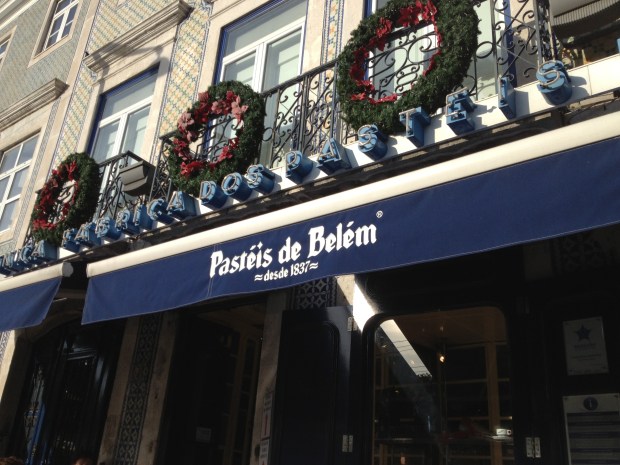
Pasteis de Belem is a pastry shop that existed since 1837. This shop is the birthplace of Pasteis de nata, or Portuguese egg tarts. They were created when Catholic monks of the 18th century used leftover egg yolks to create cakes and pastries for a living. My mom was pretty excited since she loves Asian egg tarts and she knew Portugal is famous for them.

IMG_8178

Other than Pasteis de nata, they also sell a variety of other cakes and pastries. But it seemed that everyone was just here for the tarts! We found a huge line up outside, but it moved very quickly. They also have seating inside, but we found that getting take out was the best and quickest way. They pack them for you in a little box.

IMG_8180

A terrible blurry picture of the Pasteis de nata, but I was too excited to just eat it. It’s slightly burnt at the top, but you can’t really taste any burnt taste. The filling is sort of like a creme brulee, or typical Chinese egg tarts, but the bottom was what surprised me! I’m used to typical solid tarts like in fruit tarts, or the flaky tart for some Chinese egg tarts, but this one was a crispy shell! Very layered, but you get a nice crunch as you bite into it. The filling is also much creamier than typical egg custards. You can also sprinkle some powdered sugar and cinnamon on top which gives it a nice sweet flavour! I would definitely recommend coming here to give them a try! One of the best egg tarts I’ve had and reasonably priced.

IMG_8186

A few steps down, and you will arrive at the impressive Jeronimos Monastery (also the monastery from where the monks made the pasteis de nata!) This monastery basically is a symbol of Portugal’s power and wealth back in the day when King Manuel I built it. It dates back to 1502!

IMG_8191

Inside, it’s very spacious, and you can definitely tell how old it is! It’s not as luxurious looking as some of the Italian or French churches, but definitely very large! However, the architecture is beautiful with each column carved with different items related to the sea. The monks here gave spiritual guidance to sailors and pray for the King’s soul and Vasco de Gama, a navigator and his crew, spent their night here before their voyage which was a success. Today, Vasco de Gama’s tomb is located here, as well several other important Portuguese figures. If you have a Lisboa Card, it is free entry, but even though we did not, we somehow entered for free…

IMG_8195

From afar the Jeronimos Monastery is huge! There are also various museums if you continue to walk further down. They have a maritime museum which showcases Portugal’s sea exploration, which is very well known.

IMG_8196

If you walk across the Jeronimos Monastery and towards the water, you will see the Discoveries Monument. You will need to go on an underground staircase to reach this spot where the Tagus River is. This monument was built to commemorate the death of Prince Henry, a navigator.

IMG_8197

In front of the monument, you will see a drawing of the world on the floor. What I believe the pinpoints are, are locations that navigators traveled to. The only one I sort of was familiar with was Macau, which Portugal had power over.

IMG_8198

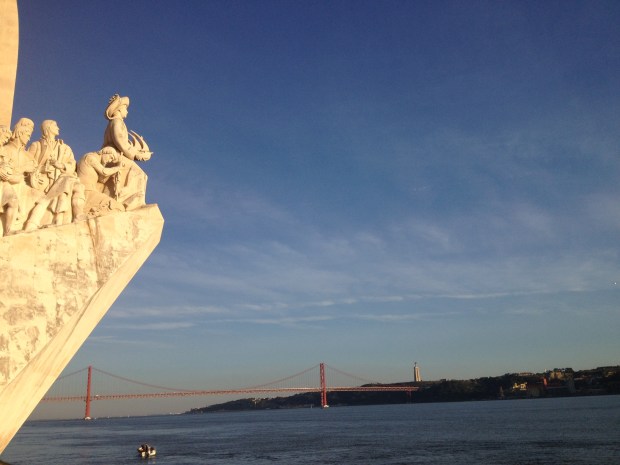
This is the side view of the Discoveries Monument which is basically a ship with the important figures of history, including Portuguese explorers.

IMG_8199

If you look out from the monument, you will see the 25 de Abril Bridge. My initial thought was “It’s the Golden Gate Bridge!” Actually, it is supposed to resemble that, although it is even longer than San Francisco’s. It is actually the longest central span in Europe!
Another important landmark to see is the Belem Tower, which I unfortunately only saw from afar. We were sort of too tired to walk further down to visit this fortress. It was built in 1515 to guard the entrance to Lisbon’s harbor and is very important to Portugal during the Age of Discovery. It was often the starting point for sailors going on voyages.

Belem is definitely worth visiting, given it’s only 15 minutes by tram. You’ll be able to walk through most of these landmarks in an afternoon if you don’t visit any other museums. A beautiful relaxing area to be on a nice sunny day!

Maison Antoine – Brussels

IMG_7634

Some claim that Maison Antoine has the best fries in Belgium and the world, but of course this is all based on personal taste. They have been voted as one of the best and have been all over the media. The fritterie is now operated by its fourth generation so it’s been around for a long time! After C and I took a quick walk to the EU building and the arc, we headed over to grab some lunch here. Yup, we eat fries for lunch. But apparently, a bunch of other people do too! We got there at around maybe 11:15 and there was already a small line up! We quickly lined up too, and later found out they open at 11:30 am. Wow, people actually line up for this place! It was a mix of locals and tourists, and there were several local families as well. The kids were so excited to get their fries! The gates rolled up, and the line began to move quickly on two sides.

IMG_7635

They have an extensive menu! Apparently, when they first started, they only had fries and two sauces though! Now, they have their fries in two sizes, and a whole menu of sauces! The Tartare Maison (House Tartar) still seems to be the most popular. Other than that, they also have a huge menu of snacks and even sandwiches. What surprised me was that many people also ordered items other than the fries. Shows that the rest of their food is also pretty good! However, I can say that pretty much everyone left with some fries!

IMG_7636

When in Belgium, get the Belgian fries. So of course we did. Since it was only ,30 euros more to get a large size and we were sharing, we got the large. It was huge though! We probably would’ve been fine just getting the small. Belgian fries are extremely popular because they are thought to have originated from Belgium, although some say that the French did, hence the name French fries. Belgian fries are cut a bit thicker than French fries though, as French fries are known to be skinny. They are also deep fried twice, therefore it’s soft in the middle and very crispy on the outside. I loved how they continued the tradition to serve the fries in a “cornet de frites” where your fries are wrapped in cone shaped paper. And you get the small plastic forks so you don’t need to get your fingers all dirty. Were the fries good? Yup. Were they amazing? I don’t know if I would say they were amazing. After a while, we both agreed we were sort of sick of the fries and they weren’t that special.

IMG_7639

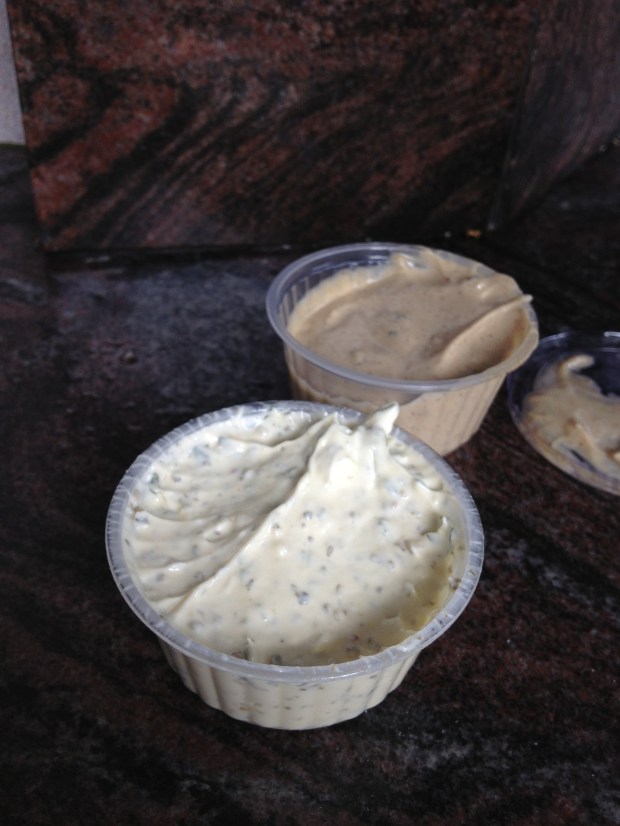
Oh and of course, we got the sauces. These are for additional costs, and we decided to try two. We got the Maison Tartare and I think the one in the back was the Chili (since we asked the lady which spicy sauce was recommended). The Maison Tartare was our favourite. The Chili was just okay, and it wasn’t even really spicy. Belgian fries always seem to be eaten with some type of sauce. The most popular ones are actually mayonnaise and ketchup. However, today, friteries have come up with a variety of sauces.

IMG_7640

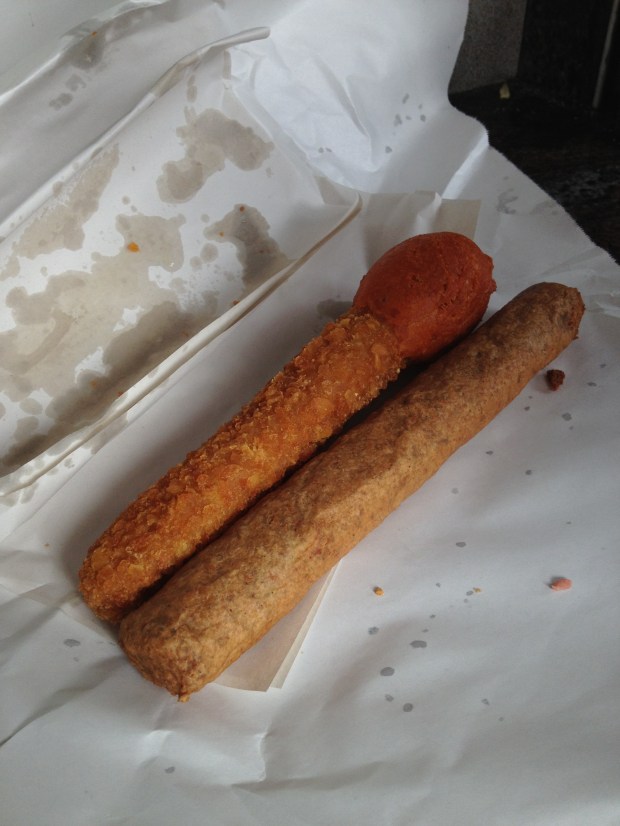
Since we lined up, we also decided to try some of their snacks. We got the Lucifer and the Loempia. The Loempia, which is pictured as the darker brown one was sort of like a sausage roll. Loempias are really spring rolls, so it was a thin outer layer deep fried with some meat inside. It was just alright and nothing too special. The Lucifer was what we liked! It seemed like a new product and they had some advertisements on the windows of it. We weren’t exactly what a Lucifer was but it looked like a matchstick! I did a quick search and still, I’m not sure what it is. It seems like a name that Maison Antoine has just come up with since Lucifers in Belgium usually refer to the beer. Anyways, it’s this crispy coating around some meat like thing, and on the red part, it’s this spicy sort of sauce that is kind of dried up. Not very descriptive I know, but just think of it as some spicy deep fried meat! Pretty good!

Anyways, Maison Antoine was a nice shop to grab a snack, although it ended up being our lunch. The fries are pretty good, but I wouldn’t metro all the way here just for the fries if I wasn’t going to tour around this area as well. I hear there are also great friteries elsewhere in the city, and I’m sure I wouldn’t be able to tell much of a difference. Still, the line up here was constant and longer once it got later in the day. Good thing we came a little earlier!